

Welcome back to HCI, your go-to source to keep up with the best insights from over 250 leadership, HR, and people sources. As always, we would love to hear from you at ken@reyvism.com with questions you’d like answered or topics covered.
Sent this by a friend? Sign up here to receive HCI in your inbox every week.
By Ken Stibler; Powered by Reyvism
What work is AI enabling you to avoid?

What work is AI enabling you to avoid?
Using AI is becoming a very respectable way not to do work.
A piece of analysis needs writing, a spreadsheet needs cleaning up or a review needs drafting. Instead comes the search for a tool, the prompt, the second prompt, the documentation, the correction and eventually the explanation for why the model still cannot quite produce what was needed. An hour disappears, 4 drafts are available, but the original task remains.
Some of this is sensible investment. Nobody complains about spending an afternoon automating something that saves a day every month. The more interesting cases are the ones in which learning to use the tool becomes a substitute for doing the work. AI makes that unusually easy because experimentation carries none of the stigma of ordinary procrastination. Wrestling with a model looks like capability building.
Companies are also giving employees plenty of reason to wrestle. In on survey of finance leaders, 76% reported high or very high pressure to fully implement AI, and respondents spent an average 26% of their workday verifying or correcting finance-specific AI output.
Management work is particularly vulnerable. Seventy-eight percent of people managers surveyed by Highwire had used AI for feedback or performance reviews over the previous year. It is easy to imagine the efficiency gain in turning rough notes into clean prose. It is equally easy to spend 30 minutes refining that prose rather than deciding what an employee actually needs to hear.
There is a similar risk at the line. Junior employees once learned by doing a lot of fairly tedious work badly, then less badly, then well. If the instinct becomes to hand that work to a model immediately, companies may save time before they have worked out how the judgment acquired through repetition gets replaced.
The useful dividing line is not whether new tech was used, it’s whether a tool actually gets work done better or faster. It seems painfully obvious, yet it we’re all seeming to forget it.
Hiring precision becomes critical as talent concentrates
The labor market can look crowded right up until a company tries to hire for the work it actually needs done. Routine tasks are easier to automate, outsource or teach than they were a few years ago, which puts more value on the harder combination of judgment, experience and context.
That helps explain why employers can receive hundreds of applications and still struggle to find a credible hire. Robert Half found 57% of U.S. hiring managers were offering above-plan pay, largely to secure specialized skills.
Part of the problem is that companies are often still hiring against roles that have drifted away from the work. Job descriptions are now frequently two to four years out of date. This makes a thin market feel thinner: employers screen for familiar titles, credentials and responsibilities while the qualities that actually matter may be much narrower.
A better approach is asking what someone must already know to be useful on day one, what can be learned, and what expertise can only brought in from outside.
Quote of the Week: Easy to say, hard to do
“We must never lose sight of what matters most: our people. We will build a culture where people feel respected, empowered, supported and proud of the work they do.”
—David Ellison and Ynon Kreiz, co-CEOs of the newly formed Skydance, in a joint memo to employees after the Warner Bros merger with Paramount
Reading List:
How can you support employee finances outside of raises?
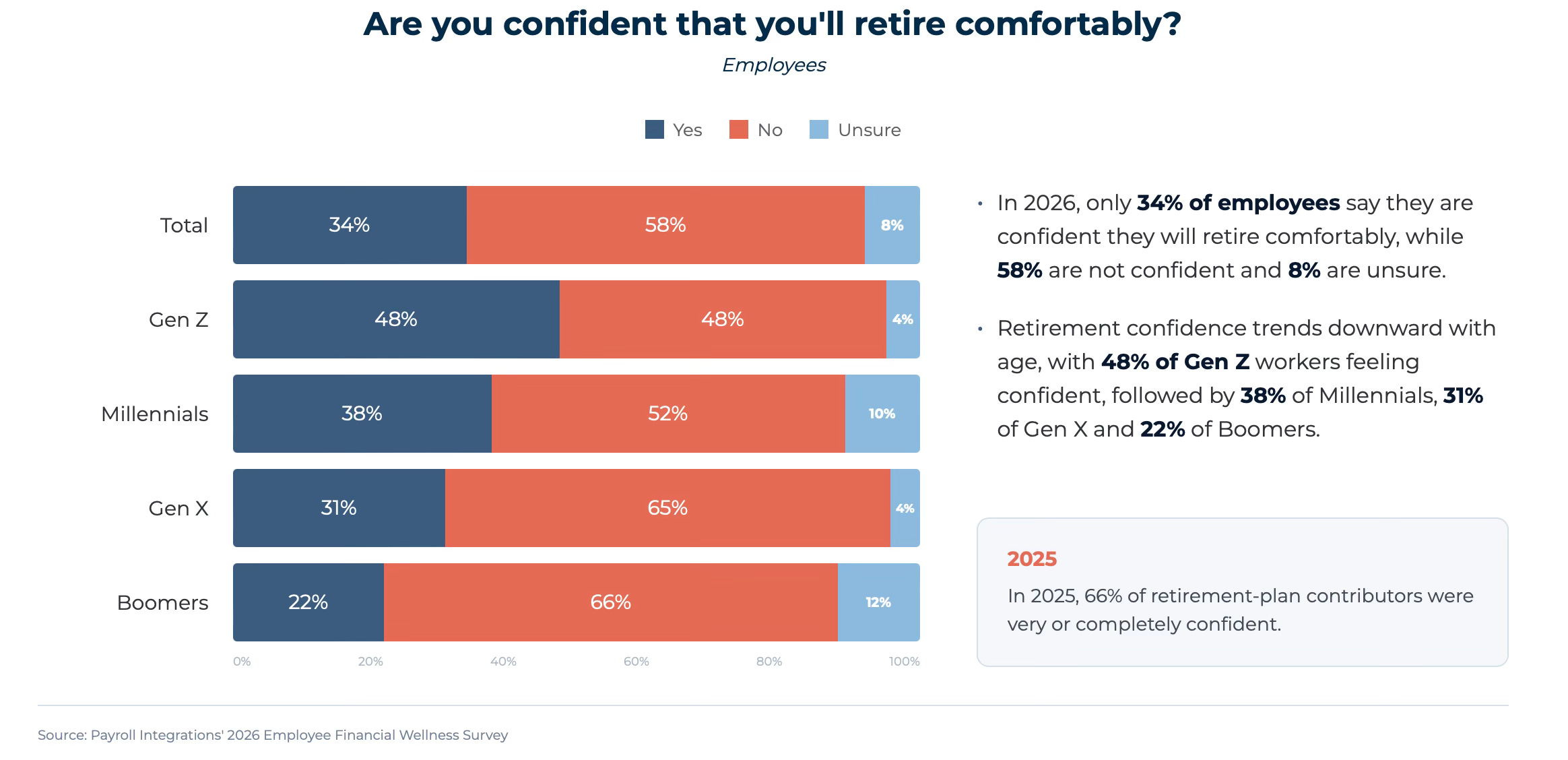
Some of the cheapest financial benefits are the ones that help employees avoid unnecessary costs. Earned-wage access can prevent an overdraft, benefit navigation can uncover support people already have, and better guidance can reduce expensive mistakes. But employers should be wary of turning “financial wellbeing” into another fee-bearing product: according to the Consumer Financial Protection Bureau, around 90% of workers paid at least one fee when employers did not cover access. A benefit should leave employees with more money, not simply more ways to spend it.
“Calendar stalking” is becoming more common
Durable hybrid work is creating a new kind of office politics: employees are not just deciding when to come in, but when it is most useful to be seen coming in. Owl Labs found 48% had participated in or planned a “billboard day”, timing office attendance around leaders or clients. That is rational if proximity still influences recognition. The management problem is not the behavior itself, but the signal it sends about what employees think gets rewarded.
Deepfake scams hit more businesses
The old reassurance that “I saw them” is rapidly losing reliability. The FBI has warned about stolen identities and manipulated video in remote hiring, particularly for roles with access to sensitive systems. As synthetic media improves, more business processes will have to separate familiarity from verification. Hiring, payment changes and privileged access increasingly need a second channel precisely as faces and voices reach a point where not even mothers can tell the difference.
Data Point: So much for prompting
25%
The fall in demand for basic AI skills since January 2026, while more in-depth AI skills, like building tools, automating workflows, and AI engineering, has risen 51%
In Other News
The biggest predictor of L&D success? How much time managers can spare. (HR Dive)
The Full Monty: New York Employees Gain the Right to Examine Their Personnel Files, With Serious Implications for Employers. (Clark Hill)
Fractional CHRO vs. Interim HR Leader: Key Differences and When to Hire Each. (HuntScanlon)
Trump administration revamps insurer price transparency reporting. (HR Dive)
McDonald’s hit with class action alleging AI-powered menu price-fixing. (Reuters)
Gen Z can’t control the future, so they’re paying witches and tarot readers to make it feel more manageable. (Fortune)