

Welcome back to HCI, your go-to source to keep up with the best insights from over 250 leadership, HR, and people sources. As always, we would love to hear from you at ken@reyvism.com with questions you’d like answered or topics covered.
Sent this by a friend? Sign up here to receive HCI in your inbox every week.
By Ken Stibler; Powered by Reyvism
Everyone is afraid they can’t keep up
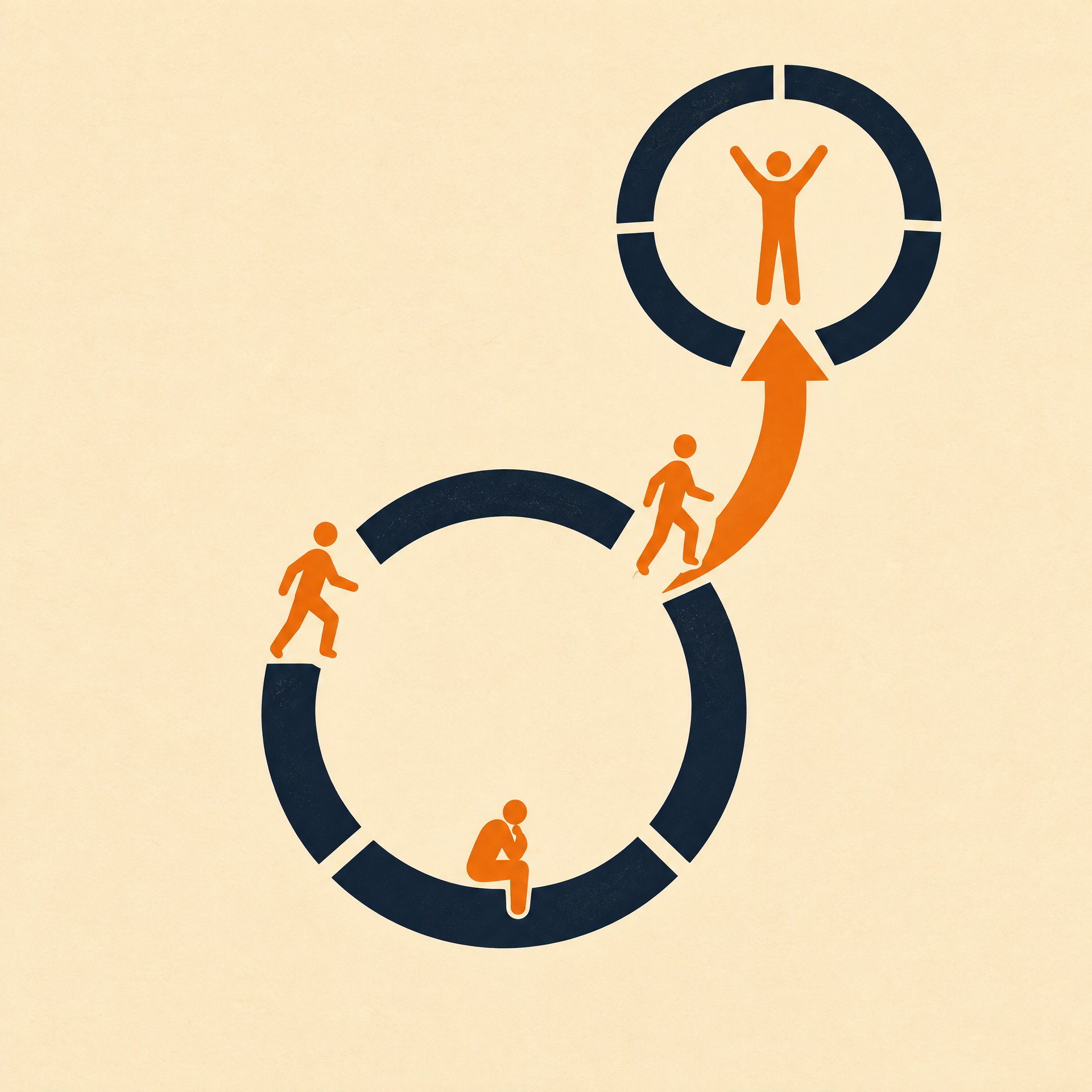
Wear of AI is starting to change how people act at work. The people supposed to manage that fear aren’t feeling much better.
Workers who worry AI could make their occupation obsolete are more likely to morally disengage and report slacking off, showing up late and other counterproductive behavior, according to new research from Washington State University. The effect was strongest in industries facing more AI disruption.
Managers have their own version of the problem. Just 17% of leaders say they feel confident anticipating and reacting to change. Eighty-seven percent worry their skills are becoming obsolete, and only 14% feel ready to use emerging technologies successfully.
CEOs aren’t waiting for them to catch up. Nearly 60% of CEOs expect to replace at least one senior leader within six months, according to BCG, and more than 40% say moving too slowly is their biggest concern.
That makes for an awkward organization. Employees are worried about their jobs, managers about their own capabilities and CEOs about the managers. The normal assumption that someone higher up has a clearer view of what comes next is getting harder to make.
Employers can’t remove much of that uncertainty but they can make it less abstract. Tell people which parts of their jobs are changing, what will matter more and what they should start learning now - as soon as you know it. Nobody needs (or can provide) a five-year promise, but any credible next step helps.
Looking busy is becoming a second job
Looking busy has long been part of office life. Now though a meaningful number of workers consumes at least a quarter of their day working at fake work. Workers report stretching out simple tasks, adding unnecessary meetings and keeping messaging apps open because 70% believe visible busyness gets rewarded.
AI makes the performance harder to read. Employees can keep their output up while burning out, and some of the time AI saves simply moves elsewhere: Workday found roughly 37% goes back into checking and rewriting its work.
Managers have more output to measure and less certainty about what produced it. Completed tasks and green status lights tell you something; rework, mistakes and who keeps catching them may tell you more.
Quote of the Week: Communication isn’t a commodity
“Fluency is becoming cheap. Sincerity is becoming scarce.”
— Natalie Sutton, communications consultant and executive coach, on AI and executive communication
Reading List:
Authenticity is apparently more about choices than vulnerability
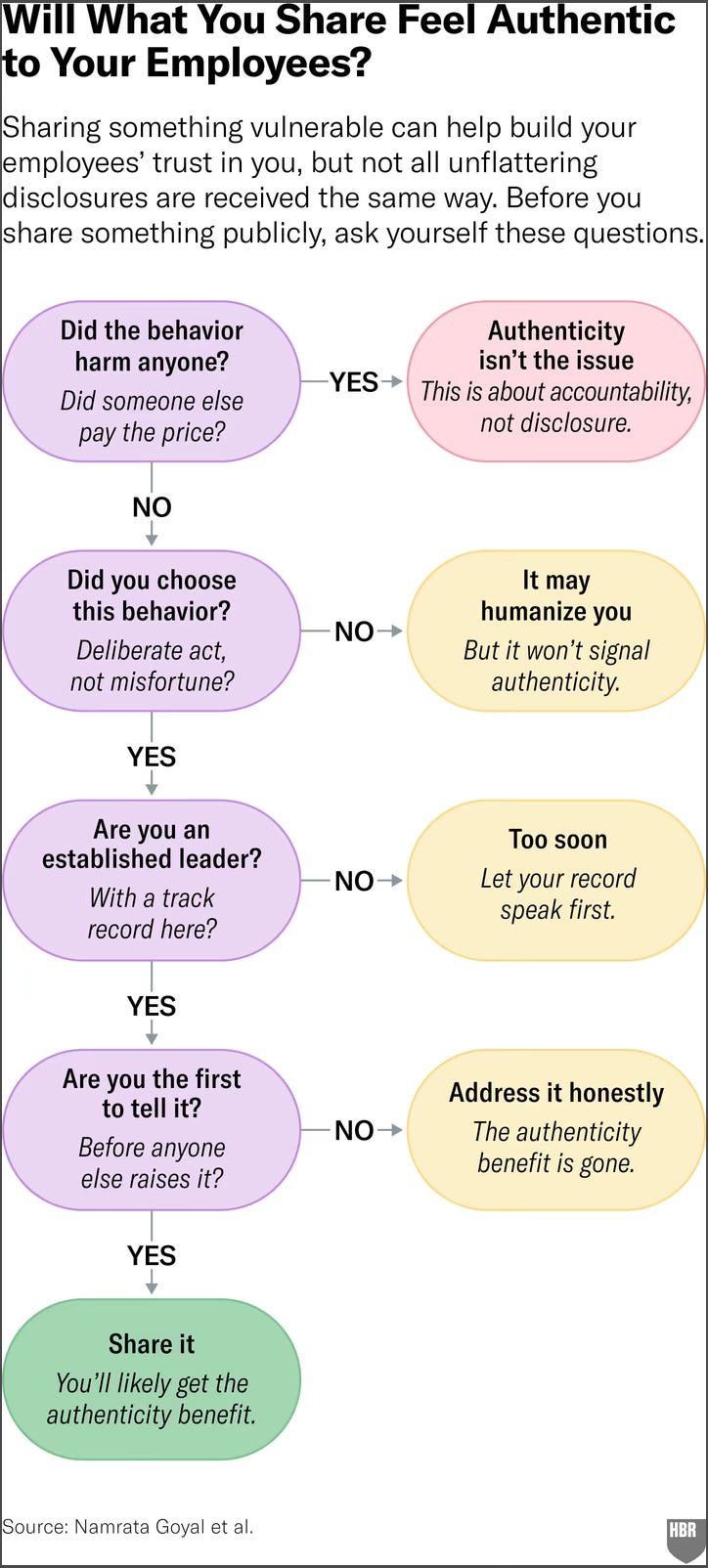
Leaders who disclosed unconventional choices were viewed as more authentic than those who disclosed personal setbacks in a series of experiments summarized by Harvard Business Review. The difference was agency: something you chose says more about you than something that happened to you. Leaders looking to seem more human may get further by showing how they make decisions than by reaching for another story about adversity.
The CHRO job is becoming less about HR
CEOs increasingly want “enterprise CHROs” who can handle workforce planning, succession and AI transformation alongside the traditional HR job. High-performing companies are also pulling senior technology leaders into what was once the CEO-CFO-CHRO triangle. As technology changes the work, the line between managing the workforce and designing how the company operates is getting thinner.
Protecting the quality of your thinking starts at the email
Hachette CEO David Shelley still writes every email himself despite 58% of leaders surveyed by General Assembly using AI to draft theirs. Shelley worries executives are also outsourcing the reading and thinking that came before the message. A rough first draft takes longer, but sometimes that is where the view gets formed.
Data Point:
In Other News
The Rise of In-Office Remote Work: The alternative to working from home is often logging on in a sea of mostly empty cubicles. (The Atlantic)
State AI Laws Up the Ante for Human Oversight of Job Decisions. (Bloomberg Law)
Workday brings autopilots to hiring, payroll in autonomous AI bet: The company said its latest tools will anticipate needs and take actions across finance and HR workflows, with customer-defined controls. (HR Dive)
AI is the root of recruiters’ biggest stressors, survey says. (HR Dive)
AI use is up, but worker training is falling behind: Effective AI training starts with experimentation, not tools, experts say. (HR Reporter)