

Welcome back to HCI, your go-to source to keep up with the best insights from over 250 leadership, HR, and people sources. As always, we would love to hear from you at ken@reyvism.com with questions you’d like answered or topics covered.
Sent this by a friend? Sign up here to receive HCI in your inbox every week.
By Ken Stibler; Powered by Reyvism
Yes it's getting worse…so where is the middle ground on GenZ communications?

Every generation complains about how the next one talks. What’s different now is speed. With 15-to-24-year-olds averaging nearly four hours a day on social media alone, slang no longer moves through a school hallway over a few years. It moves through algorithms in weeks, and it splinters by platform, game and fandom along the way. Dictionary.com’s 2025 Word of the Year was “67,” a term the editors themselves called “meaningless, ubiquitous, and nonsensical.”
So this isn’t just hand-wringing. In a recent survey of U.S. workers, 80% of Gen Z said generational differences in workplace language were a challenge, against 30% of boomers. Three quarters of boomers had no idea what “delulu” meant.
More tellingly - and slightly comforting - 41% of Gen Z didn’t know what Gen Alpha’s “Ohio” meant either. The language is segmenting so quickly that even young people can’t keep up with each other, and Gen Alpha is already arriving: 23% of HR professionals report hiring Gen Alpha workers.
It cuts both ways. Only 22% of the same Gen Z workers knew exactly what it means to “boil the ocean.” Across offices, 68% of workers regularly hear phrases they don’t understand, and more than a third would be embarrassed to ask. That’s how instructions get misread and meetings go quiet.
We’ve already solved a version of this problem with dress codes. The share of companies enforcing strict dress codes fell from 30% in 2018 to 4.3% in 2024, but most didn’t drop standards altogether. They moved to “dress for your day”: casual on a team call, polished in front of a client, and a short list of things that are never okay. Nobody had to love khakis. They just had to know where the line was.
Communication deserves the same treatment: a low, clear, achievable bar, written down and explained. A one-page “communicate for your audience” standard could cover:
Channels: what warrants a call (running late, a customer problem), what fits a text or Slack, and what has to be in email
Timing: what “by Friday” or “ASAP” actually means, and expected response windows
Audience: plain, complete sentences for customers and anything forwarded outside the team; internal chat can stay loose
Both directions: managers drop the “blue-sky” jargon too, and anyone can ask what a term means without penalty
The point isn’t policing slang or learning (mercifully). It’s to make sure everyone can read the work. Language will keep changing faster than any policy, but common legibility is a reasonable thing to expect, as long as someone has the honest conversation about what it looks like.
Personal agentic AI raises an immediate volume problem for customer service orgs
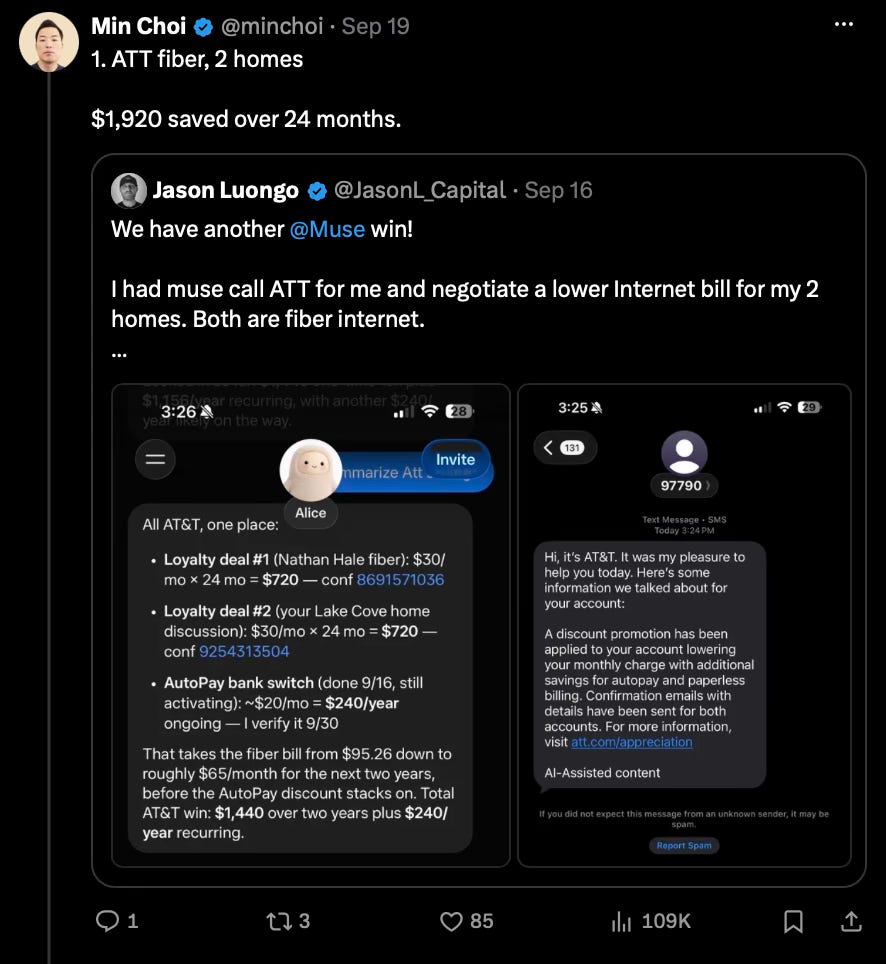
“Agents” have moved from a software category into consumer behavior. Meta’s newly released Muse can complete forms, make calls, and negotiate on a user’s behalf.
And less than a month into availability, consumers are flooding social media with stories of agents sitting on hold, negotiating bills, cancelling subscriptions and seeking insurance preauthorization, while banks, insurers and outsourcers work out how to handle them.
This creates a fairly urgent problem for any service orgs. Bots are endlessly patient, will call five times to confirm one booking, and often fail authentication anyway, so the call eats agent time and goes nowhere. And with 74% of consumers saying they’d hand routine tasks like negotiating deals and resolving complaints to an agent, that volume is coming.
Most readers’ businesses have a bit of lead time, and it’s worth using it. Deciding which requests an agent can complete on someone’s behalf and which require the actual customer, giving frontline staff permission to end unproductive bot calls, and fixing QA scoring so people aren’t dinged for their “empathy” toward software (it’s already happening) can help blunt the wave of “why not” agentic outreach.
Quote of the Week: Silent signals
“It’s gotten harder and harder for employers to know who can actually do the job anymore.”
— Dan Shapero, LinkedIn CEO
Reading List:
The labor market is grinding to a halt
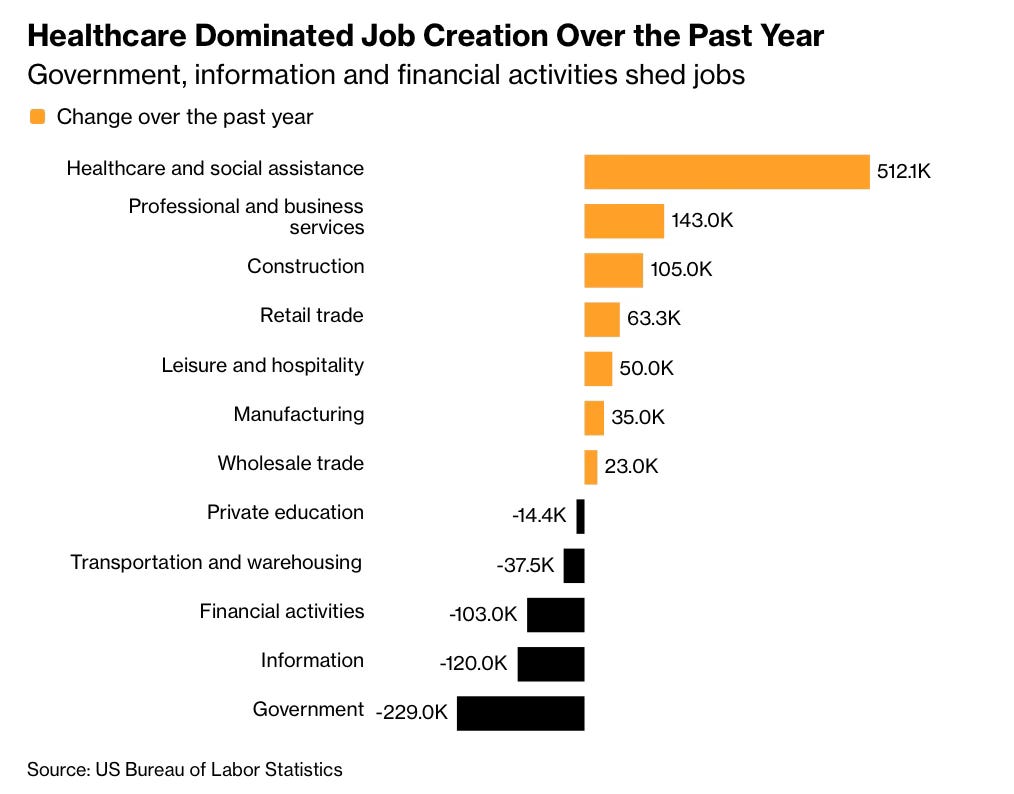
Layoffs are low, with September's 43,281 announced cuts the fewest for the month since 2022, but hiring plans were the weakest for September in fifteen years. Meanwhile the average job search has passed six months and nearly 2 million Americans are long-term unemployed, hitting experienced white-collar workers and new grads hardest. Low-fire, low-hire looks stable from the top and frozen from the inside. For those still hiring here’s an opportunity to outperform the algorithms as employment gaps become a lower value signal of whether someone can do the work.
Folding AI spending into employee cost?
Finance software firm Esker is including AI token consumption in employee cost planning, alongside salary, bonuses and payroll taxes, after spending roughly four times its AI budget. In one survey, 72% of finance leaders reported spending more than planned on AI, while 65% of CFOs struggled to connect usage with business outcomes. HR has a reason to join that discussion: the resources needed to do a role are changing and AI systems fit awkwardly within the tech function anyways.
Last in line for training, high performer disengagement rises
Should limited development dollars go to stars or to the people who need them most? A new study finds the answer depends on culture: in meritocratic workplaces, high performers felt slighted when passed over, while in more egalitarian ones it was lower performers. Managers who only weigh productivity can create a fairness problem they never see coming. Make the selection criteria explicit before you hand out the seat, and offer your high performers a different form of investment, like stretch assignments or exposure, rather than nothing.
Data Point: The entry-level still exists
57%
The share of U.S. workers in jobs requiring no prior work experience in 2025, according to the Bureau of Labor Statistics
In Other News
The Surprises That New CEOs Face. (WSJ CEO Brief)
AI skill levels drive workforce divide, PwC finds. (HR Dive)
Skilled trades face worker shortage as industries recruit the next generation. (Scripps News)
Ghost jobs and fake applicants have created a hiring trust gap. (HR Dive)
AI could force 11 million US workers into new careers by 2035. (CNN)
Technology isn’t yet solving HR’s workflow problems. (HR Dive)