

Welcome to the latest edition of Human Capital Intelligence, your weekly brief synthesizing over 250 leadership, HR, and people sources to filter out the noise. As always, we would love to hear from you at ken@reyvism.com with questions you’d like answered or topics covered.
Sent this by a friend? Sign up here to receive HCI in your inbox every week.
By Ken Stibler; Powered by Reyvism Analytics
Tired and skeptical, employees stand still as leaders push change
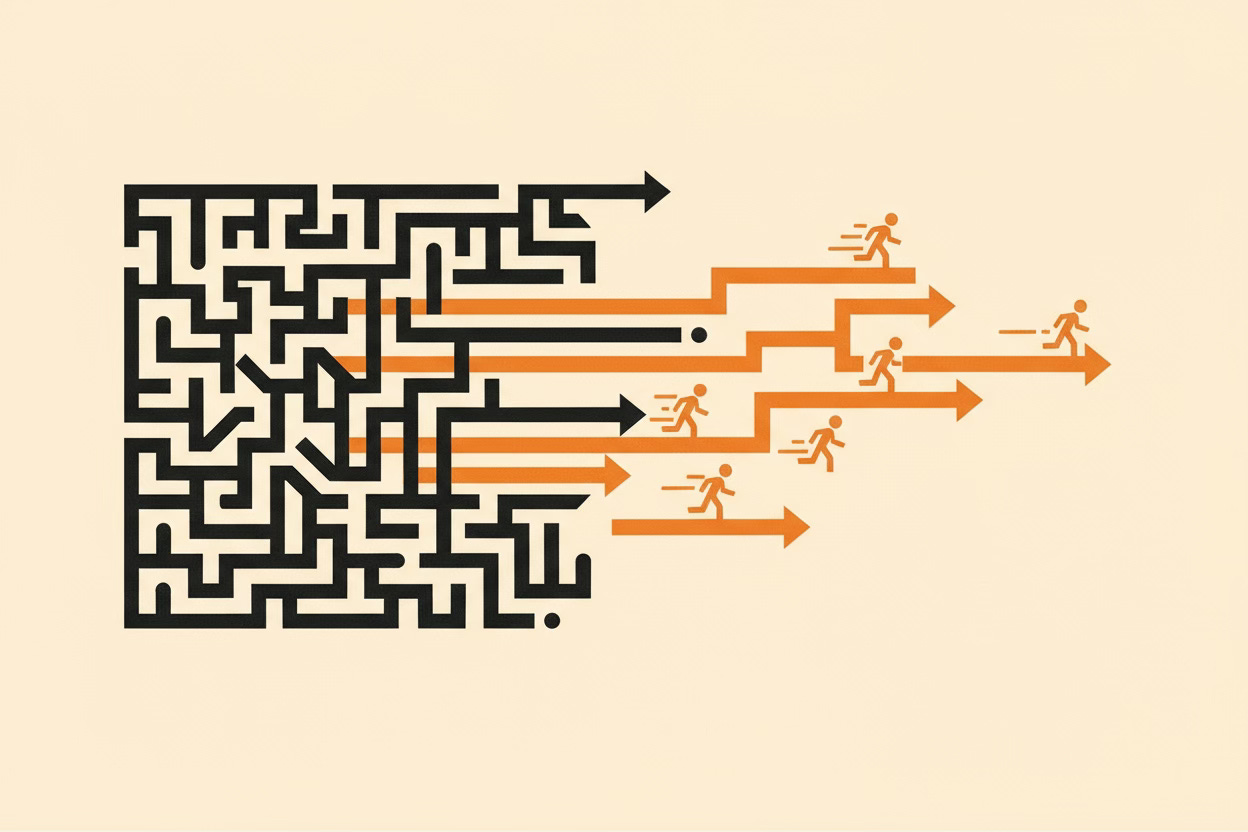
Change fatigue is setting in. Nearly two-thirds of U.S. workers experienced at least one organizational change in the past year, yet a third say their companies changes weren’t worth the effort, according to Eagle Hill Consulting. Employees see benefits in efficiency and collaboration but feel burdened by execution: only one in four believe their organization manages change effectively. Workloads and stress rose for nearly half of respondents, and most said managers failed to remove existing responsibilities to make room for transition.
The data reveal what many leaders overlook: employees can accept new tools or structures, but they reject poorly timed or ill-communicated shifts that feel detached from purpose. Employees are twice as likely to view product launches or technology upgrades as positive compared with culture shifts or return-to-office mandates. The best-received changes are those that stay within the “9-to-5” boundary rather than spill into personal life.
Eagle Hill’s CEO Melissa Jezior calls the problem one of method, not motivation. “The key to successful change is not just what you change but how you change.” Companies that pace transitions, tie them clearly to purpose, and equip mid-level managers as change leaders are likelier to sustain adoption. Without that, fatigue compounds and transformation stalls.
Recruiters get more efficient, but talent quality is still declining
Recruiters are handling record applicant volumes yet finding fewer candidates worth hiring. Nearly two-thirds say applications have surged this year, but much of that increase reflects desperation rather than depth. Employers report a flood of low-fit résumés and candidates leaning on automation tools to mass-apply.
The strain is prompting recruiters to rethink their funnel rather than simply widen it. Many are rebuilding sourcing pipelines, re-evaluating job criteria, and upgrading systems to filter better rather than faster. Yet the underlying issue runs deeper: too many candidates lack the adaptability and judgment modern roles require. The efficiency gains of recent years have only exposed how fragile the connection has become between hiring velocity and hiring quality.
Quote of the Week: Yesterday’s Success
“There’s nothing more dangerous than yesterday’s success. You can leverage it and learn from it, but I focus on the future and how to drive success for our employees and our workmates and our customers.”
— Workday CEO Carl Eschenbach
Reading List:
Why don’t we measure trust?
Executives consistently rank trust among the top qualities of effective leadership, yet few measure it with any rigor. While diagnostic tools now exist, from neuroscience-based organizational trust indices to leadership behavior surveys, most firms still treat trust as a feeling rather than a metric, the Harvard Business Review reports. Unmeasured trust leaves leaders blind to early signals of disengagement and reputational risk. The organizations now building trust dashboards and embedding behavioral measurement into performance systems are turning trust from a virtue into a competitive advantage.
Performance management suffers from a lack of clarity
Nearly half of organizations say performance management could lift productivity, but only one in five believes managers deliver feedback effectively. Research shows that inflated ratings, unclear goals, and inconsistent coaching continue to weaken these systems. Many firms are experimenting with AI to streamline reviews and goal setting, but the real differentiator remains human clarity that defines what excellence looks. Simplified scales, skills-based evaluation, and feedback training can restore credibility to a process most employees distrust.
How to manage perfectionists
Some employees undermine productivity not through neglect but overcommitment. The problem stems from workers applying luxury-level standards to mass-market work, redoing tasks, rejecting adequate output, and driving up costs, Inc reports. When excellence becomes inefficiency, leaders must intervene with absolute clarity about expectations and consequences. The lesson is not to reward indifference but to realign ambition with purpose. Quality matters only when it serves the right standard at the right scale.
Data Point: Spiraling
45%
The number of workers feel in control of their careers right now, as uncertainty from layoffs, a cooling job market, and AI transformation permeate their work lives.
In Other News
How the U.S. Economy Has Defied Doomsday Predictions on Tariffs. (Wall Street Journal)
Walmart CEO said paying its star managers upwards of $620,000 yearly empowered them to ‘feel like owners’. (Fortune)
The future of work is still human: Why we may be investing too much importance in the role of technology. (Financial Times)
The practice of ‘labor hoarding’—holding on to employees for fear of not being able to get them back later—has reached its end. (Wall Street Journal)
Over one-third of companies plan to replace entry roles with AI, survey says. (HR Dive)
Citi’s Ryan: Employee buy-in on AI will yield ‘innovation dividend’. (CIO Dive)
AI could save employees a full day of work per week — if they get training. (HR Dive)
To boost AI adoption, CIOs lean on training, guardrails. (CIO Dive)