

Welcome back to Human Capital Intelligence! Welcome to your go to 2026 source to keep up with the best insights from over 250 leadership, HR, and people sources. As always, we would love to hear from you at ken@reyvism.com with questions you’d like answered or topics covered.
Sent this by a friend? Sign up here to receive HCI in your inbox every week.
By Ken Stibler; Powered by Reyvism Analytics
Productivity without culture is a recipe for disaster
Many companies are dialing up productivity demands without fixing the systems that make productivity possible. Amazon’s new policy requiring weekly manager impact reports reflects a wider shift toward visible output tracking. But when organizations lack consistent expectations and working trust, documentation turns into defense, and accountability loses its edge.
Meanwhile, the old social fabric is fraying. Fewer people linger after hours. Fewer friendships form on the job. For younger employees, the absence of these informal cues leaves the workplace harder to read and harder to navigate. Culture has quietly become an operational dependency. When it is missing, performance tools lose traction, and even high performers pull back.
That’s where a sudden rise of culture coaches fits. Businesses are bringing in outside help to improve how teams make decisions, resolve conflict, and hold one another to clear standards. Culture is becoming a fixed cost of performance. Without strong norms, even the best systems break down under pressure.
Skill resilience requires pushing back against the theft of our attention (aka reading)
Our lives are increasingly flooded with tools that promise speed while quietly eroding our focus. Auto-summaries, feed algorithms, and AI assistants make it easy to consume more while understanding less. Over time, that shift is reshaping the cognitive habits behind good work. People scan, react, and move on. What they lose is the ability to stay with a hard problem and think deeply enough to solve it.
Read more: LinkedIn Data show people are scrolling longer on the site. (WSJ)
Reading (something an increasing number of Americans don’t bother with) offers a way back. Long-form fiction and nonfiction force the brain to process complexity without shortcuts. They train attention span, narrative memory, and the ability to hold ambiguity…all essential for navigating strategic work and leadership roles. But reading for pleasure continues to fall, especially among younger men, and the muscle of sustained focus is weakening across the board.
Quote of the Week: Distance Responsibility
“You can’t explain licensing or franchising to a customer.”
— Jim Fielding, former CEO of Claire’s Stores, on why brand blowback lands even when a location is independently operated.
Reading List:
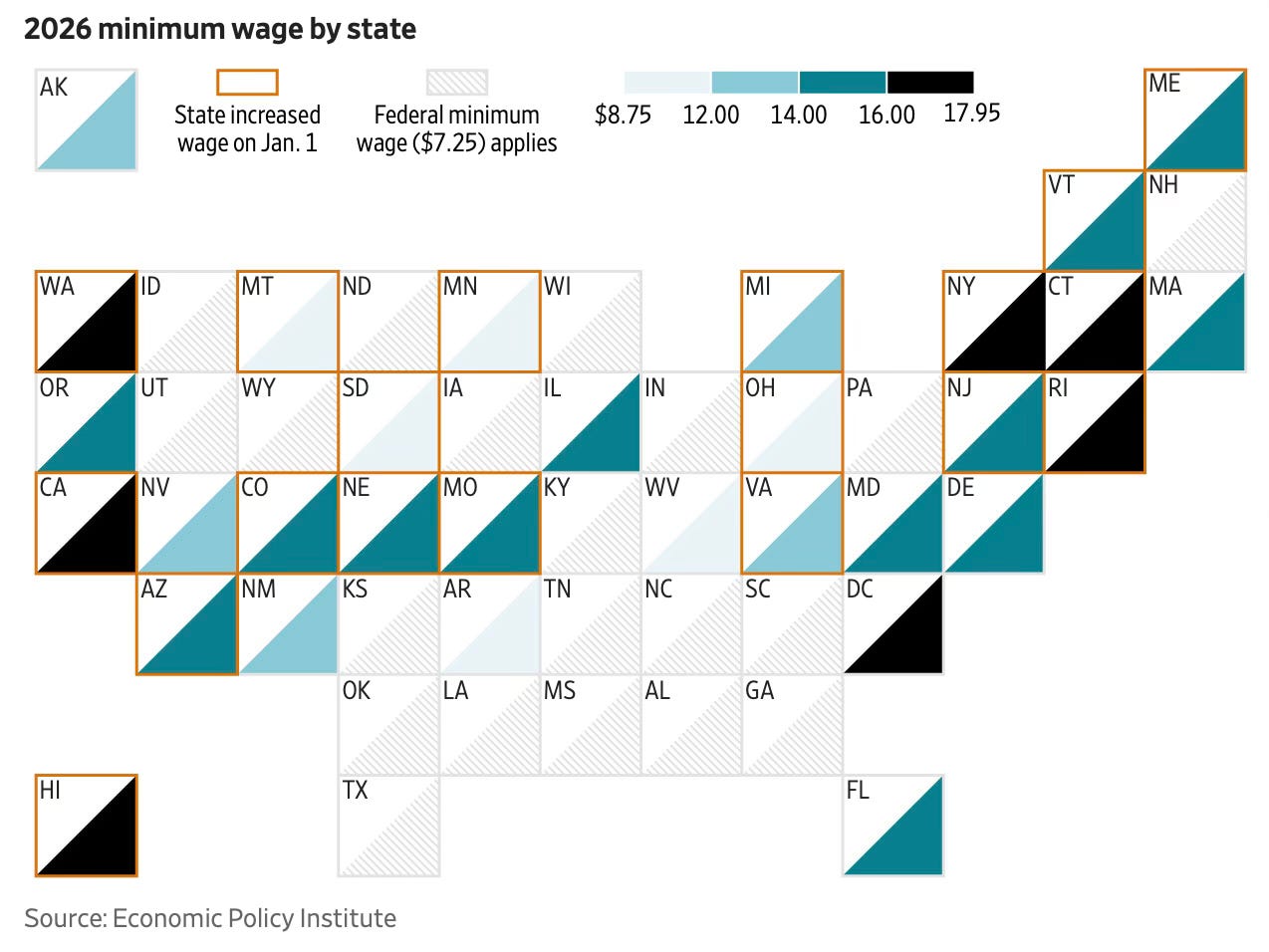
2026 ushers in a wave of new labor laws
New labor rules taking effect this month mark a broader regulatory shift. Nineteen states raised minimum wages, led by Washington at $17.13 an hour, and more workers now fall under $15-plus state floors than the federal baseline. At the same time, states are extending oversight beyond pay. Illinois expanded its Human Rights Act to cover algorithmic bias in hiring, Colorado and Texas added limits on AI use in employment decisions, and Oregon introduced stricter scheduling notice rules. The message for employers is clear. Labor compliance is now as much about systems and processes as it is about wages.
Hilton, ICE, and the new corporate crisis playbook
A Hampton Inn franchise in Minnesota became the center of a political firestorm after screenshots alleged it refused rooms to ICE agents. Hilton removed the property from its system within a day. The move was quick and decisive, but the incident revealed an ongoing vulnerability: customers do not care whether a location is franchised or company-owned. Brand accountability is absolute. In a social media environment where reputational damage can spread in hours, the margin for inaction is gone.
Even small businesses are getting CEOs security
Security spending for executives is rising, with the average disclosed off-the-job executive protection reached $112,000 in 2024, nearly double what it was four years ago. Behind the number is a structural change: event logistics are tighter. Spouses and children are briefed. Personal information is scrubbed or managed more actively. The pattern reflects a broader reality: visibility is risk, and even mid-market firms are reconsidering their posture.
Data Point: Kids Aren’t Alright
41%
Underemployment rate for recent college graduates according to New York Fed data
In Other News
Forget an MBA: Hasbro forces workers to sit through a Monopoly-style board game to see if they’re fit for the C-suite—and it’s a tactic approved by Reid Hoffman. (Fortune)
Fewer layoff announcements may be masking a deeper slowdown as white-collar and manufacturing hiring continues to fall. (Quartz)
Why AI Boosts Creativity for Some Employees but Not Others. (Harvard Business Review)
Recruiters are increasing their AI usage as pressure to hire intensifies. (HR Dive)
An analogue native’s guide to digital success: If employers want AI to transform work, they should pay attention to history’s technological flops. (Financial Times)