Accelerating skill gaps | Labor market manipulation | 'ADA' generation | More people live paycheck-to-paycheck | Engagement falls further
Welcome to the latest edition of Human Capital Intelligence. As always, we would love to hear from you at ken@stibler.me with news ideas, feedback and anything else you find interesting.
Sent this by a friend? Sign up here to receive HCI in your inbox every week.
By Ken Stibler; Powered by Reyvism Analytics
Societal acceleration outpaces skill development
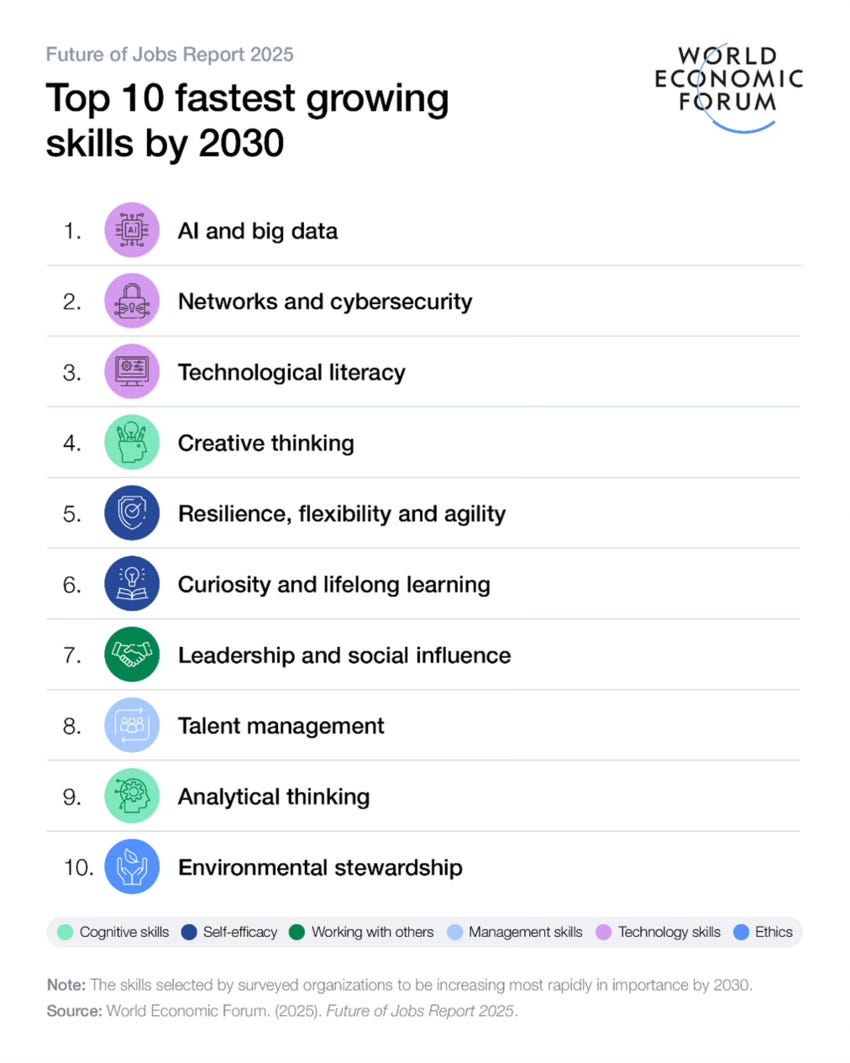
AI's rapid advancement is exposing a critical flaw in how companies approach employee development: the traditional model of one-off and periodic skill acquisition is fundamentally broken.
According to TalentLMS, nearly half of employees believe AI is advancing faster than their company's ability to train them, while 58% multitask during training and one-third quickly forget the content - clear indicators that current learning approaches are failing to engage or sustain skill development.
This commodification of learning into discrete training sessions, rather than treating it as a core business process, appears increasingly misaligned with the pace of technological change.
While 77% of HR professionals claim their organizations are prioritizing upskilling initiatives for 2025, particularly in AI and sustainability, the execution reveals reactive rather than proactive skill development. The stark reality is reflected in TalentLMS's finding that 58% of employees multitask during training sessions and one-third quickly forget content - symptoms of poorly designed and inadequately prioritized learning programs.
The problem starts at the top, with leadership treating AI adoption and skill development as separate challenges rather than an integrated imperative. This top-down training gap creates a cascading effect throughout organizations, where CHROs overwhelmingly focus on experimental AI pilots (62%) rather than systematic reskilling strategies (7%) for roles at risk of AI disruption. More troublingly, over half of vice presidents and directors report receiving no AI training themselves, creating a knowledge gap that cascades throughout their organizations.
Future of Jobs Report 2025: 78 Million New Job Opportunities by 2030 but Urgent Upskilling Needed to Prepare Workforces. (World Economic Forum)
This disconnect is creating tangible business impacts. LinkedIn's Work Change Report reveals that 73% of HR professionals find less than half of job applications meet their criteria, despite a 300% surge in AI-related hiring over the past eight years.
Below the lack of time, money, and motivation which hinder continuous upskilling lies the broader challenge integrating learning into work processes. The underlying challenge is cultural: companies need to shift from viewing skill development as a series of training programs to embedding continuous learning into daily operations.
This is especially crucial given AI's compounding rate of advancement, which means today's cutting-edge skills could be obsolete within months. Organizations that treat learning as a core business process, rather than a periodic initiative, will be better positioned to adapt to accelerating technological change.
HCI View: For small and medium-sized business leaders looking to catch up, the immediate priority should be establishing a lean, continuous learning infrastructure that emphasizes practical AI literacy and prompt engineering skills while leveraging partnerships with larger tech companies and educational institutions to access more sophisticated training resources.
Thanks for reading Human Capital Intelligence! Subscribe for HCI in your inbox every week
A portrait of labor markets’ future from the finance sector
The finance sector is emerging as a harbinger of broader labor market transformations, with recent data from Bloomberg Intelligence projecting up to 200,000 job cuts in global banks over the next three to five years due to AI adoption. The sector's aggressive AI implementation is expected to boost pretax profits by 12% to 17% by 2027, adding up to $180 billion to banks' combined bottom lines.
While mass layoffs loom for many traditional (i.e. manual) banking roles, an intense war for specialized talent is simultaneously driving unprecedented retention measures. Some firms are extending non-competes to nearly 2 years for portfolio managers and quantitative analysts while offering aggressive compensation packages.
The bifurcation between highly valued specialists and increasingly automated general functions is reflected in the 13% growth in investment headcount at multistrategy firms - even as traditional analyst roles have declined by 30% at major banks over the past decade. CIOs and technology leaders increasingly view AI not just as a productivity tool but as a direct substitute for human capital, with 68% of business leaders citing investor pressure to demonstrate returns on AI investments as a key driver of this transition.
The concept of "cost avoidance" has emerged as a key justification for AI investment, with companies like TS Imagine reporting that AI can perform certain tasks at 3% of human worker costs. Palantir Technologies has already reduced future headcount projections by 10-15% through AI implementation, signaling a broader shift toward what executives euphemistically call "doing more with the same." This trend is particularly pronounced in software development and customer service, where companies are actively deferring or reducing planned hiring.
HCI View: Small businesses are much less likely to automate than larger companies, but as the tech becomes more easy to use having a plan of which roles truly require human judgment versus those that can be automated is a good insurance policy if the competitive landscape suddenly shifts.
Referrals become the ‘third door’ in a broken labor market
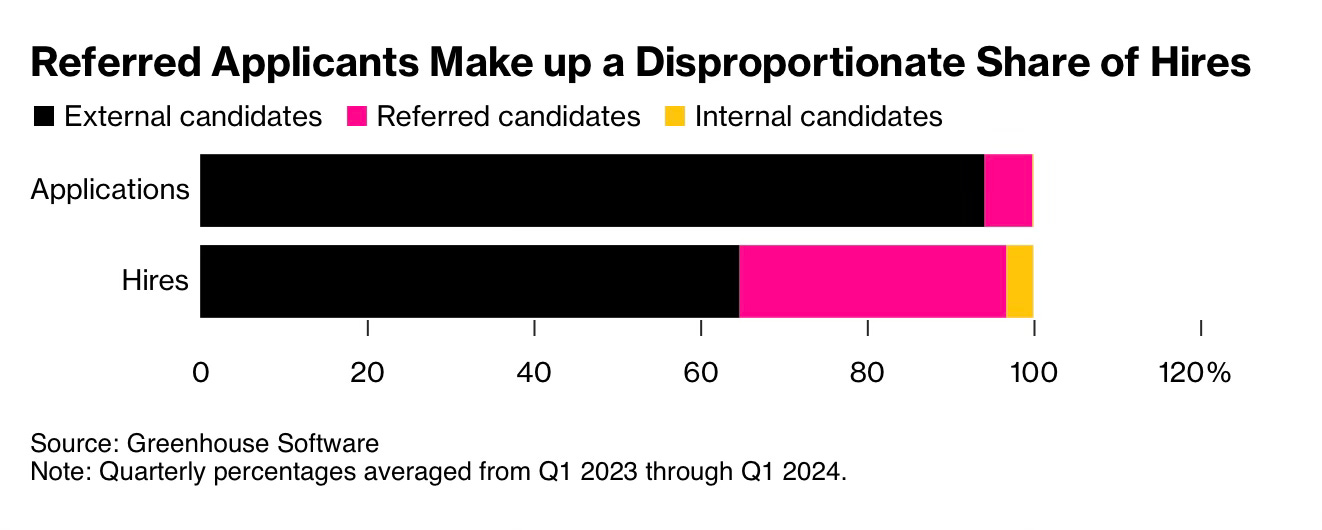
As office jobs get harder to find, underground markets for referrals have emerged in corporate hiring. Platforms like Refermarket and ReferralHub allow you to purchase employee referrals for fees ranging from $3 to $50, effectively creating a "third door" into competitive companies. This marketplace comes as traditional job applications face increasingly long odds, with hiring platform Greenhouse reporting that external applicants have just a 1 in 200 chance of being hired compared to a 1 in 25 chance for referred candidates.
Read More: Even Harvard M.B.A.s Are Struggling to Land Jobs: The latest crop of elite business-school graduates are taking months to find new jobs. (Wall Street Journal)
While platforms like Blind and Refermarket claim to democratize access to coveted positions at top employers, with some amassing over 10,000 users, major companies including Goldman Sachs and Google explicitly prohibit such "courtesy referrals." The trend highlights growing inefficiencies in traditional hiring channels while raising concerns about the commodification of employee referral programs, which were originally designed to leverage trusted professional networks for quality candidates.
Quote of the Week: The C&V in Uncivil
Candidates and recruiters seemingly haven’t always had the best relationship, but what was previously a mostly-neutral, transactional interaction has become an emotional one, rife with finger pointing: Job seekers say they’re getting ghosted by recruiters or rejected by AI within moments of applying.
Hiring teams say they can’t handle the growing pile of résumés on their desks, made worse by the growing arsenal of AI tools that candidates are using to speed up the application process.
Mental health and litigation fuel the rise of ‘ADA’ generation
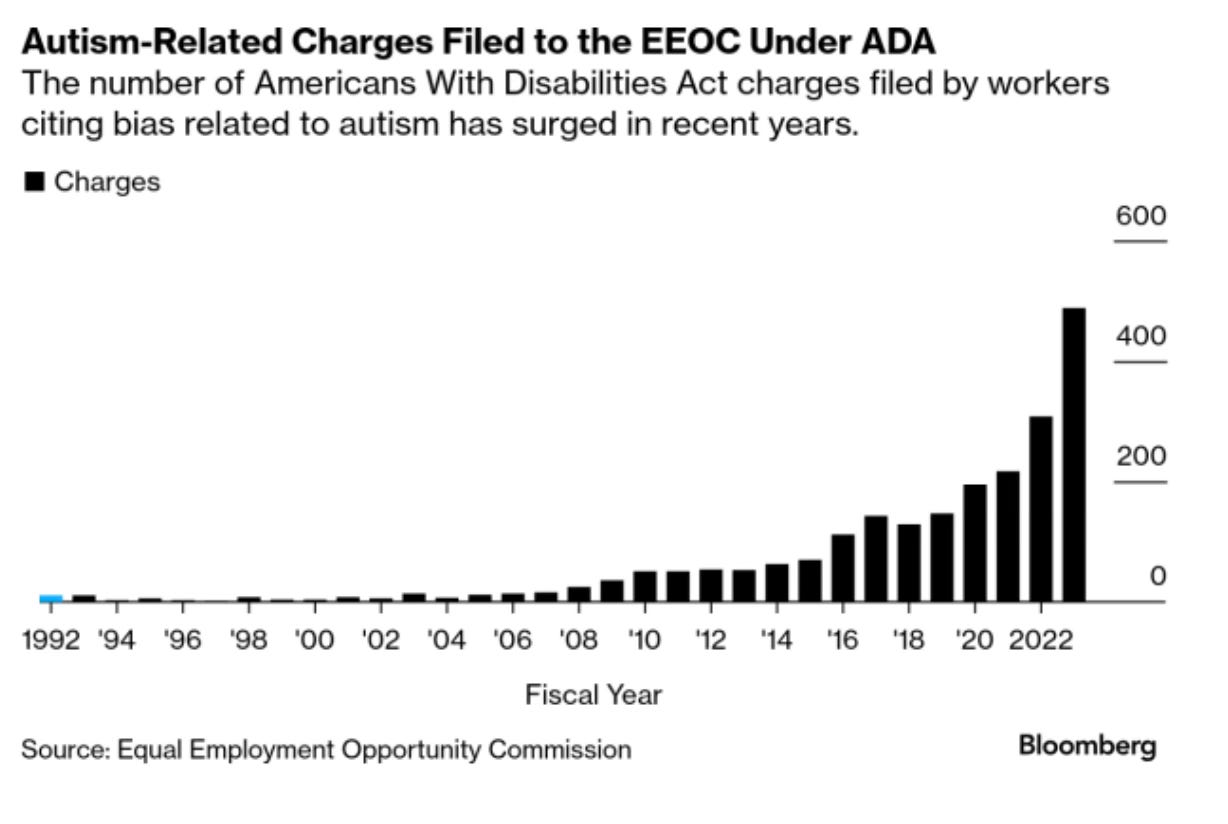
Disability discrimination claims from neurodivergent employees have surged exponentially, with autism-related charges filed to the EEOC jumping from just 14 in 2003 to 488 in fiscal year 2023. This surge comes amid heightened awareness of neurodivergent conditions, particularly among Generation Z workers, who have been dubbed the "ADA Generation" by disability advocates.
The Covid-19 pandemic has accelerated this trend with no signs of slowing as disability protections become a front in the fight over return to office. Legal experts and disability advocates emphasize that while these developments present challenges, employers' focus should shift from fear to education and understanding, as they work to create more inclusive workplaces while adhering to ADA requirements.
HCI View: Check your policies, while it’s annoying it is certainly preferable to a lawsuit. It’s also worthwhile to watch “how to sue your boss” section of TikTok to understand the language and signs that an employee might be trying to game the system.
Number of employees living paycheck-to-paycheck rises
Major employers are expanding their financial wellness offerings as mounting evidence suggests workers, particularly Gen Z, are facing unprecedented financial strain. Chipotle’s recently expansion of financial benefits to including student debt repayment and pay-on-demand services as their internal data shows that 73% of their 125,000-strong workforce belongs to a generation struggling with credit card debt and financial literacy challenges.
The move reflects a broader deterioration of employee financial health, with Guardian Life Insurance reporting that only 32% of workers rate their financial wellness as good, down 14% from 2022. This financial pressure is intensifying despite steady compensation growth forecasts, with Mercer projecting 3.7% total salary increases for nonunion workers in 2025, even as Monster's 2025 Work Watch Report reveals that 95% of workers feel their wages haven't kept pace with inflation, forcing 82% to tap into savings and 41% to reduce retirement contributions.
HCI View: Many leaders have an incomplete, at best, picture of what pressures employees bring into work with them, so calibrating listening efforts to better understand of employees’ out of work distractions a good start to more creative and compassionate compensation.
Corporate purpose needs a refresh as employee engagement collapses
Employee engagement has plummeted to its lowest level in a decade, with Gallup reporting only 31% of U.S. workers feeling engaged at work by the end of 2024. This decline coincides with mounting evidence that traditional corporate purpose initiatives are failing to resonate.
Research from Judge Business School and the Top Employers Institute suggests that leaders may need to fundamentally rethink their approach to employee motivation, finding that career development and individual empowerment prove more effective at boosting loyalty than abstract mission statements. The data shows Gen Z claiming the steepest engagement decline of five percentage points year-over-year, while basic workplace needs such as role clarity and personal development have seen double-digit percentage drops since 2020.
HCI View: This can feel abstract to solve, but just providing clarity around where the company is going and what that means for an employee translate to marked improvements in engagement.
Data Point:
46%
The percentage of remote workers that say they’d leave their job if they could no longer work from home according to Pew Research.
In Other News:
An '80s-Era Policy Was Holding the UPS Store Back. Here's How Its President Discovered the Problem — and Changed It. (Entrepreneur)
Business leaders anticipate hiring more after last year’s uncertainties around politics, AI and the economy. (Wall Street Journal)