

Welcome to the latest edition of Human Capital Intelligence. As always, we would love to hear from you at ken@stibler.me with news ideas, feedback and anything else you find interesting.
Sent this by a friend? Sign up here to receive HCI in your inbox every week.
By Ken Stibler; Powered by Reyvism Analytics
What’s Working:

Whose responsibility is it to fix Gen Z?
While both seasoned executives and Gen Z workers acknowledge a significant preparedness gap, drastically different life experience and values has create a chasm between the two groups.
One tangible example of this is in the skills perception gap, where Gen Z employees prioritize hard skills while their bosses bemoan their interpersonal approach. Their focus on technical proficiency, while valuable, has created a blind spot in developing the human-centric capabilities that senior leadership considers paramount.
From the senior management perspective, the immediate inclination is to criticize perceived shortcomings in workplace readiness. However, this overlooks the unique circumstances that have shaped Gen Z's professional development, including disrupted internship opportunities during COVID-19, challenging first-job markets, and misaligned academic preparation.
The fact that 67% of young professionals would endure a toxic workplace for growth opportunities suggests that younger workers are not lacking in commitment – rather, they're desperately seeking structured development paths that often fail to materialize.
For meaningful progress, both generations must make concessions. Senior leadership should abandon the expectation that entry-level workers will arrive fully formed with traditional workplace soft skills, and instead invest in targeted development programs that bridge technical and human capabilities. The striking success of co-op programs and apprenticeship models demonstrates the potential of alternative skill-building approaches.
Simultaneously, Gen Z must recognize that technical proficiency alone is insufficient for career advancement, embrace humility about their deficiencies, and actively seek opportunities to develop interpersonal capabilities, even when these skills seem less quantifiable.
While generational divides are more of a punch-line than a real leadership priority, the fact that most Gen Z workers often don't know they can turn to HR for help with basic workplace processes suggests that building common ground and clear communications offers a tangible first step for both sides.
AI-optimism reverses, with leadership rushing in just as employees slow down
Just as corporate America reaches peak enthusiasm for AI - with 91% of organizations expecting it to become core to their business strategy - workers are quietly staging a rebellion. Slack's extensive survey of 17,000 office workers reveals a dramatic slowdown in AI adoption, with U.S. implementation barely creeping from 32% to 33%, compared to last year's robust 8 percentage point surge. This widening gulf between executive ambition and workforce reality represents a critical failure in corporate AI strategy that threatens to derail digital transformation efforts.
CEOs and experts share how AI is shaking up the workforce—including an instance of ‘robots outcompeting humans in real time’. (Fortune)
The workforce's resistance stems from a toxic combination of fear and inadequate support. Half of U.S. workers admit to concealing their AI use from managers, fearing they'll be labeled as incompetent or lazy, while a staggering 61% have spent less than five hours learning AI tools. This training deficit is particularly ironic given that 76% of workers express urgency about becoming AI experts - revealing a workforce that simultaneously craves AI competency while fearing the professional consequences of acquiring it.
The disconnection extends to fundamental disagreements about AI's purpose in the workplace. While leadership may envision AI freeing up time for innovation and upskilling, workers anticipate being saddled with more administrative tasks - not less. This misalignment, combined with what Slack's SVP Christina Janzer describes as excessive burden on workers to "figure out how to use AI" on their own, suggests that without a dramatic reset in how organizations approach AI implementation, corporate America's AI ambitions may be dead on arrival.
Quote of the Week:
“30% of employees are actually avoiding more people at work than they did two years ago, and of course that’s not going to have a very positive effect on the quality of collaboration. Clearly, physical proximity and co-location is not a silver bullet to solve the collaboration challenge.”
— Jessica Knight, VP of Research at Gartner
Reading List:
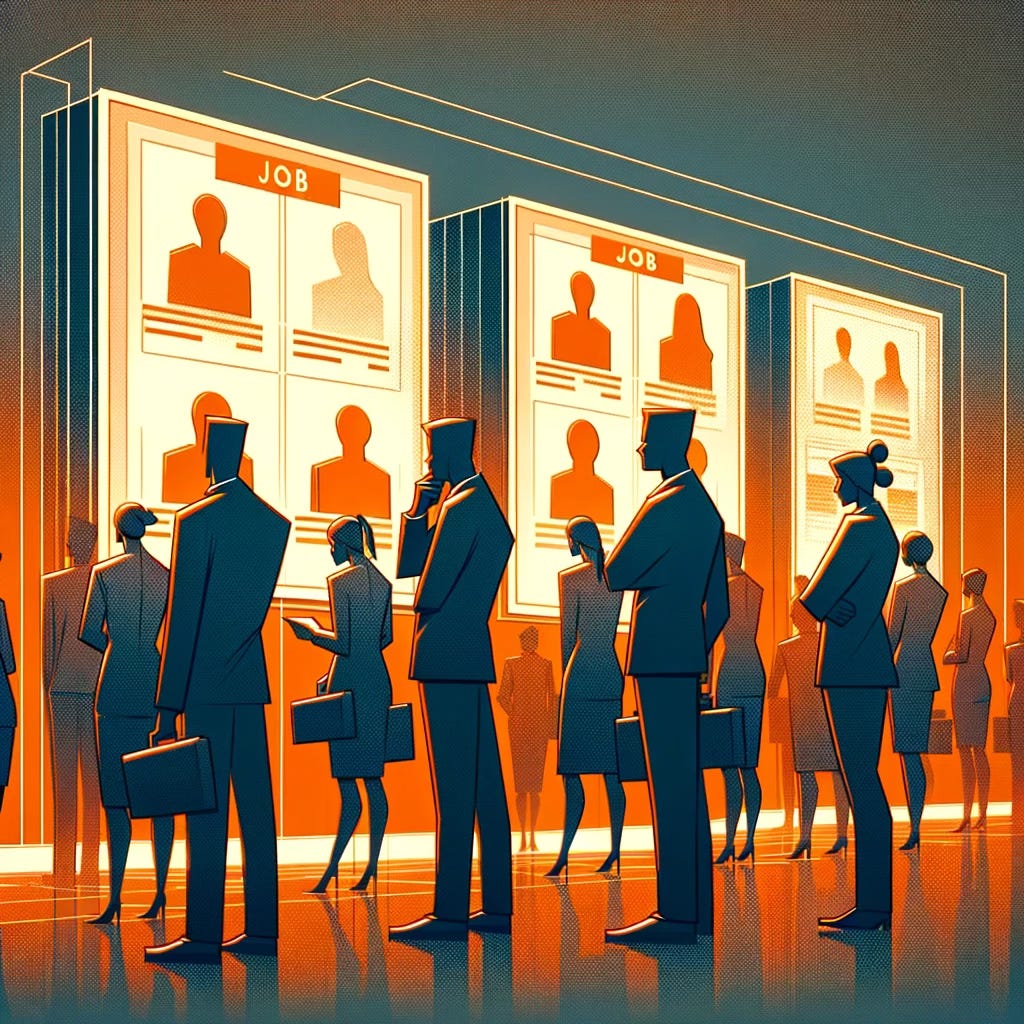
Getting real about post-AI recruitment
The fundamental disconnect between recruiter expectations and job market realities has reached a breaking point that virtually demands AI intervention. While recruiters insist on deeply personalized materials - with 87% calling them "essential" - candidates are facing application volumes in the hundred to thousands just to secure an offer.
72% of recruiters expect application packages to customized, requiring role-specific experience, personality, and careful attention to the job description. Yet applications receives less than two minutes of recruiter review time on average. When multiplied across hundreds of applications, the cost-benefit equation of engaged applying simply doesn't compute for human-only application efforts.
In turn, the “AI-ification” of job applications isn’t (just) a rejection of personalization - it's a rational response to system where the effort demanded in early hiring stages has detached from the probability of success.
Government labor body deems ‘captive audience’ meetings illegal
In a landmark decision that overturns 76 years of precedent, the National Labor Relations Board (NLRB) has ruled that mandatory "captive audience" meetings - where employers compel workers to attend presentations about unionization - violate federal labor law. The ruling finds these commonly anti-union tactics violate Section 8(a)(1) of the National Labor Relations Act.
While many HCI readers are not the type of businesses which traditionally worry about unionization, the ruling potentially creates another opening for employees - inspired by social media tactics of how to sue your company into a settlement.
Being kind in the office reduces your stress
Workers would take a pay cut to work under more emotionally intelligent leadership, according to new HP research, while a separate study demonstrates that workplace kindness creates measurable improvements in well-being, stress levels, and institutional connection. This research established that specific metrics for kindness - including trust, autonomy, and fair treatment - deliver demonstrable increases on those displaying kindness.
The study moves beyond traditional workplace satisfaction research by demonstrating a virtuous cycle where recipients of kindness are more likely to extend similar considerations to others, creating a rippling effect throughout organizations.
Data Point:
2.2%
The rise in U.S. labor productivity - the amount of output per worker - in the third quarter of 2024 alone. Government labor data shows productivity accelerating after a long pre-Covid lull, likely due to the adoption of AI.
In Other News:
When Qualified Women Resist the Leader Label: Many women are less likely than men to see themselves as leaders despite their demonstrated abilities. (MIT Sloan)
Silicon Valley is on edge as Trump's immigration policy sparks fears of a high-tech talent shortage. (Business Insider)
The Bosses Who Don’t Care About Your Ivy League Degree: Elite university pedigrees can work against job seekers in some corners of the corporate world. (Wall Street Journal)
While most employees find meaning at their job, 35% say they are thinking about a change. (HR Dive)
Despite shift under Trump 2.0, EEOC Has a 3-1 Democratic Majority. (HR Advisor Daily)
$35K overtime salary threshold back in effect: A federal judge ruled that the Department of Labor’s 2024 rule exceeded the agency’s authority and is unlawful. (HR Dive)
Predictive AI Can Improve Sales Performance Management from better approaches for account scoring, to quota optimization, and related decisions. (MIT Sloan)
Sales Meetings and Long Lunches Fade in Favor of Pickleball and LinkedIn: Younger generations of business-to-business sales execs change the way companies market themselves to clients. (Wall Street Journal)
Minimum wage workers struggle to afford rent in all of the country’s 50 largest real estate markets. (New York Times)