

Welcome back to Human Capital Intelligence! Welcome to your go to 2026 source to keep up with the best insights from over 250 leadership, HR, and people sources. As always, we would love to hear from you at ken@reyvism.com with questions you’d like answered or topics covered.
Sent this by a friend? Sign up here to receive HCI in your inbox every week.
By Ken Stibler; Powered by Reyvism Analytics
‘Sink or swim’ engagement is back, but leadership still determines who survives
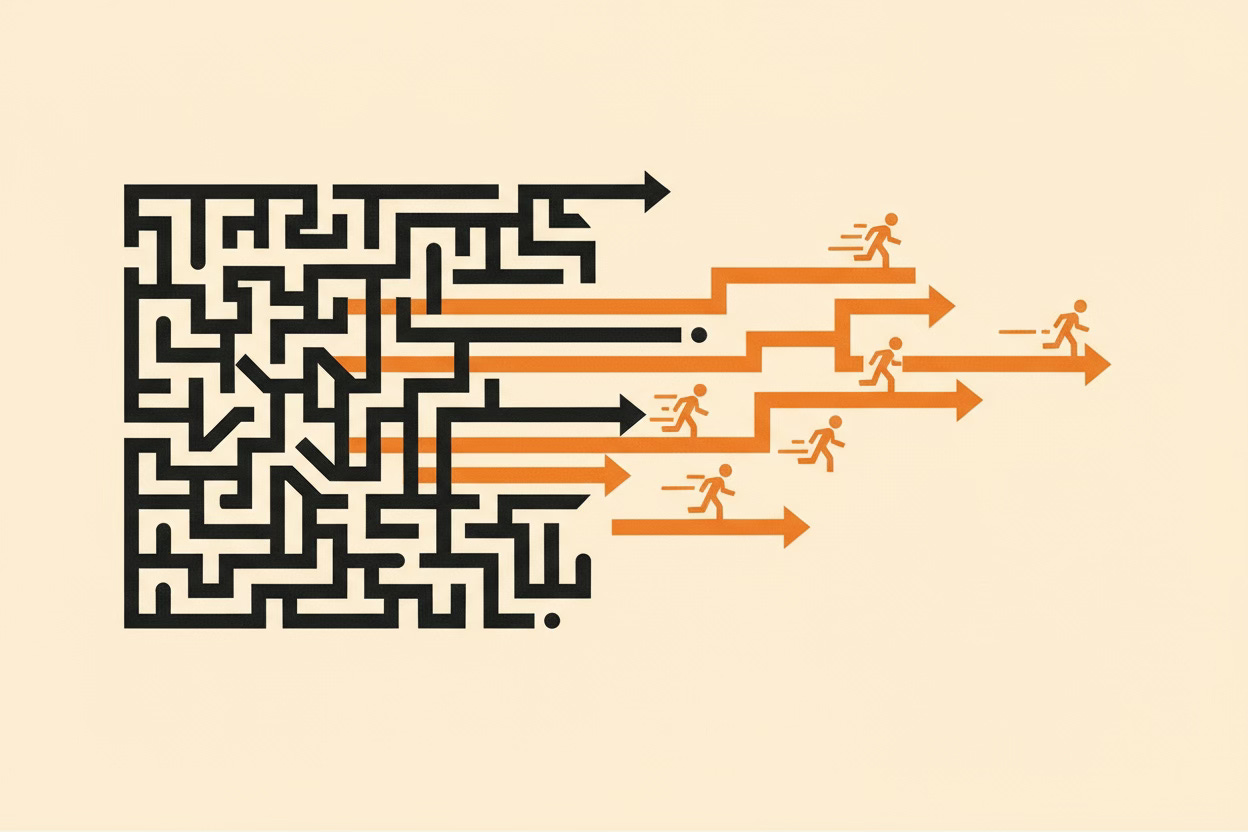
The labor market has shifted decisively back toward employers, and with it, a harder-edged management philosophy is re-emerging. As hiring slows, layoffs linger, and AI reshapes cost structures, many organizations are quietly abandoning the softer engagement strategies that defined the post-pandemic years. Performance expectations are rising, perks are disappearing, and loyalty is no longer assumed or rewarded.
This is not simply a return to pre-2020 norms. What makes the current moment distinct is that companies are tightening expectations while markets remain profitable and equity values strong. Employees are being asked to do more, with less leverage, in an environment where quitting is riskier and internal mobility is less visible. “Sink or swim” is becoming an implicit “engagement” strategy, even when leaders do not label it as such.
The organizations that will separate themselves are not those that squeeze hardest though. In a down labor market, employees are not asking for indulgence, but for predictability, fairness, and a credible path forward. Firms that invest in manager capability, transparent expectations, and real development will retain commitment even as power shifts back to employers. Those that do not may find that compliance replaces engagement, and that erosion is far harder to reverse.
Lack of career development changes employee loyalty
Even amidst the squeeze, employee loyalty has not disappeared, but it has become conditional on clarity. Workers may stay put in a weak job market, yet their attachment to employers depends on whether they see forward motion in skills, scope, or opportunity. When career paths are unclear, loyalty does not deepen. It simply pauses.
This creates a hidden retention risk. Employees hedge by taking on side projects, building portable skills, or mentally detaching, even if they are not actively job hunting. Employers that provide career clarity without promotions or pay increases can retain talent through the cycle. Those that delay will face attrition the moment conditions improve.
Quote of the Week: Little Changes, Big Difference
“You don’t need grand, expensive programs to make a real difference. Sometimes the most impactful benefits come from listening closely to employees and removing friction from their lives.”
—Eric Stark, cofounder and president at Slate, which added home cleaning services as an employee benefit after one worker requested it on LinkedIn
Reading List:
CEO confidence in short-term company growth has declined sharply
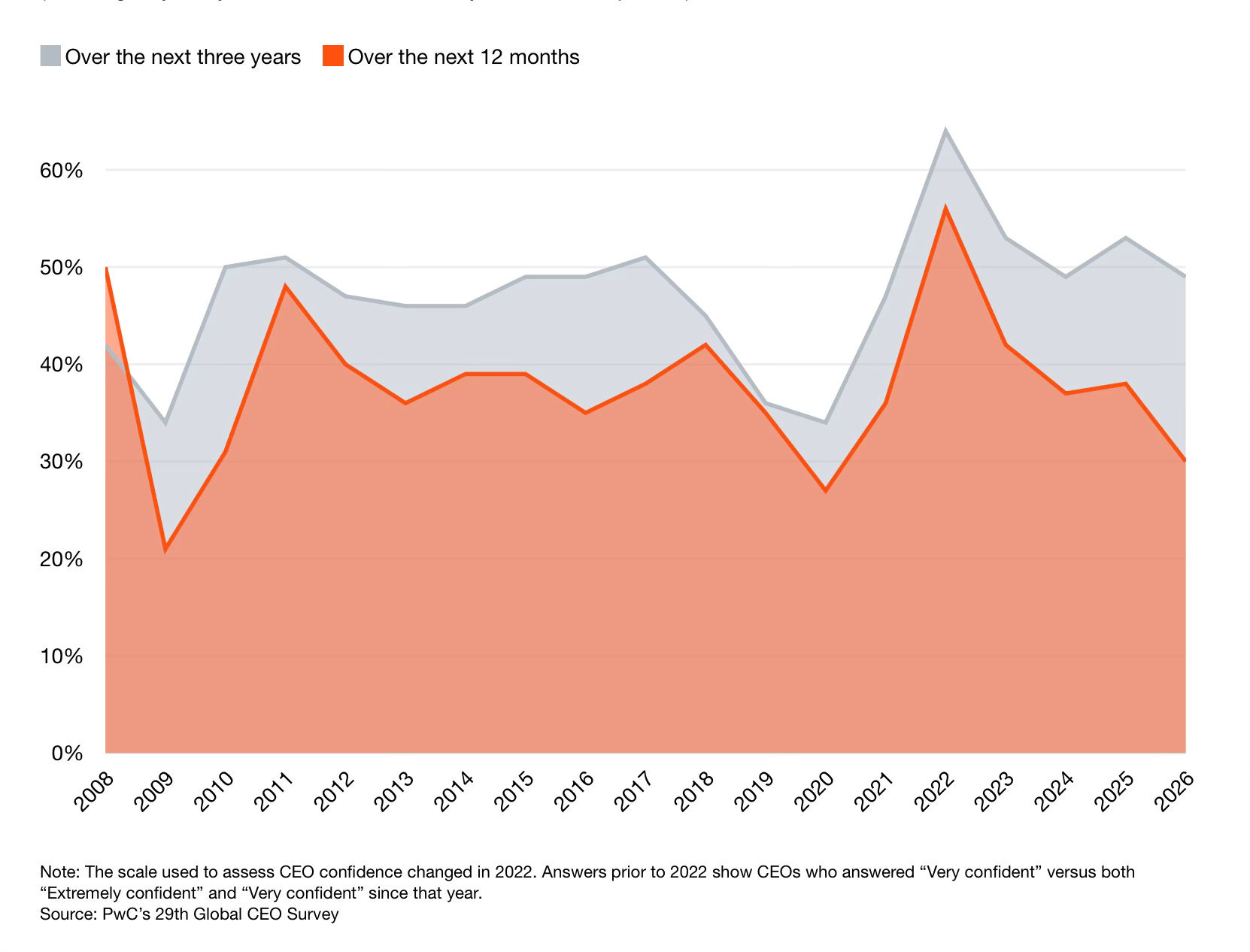
AI becomes the defining leadership topic as CEO confidence hits covid-low
CEO confidence in growth and execution has fallen to levels last seen during the pandemic, even as investment in AI accelerates. The tension is no longer about whether to adopt AI, but whether leadership teams can convert spending into durable performance gains. For many executives, the anxiety is not technological but organizational, stemming from uncertainty over skills, structure, and accountability.
Employee training is the investment that pays off twice
New research suggests that the return on training investments extends beyond frontline productivity. Better-trained employees reduce dependency, rework, and escalation, freeing managerial time and attention for higher-value decisions. Nearly half of training’s payoff may come indirectly through improved managerial leverage, a benefit most ROI models fail to capture.
AI’s hidden management tax becomes a drag on efficiency
While AI promises time savings, many organizations are losing a meaningful share of those gains to verification, correction, and oversight. Without clearer role design and stronger baseline skills, managers absorb the burden of monitoring AI-assisted work. In practice, this shifts cognitive load upward, limiting productivity improvements and increasing leadership strain.
Data Point: Not too confident
40%
Percentage. of productivity gains in the workplace due to artificial intelligence are being lost to rework and low-quality output, according to new research from Workday.
In Other News
Trust has become the crisis CEOs can’t ignore at Davos, as new data show 70% of people turning more ‘insular’. (Fortune)
Front-line supervisors are often promoted without leadership skills, Gallup says. (HR Dive)
Thinking about HR succession? Expect to appoint a first-timer. (HR Brew)
Policies Aren’t Enough to Retain Top Talent. You Need Systems. (HBR)
The AI perception gap: How to ensure employers and workers are ready for imminent transformation. (World Economic Forum)
As organizations race to adopt AI in 2026, Marsh’s Mercer says empower talent and redesign work to achieve meaningful gains. (Mercer)
Measuring US workers’ capacity to adapt to AI-driven job displacement. (Brookings)