

Welcome to the latest edition of Human Capital Intelligence. As always, we would love to hear from you at ken@stibler.me with news ideas, feedback and anything else you find interesting.
Sent this by a friend? Sign up here to receive HCI in your inbox every week.
By Ken Stibler; Powered by Reyvism Analytics

CEO roles changes uncomfortably in line with a change world
The modern CEO's role has become a study in contradictions, with McKinsey Chief Bob Sternfels observing that leaders must now simultaneously be "stoic in the face of disruption" while bringing humor to serious matters, and maintain confidence while exhibiting humility. This increasingly complex balancing act reflects a fundamental shift in leadership demands, with CEOs now juggling twice as many critical issues as they did a decade ago.
The pressure points have multiplied dramatically, driven by technological disruption, political tensions, climate change, and post-pandemic workforce dynamics. BCG's research reveals that 40% of corporate leaders feel unprepared for market shocks in 2025, despite years of navigating major disruptions. The challenge is compounded by the need to balance immediate cost management - cited as the top priority by one-third of leaders - with strategic investment in innovation and growth.
The skillset required for modern leadership has expanded far beyond traditional executive capabilities. According to a Harvard Business Publishing study, 70% of HR leaders emphasize the importance of continual learning and growth to master an ever-wider range of leadership behaviors, 58% stress the need for improved resilience in the face of constant change. This evolution has prompted organizations like KPMG to develop comprehensive executive development programs focusing on wellness, leadership impact, and sustainable high performance.
The complexity is particularly evident in the AI transformation challenge, where BCG reports 75% of executives list AI as a top-three priority, yet three-quarters struggle to realize tangible value from their investments. Leaders must now personally drive cultural change while maintaining strategic focus, with BCG recommending a "10-20-70" resource allocation principle: 10% to algorithms, 20% to technology and data, and 70% to people and processes.
The solution to this increased complexity is in more clarity - the intelligence needed to chart a path - and in adaptive and delegate leadership. Anecdotally in startups HCI is talking to, companies are increasingly separating the role of the CEO and the strategic leader, with a visionary to look at the horizon and chart a direction (CSO or President), the CEO to chart a path and align the organization, and a COO (with the help of functional Chief of Staff roles) to execute.
The stakes are high - as BCG notes, companies falling short of their strategic targets underperform their peers by an average of 9 percentage points in total shareholder returns.
HCI View: Wellness is often something for other people, not for us. But sustainability is key with what’s shaping up to be a marathon of change. Identify the minimum amount of rest for peak performance and stick to it. Crowdsource ideas from others (like a Vistage group!). And activate your competitive side to unlock the tenacity needed to confront the new foe of immense complexity.
Political uncertainty sinks economic sentiment
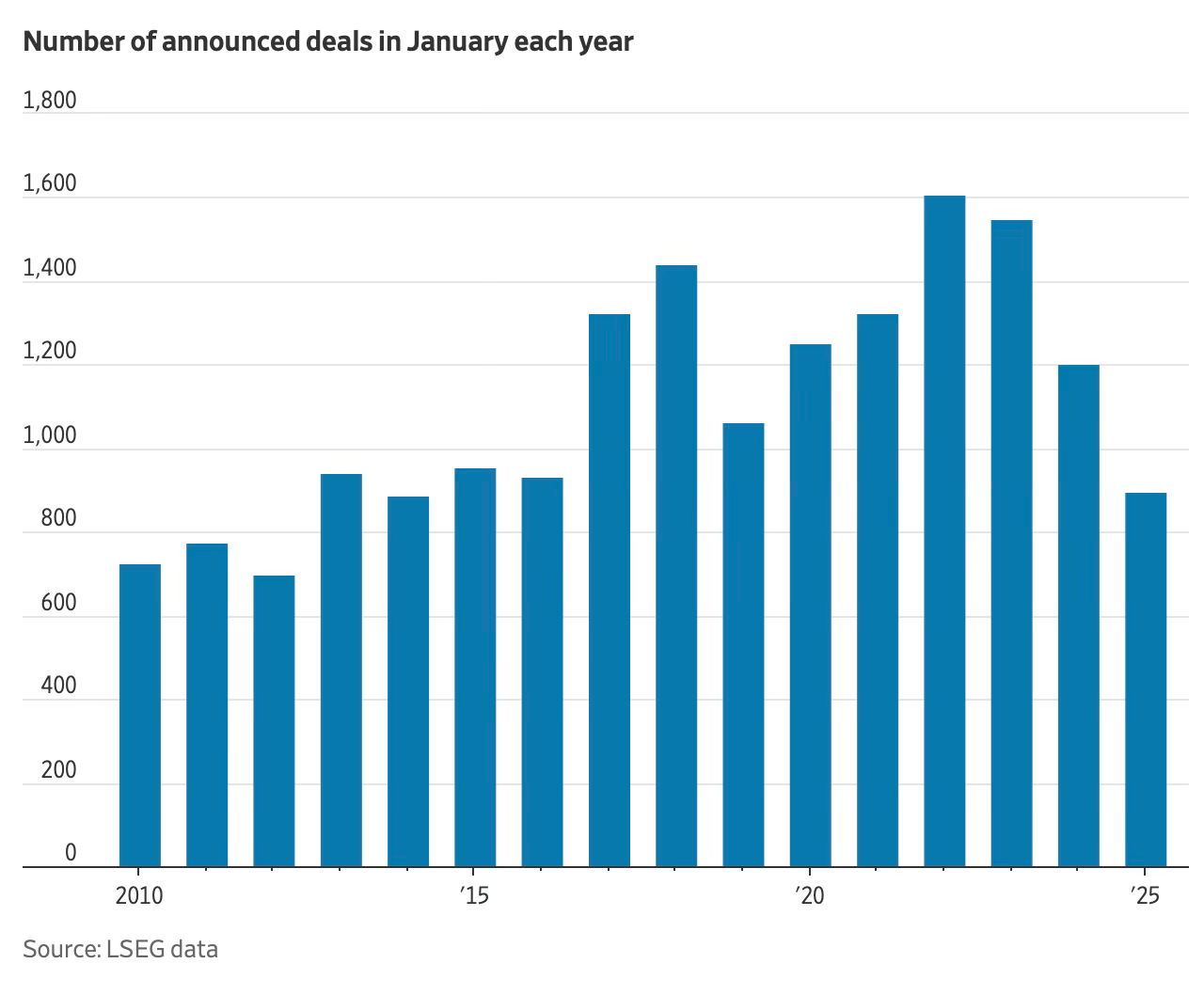
Well that was a quick turnaround. The optimism seen by CEOs around policy stability, deregulation, and strong “animal spirits” has rapidly dissipated as President Trump's aggressive trade policies send shockwaves through corporate America. Dealmaking activity has plummeted to its lowest level in a decade, with January M&A activity falling 30% decline from the previous year. This is despite widespread forecasts that Q1 25 would be a boom for pent-up M&A activity tempered by an aggressive Biden DoJ and FTC.
The implementation of sweeping tariffs targeting China, Mexico, and Canada has triggered the establishment of "tariff war rooms" across Fortune 500 companies, as executives scramble to navigate an increasingly volatile trade landscape. While Mexico and Canada have secured a temporary 30-day reprieve, the uncertainty has already rippled through supply chains, with industries from automotive to insurance bracing for potential cost increases. The American Property Casualty Insurance Association warns that tariff-induced price hikes could add $3,000 to the cost of each new vehicle.
All CEOs are bewildered by these non-strategic tariff tantrums being directed at our closest allies instead of adversaries.”
— Jeffrey Sonnenfeld, professor at Yale School of Management
Corporate leaders are adopting a notably more cautious stance, with executives increasingly using terms like "fragility," "volatility," and "wait and see" in their market outlooks. One CEO compared the current business environment to Disney World's Space Mountain ride, describing it as a journey through darkness with unexpected turns.
HCI View: Time to get intelligence on political risks - previously the domain of large companies only. Both parties are now anti-business in some ways and pro-business in others. Ensure you know whose responsibility it is to identify and respond to external pressures - there is too much potentially material noise for the CEO to be the one one looking outside.
Quote of the Week: Maybe don’t fire HR first?
When USAID fired staff over the last weeks, it sent an email out to hundreds if not thousands of staff about next steps. However, soon after the email went out, the majority of the employee relations team—including the employee with whom staffers had been directed to share their personal information—was placed on administrative leave. This created understandable chaos and even more understandable questions about why the HR team was in the first round of layoffs to begin with.
Reading List:
A new kind of competition emerges as “AI native” companies mature
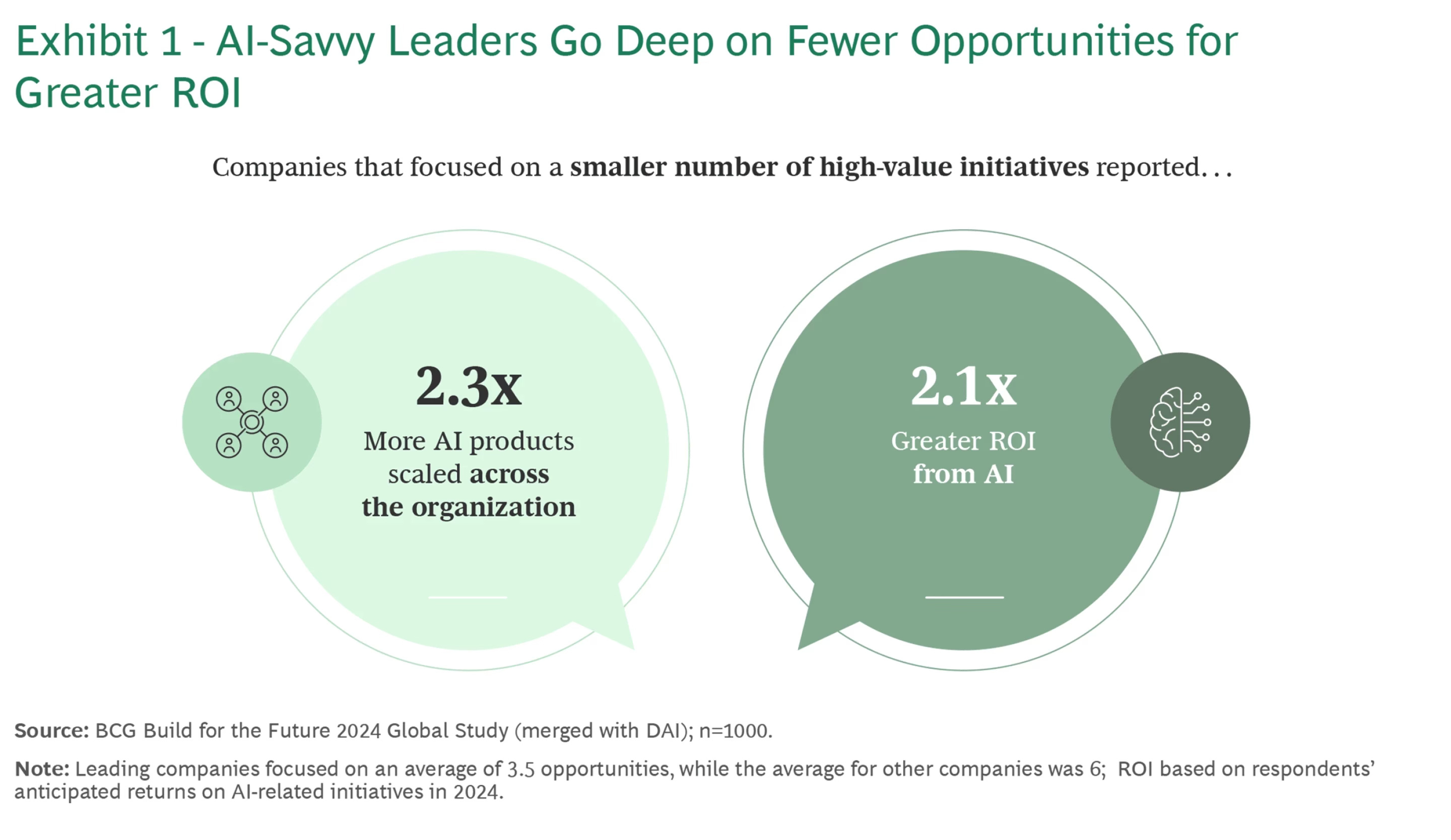
A new breed of competitor is emerging across industries, as "AI native" companies demonstrate unprecedented growth trajectories and operational efficiencies, the Wall Street Journal reports. These startups, built from the ground up around artificial intelligence rather than traditional structured processes, are achieving remarkable results - exemplified by StackBlitz reaching $20 million in annual recurring revenue just eight weeks after launching its text-to-app product, a milestone that traditionally would take best-in-class companies three years to achieve.
How much do aspiring CEOs really need to know about AI? More than they think. (Fortune)
The competitive advantage of these AI natives appears to be deepening with use, according to venture capital investors, as their malleable AI systems learn and adapt across entire industry verticals. For instance, advertising startup Supernatural AI reports twice the revenue with half the staff compared to traditional agencies at a similar stage, by replacing conventional processes with AI-driven reasoning systems. Microsoft executive Jared Spataro suggests these companies offer a glimpse of the future, unencumbered by legacy thinking, summarizing their approach as simply: "I don't care how it was."
HCI View: It’s easy to “other” these AI native companies, but these type of companies are tomorrow’s (sometimes literally) vendors at best and competitors at worst. Imagine one of your competitors just with a 10th of the labor costs and built on technology from the ground up?
This is already happening in services, stay near the forefront of innovation or put yourself at risk of being made obsolete by it. For a great example of how to do this, check out the different certificates and AI learnings of D.C. Vistage member Pete Lamont.
Lying now feels like a necessity for the majority of workers, undermining engagement and workplace visibility
Nearly half of workers are now lying to get ahead, with 44% of job applicants admitting to deception during the hiring process and an alarming 40% successfully landing roles through their misrepresentations, according to a January survey from Resume Builder. The practice has become so normalized that some industry experts now describe it as "a perceived necessity to compete in today's job market," particularly as LinkedIn data reveals 14 million job applications went completely ignored in a single quarter of 2024.
The culture of dishonesty extends well beyond the hiring process, with a February report revealing that 47% of employees regularly provide misleading feedback on engagement surveys, creating a blind spot for HR teams attempting to gauge workplace sentiment. The pervasive nature of workplace deception raises serious questions about the reliability of any internal corporate data that relies on employee self-reporting, from productivity metrics to risk assessments and operational health indicators.
HCI View: The same noise that has undermined the reliability of economic data is now coming for your internal clarity. Ensure that your team don’t just blindly trust their people/engagement data - call BS if the numbers and lived experience seriously clash.
AI in employee development raises the risk of AI ‘slop’
AI coaching tools are rapidly infiltrating training and development, with major players like Oracle launching comprehensive platforms for everything from career guidance to performance reviews. The push comes as U.S. companies spend approximately $1,500 per employee on training, with AI coach platforms reporting 300% growth. However, industry experts warn of a looming risk: the potential proliferation of "AI slop" - a GenZ word used to describe hastily produced, generic content lacking the depth and nuance of human-created guidance.
“American workers across most industries are struggling. Burnout rates are high and the threat of AI is triggering significant fear about their relevance at work. And they are broadly saying that the training and development programs they have access to are not helping. In fact, in many cases, it’s making things worse.”
— Scott Anderberg, CEO of Moodle
The threat of "slop" appears particularly acute given existing employee frustration with digital training delivery, where 25% already report their current training as ineffective and not worth their time. The disengagement is so severe that 46% of workers admit to speeding through videos while multitasking, and over half now use AI tools to complete mandatory training modules.
HCI View: Truly, AI is just another tool, like excel or word. But rushed adoption without the proper foundations for tool usage (the comfort with new capabilities and critical thinking to apply them) risks creating an ecosystem of AI systems talking to other AI systems, potentially flooding internal communications, marketing and training with engagement-killing content that people just bypass.
Data Point(s): Digital employee training overload
80% of decision-makers are concerned about finding technology talent this year. And U.S. companies spent $1,500 per employee on training last year. But…
25% of workers said training isn’t impactful, not worth their time and doesn’t prepare them for their roles
About 50% of employees report using AI to complete mandatory training
46% speed up videos to complete training quicker or allow videos to play while multitasking
14% mute the audio or click through questions without participating
In Other News:
How BlackRock’s startup culture made it a Wall Street first mover in crypto. (Fortune)
Congress Reintroduces Main Street Tax Certainty Act to Keep 22%. (National Federation of Independent Business)
Amazon's Push to Cut Costs Triggers Fears of Fewer Promotions: Campaign to restructure workforce is capitalizing on a moment when return-to-office policies are more common and the technology job market is cooling off. (Bloomberg)
Job market stays sturdy but pay pressure is still on, economists say. (HR Dive)
Remote work grows for the highest earners. (HR Dive)
Busy work hounds employees ‘often,’ survey says: Employees said they were frustrated by inefficiencies, but also that they had no power to change them. (HR Dive)
Efficiency and cost-cutting will define tech budgets in 2025. (Employee Benefits News)
Employee emergency funds can’t solve workers’ entire problem but are a source of quick relief and comfort. (HR Brew)
The case for ‘late bloomers’: Ageism in the workplace is not only concerning, it’s wrong-headed. (Financial Times)
The conversation around AI in employee development is critical. While AI-powered learning tools can scale training, the risk of low-quality 'slop' content is real. I've found that AI is most effective when paired with human oversight—augmenting, not replacing, personalized learning. Companies that treat AI as a shortcut rather than an enabler are missing the point.