

Welcome back to Human Capital Intelligence! Welcome to your go to 2026 source to keep up with the best insights from over 250 leadership, HR, and people sources. As always, we would love to hear from you at ken@reyvism.com with questions you’d like answered or topics covered.
Sent this by a friend? Sign up here to receive HCI in your inbox every week.
By Ken Stibler; Powered by Reyvism Analytics
Leadership lessons from software: What got you here won’t get you there
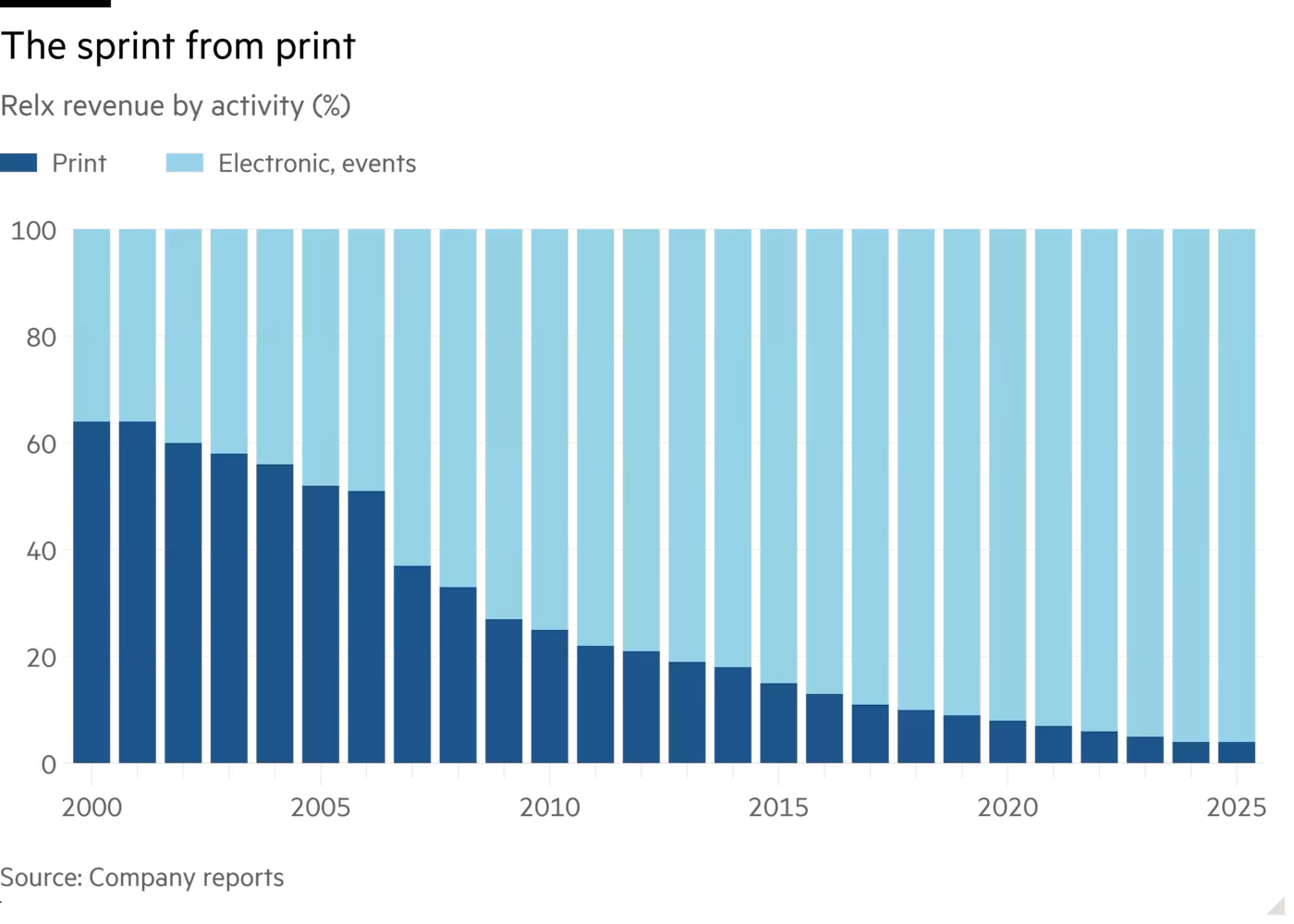
The recent software industry meltdown offers an important lesson for today’s leaders. For anyone not familiar (after watching their 401ks drop) the stock market has wiped billions of value off after Claude maker Anthropic released a tool that can automate coding tasks like cloning the entire salesforce platform.
But the real story isn’t about software. It’s about what happens when the advantages you’ve spent decades building start rapidly eroding. Companies that built empires on recurring revenue watched their value proposition evaporate in a single trading session.
This is the new reality across industries, including in middle market businesses that you’d never suspect are being disrupted by AI and the broader pace of general change alike. The skills that made you successful, the business models that seemed unassailable, the competitive advantages you’ve cultivated can become liabilities faster than your planning cycle.
The companies surviving this transition aren’t the ones with the best technology. They’re the ones willing to abandon what worked yesterday. Leaders who wait for clarity before acting will find themselves managing decline rather than growth. Your next competitor isn’t improving on your model…they’re making it irrelevant.
Trust and skills are the growth engine leaders keep stalling
The gap between employer optimism and employee reality is offering a map to how growth plans are break down. While 96% of employers forecast growth in 2026, only 51% of workers agree. The disconnect is more about investment priorities than anything ephemeral. Companies historically reinvest productivity gains into more technology rather than the people who must use it, then wonder why workers don’t share their confidence.
High performers offer a lesson of how to approach this differently. They convert saved time into strategic capital for upskilling, collaboration, and judgment work, achieving double the ROI as a result. The pattern repeats in reorganizations: 88% of leaders believe their new structure will succeed, but only 36% of employees agree because only 22% receive adequate support to adapt.
Leaders overemphasize design while underinvesting in the transition itself. This isn’t a communication gap. It’s a trust deficit created by resource allocation choices that tell employees they’re secondary to the technology meant to help them.
Quote of the Week: Change is the beginning, not the end
"The announcement of a redesign isn't the finish line, it's the starting gun. Leaders who plan for how people will actually work in the new model, and who support them through that transition, are the ones who unlock results others never reach."
— Tracy Thurkow, partner at Bain & Co.
Reading List:

Gen Z’s “admin nights” reveal what’s missing at work
Finally a positive story about Gen Z! The FT reports how 20 somethings are turning tedious logistics tasks into social events, gathering with friends to collectively tackle bills and budgets. The trend works because of “body doubling,” where shared accountability makes hard tasks easier. But the deeper insight is what it reveals about work: people crave connection around difficult challenges, not just efficiency. Mixed-age groups add life experience that transforms admin into mentorship. When someone says the best part was “knowing I’m not alone,” they’re describing what’s absent in most workplace transformation efforts.
Deloitte's job title overhaul signals strategic intent
Deloitte is changing job titles for nearly 182,000 US employees by June to reflect its AI transformation priorities. The firm is "modernizing our talent architecture to provide a more tailored experience reflective of our professionals' broad range of skills and the work they do," a spokesperson told Business Insider. Experts say clear job titles can benefit employees by creating status and clarifying advancement paths, but warn that major changes imposed without consultation breed resentment. "Too often, senior leaders make these changes without inviting employees into the conversation," said Joe Mull, founder of Boss Hero School.
The HR-C-Suite divide on AI is a strategy failure
64% of execs agree AI is essential for competitive talent pools but nearly half say HR and C-Suite aren't aligned on its use. CHROs are simultaneously the most enthusiastic about AI's potential and the most concerned about job security impacts. This isn't contradiction, it's realism about managing a transition that leadership hasn't funded properly. The division means organizations will fall behind not because they lack AI tools, but because they lack agreement on how humans and AI work together.
Data Point: Think twice about the ROI of bye bye
45k
The average cost of turnover for a single worker.
In Other News
Have you considered hiring a chief bullshit officer? (Financial Times)
Learning through tiny bits: Why microlearning is the future of employee development. (London Loves Business)
Employees say compliance training is ‘disconnected’ from real life. (HR Dive)
Private-Sector Job Growth Cooled in January: America’s private sector added 22,000 jobs last month, according to human-resources firm ADP, well below estimates. (Wall Street Journal)
What HR needs to know about hiring in the wake of a layoff: A reminder of the dos and don’ts when reorganizing your workforce. (HR Brew)
AI is breaking the job application process — and forcing recruiters to rethink hiring and building the bench of talent. (Business Insider)