

Welcome back to Human Capital Intelligence! Welcome to your go to 2026 source to keep up with the best insights from over 250 leadership, HR, and people sources. As always, we would love to hear from you at ken@reyvism.com with questions you’d like answered or topics covered.
Sent this by a friend? Sign up here to receive HCI in your inbox every week.
By Ken Stibler; Powered by Reyvism Analytics
What skills does the modern workflows actually need?

An important note for hiring managers - there is not really as an “AI skill.” The rush to find people with this discrete, magical new competency misunderstand both the tech and the skills that can make it work. The ability to effectively use and even build generative AI tools are the same ones that have always mattered, just magnified: clarity of thought, precision of language, curiosity, and the bravery to change yourself. These are human skills. A-players already have them. The challenge isn’t finding new people; it’s supporting your people as they learn to apply their existing talents to a new class of tools.
The ManpowerGroup report that found “AI skills” are the hardest to find is better understood as a shortage of adaptability, not a shortage of coders. This is not just a philosophical point; it’s a practical one with huge ROI implications. A recent DataCamp report found that organizations with mature data and AI upskilling programs see double the return on their AI investments. That return isn’t coming from hiring a few expensive prompt engineers. It’s coming from a workforce that is empowered to think critically and experiment.
Look at Walmart. They are training 1.6 million employees not to become AI experts, but to use AI to be better at their jobs. The CEO takeaway is this: stop chasing a mythical beast. Your best people already have what it takes. Your job is to give them the tools, the permission, and the support to amplify their innate curiosity and judgment. The bottleneck isn’t talent; it’s a failure of leadership to trust the people you already have.
Managing change and attention budgets as real resources
The current volume of change organizations are facing is spurring a lot of calls to change everything—key functions, org charts, training. But the “budget” of leaders and employees for change and the intentional work it requires is being tapped out. Every new tool, process, or pivot draws down from a finite organizational capacity for change, and that budget is now deep in the red.
This a leadership mandate masquerading as a tech problem. The shift to new operating models isn’t free; it consumes a finite budget of attention and energy. That requires deep, disruptive change that consumes the very attention your team needs to do their actual jobs.
If you treat your team’s attention and their capacity to adapt as free and infinite resources, you will burn them out and your most important initiatives will fail. You have to budget for change as you budget capital. It’s a real asset, and it’s nearly depleted.
Quote of the Week: Failure as an absence of effort
"The worst thing is not to take a decision, because then nothing happens.”
Andreas Schierenbeck, CEO of Hitachi Energy, on why he pays his team to make decisions, not to wait for permission.
Reading List:
A HCI foray into parenting advice
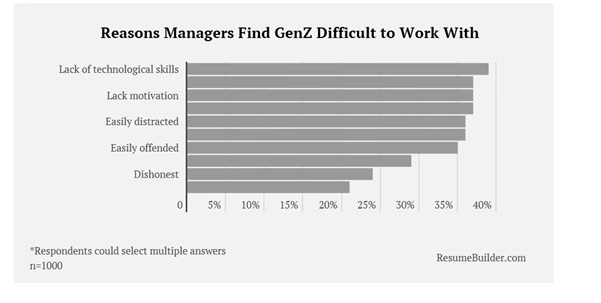
Advice on dealing with kids is like managing with higher stakes and lower pay, which is why we normally avoid the subject. But a WSJ piece on how tech execs are raising their kids shows how much today’s kids won’t be educated by curriculums or schools. From leaders at Anthropic to Microsoft to Wharton, parents “in the know” are taking control of their education and emphasizing empathy, adaptability, critical thinking, and the ability to be in rooms with other humans (not GenZ/A’s natural strong-suits) as technical skills become table stakes.
Don’t plug legally questionable things into ChatGPT
If you or your team are plugging confidential information into a public AI, you’re committing malpractice. A federal court just made it clear in U.S. v. Heppner: your conversations with AI are not confidential. A CEO used Claude to research his own fraud case, and the court ruled those chats were not privileged and were fully discoverable. While a silly example, multiple studies have found that executives are the most likely group in organizations to break AI policies. Consider every AI prompt as if it will be read aloud in a deposition, because it just might.
Workplace gossip has an unappreciated upside
Your team is probably gossiping, and it might be holding them together. New research in the Journal of Business Ethics found that while employees avoid their boss after gossiping, they also report a greater sense of belonging and collaboration with their peers. This informal channel can be a powerful, if risky, tool for building team cohesion. The challenge is to foster an environment of psychological safety where the energy spent on negative gossip can be channeled into open, constructive feedback. If your team is gossiping, it's a signal they don't feel safe talking to you.
Data Point: An indicator of financial stress
6%
The share of workers in 401(k) plans who took a hardship withdrawal in 2025—a record and from 4.8% in 2024.
In Other News
RIP résumés: Slop is killing the résumé. Job hunters are scrambling for new ways to stand out. (Business Insider)
Why pay-for-performance programs don’t always work. (HR Dive)
Women Show Stronger Employee Engagement Amid Higher Burnout. (Gallup)
Australian state to give legal right to work from home 2 days a week. (Financial Times)
What if AI just makes us work harder? Employees have reported increased momentum, but also a feeling of having more to do. (Financial Times)
Frictionless AI comes at a human cost to learning, growth and connection. (AAAS)