

Welcome back to Human Capital Intelligence! Your go-to source to keep up with the best insights from over 250 leadership, HR, and people sources. As always, we would love to hear from you at ken@reyvism.com with questions you’d like answered or topics covered.
Sent this by a friend? Sign up here to receive HCI in your inbox every week.
By Ken Stibler; Powered by Reyvism Analytics
The "Return to Human" Begins
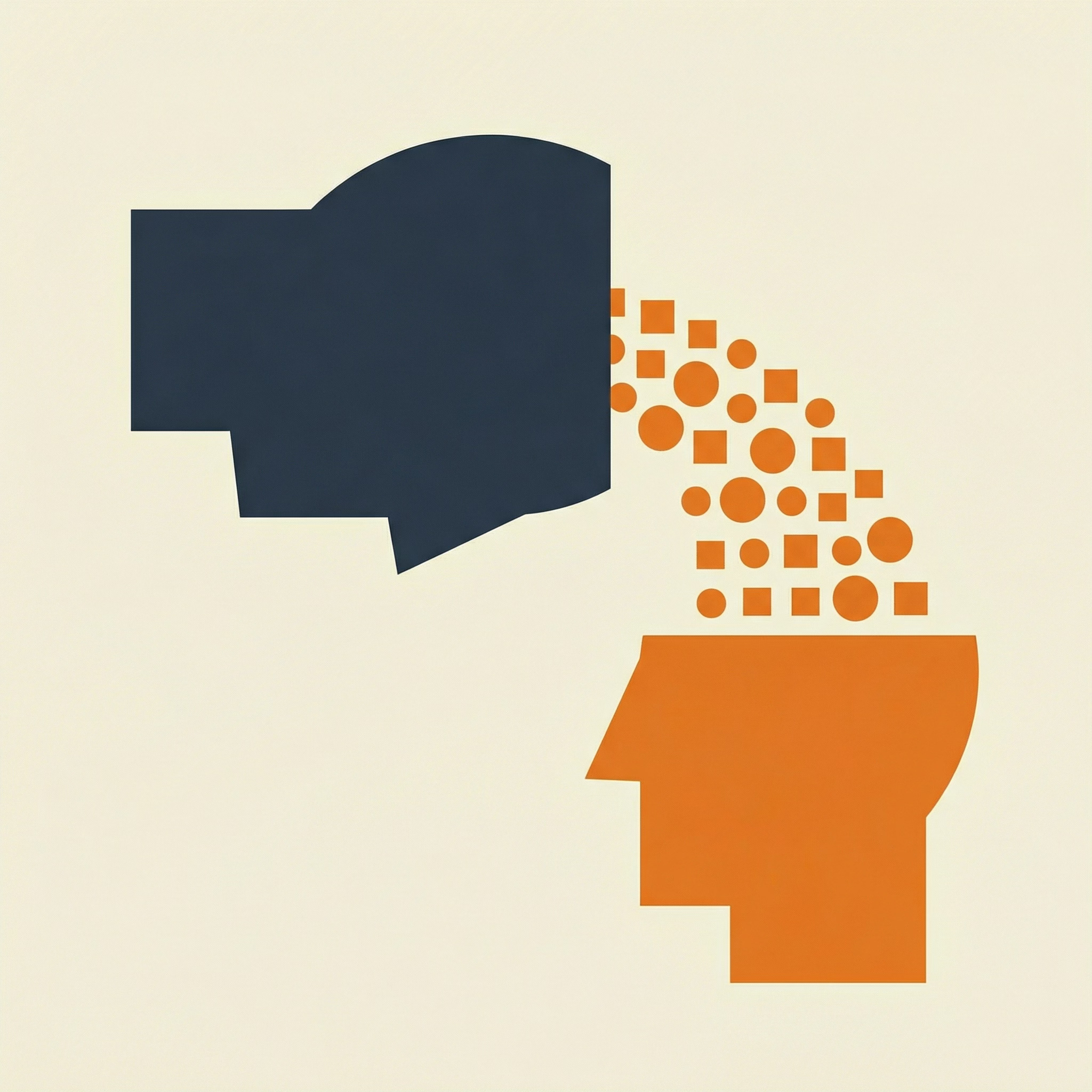
Remember the “Return to Office”? The fight is still ongoing for many, after companies spent years optimizing for remote efficiency, then realized the isolation was hollowing out their cultures and dragged everyone back. We are watching the same correction play out with AI, only broader and more consequential.
AI has made good-enough work available to everyone. A polished cover letter, a competent brief, a passable customer interaction: these used to separate the serious from the unserious. Now they are table stakes. Seventy-five percent of senior HR leaders report a steep rise in AI-generated applications, and more than 40% have extended probation periods because they can no longer tell who is actually capable before the person starts working.
Beyond process, talent quality itself has dipped. When AI handles the messy, frustrating early-career work that builds real expertise, people look competent without becoming competent.
A software consultant with 25 years of experience let AI build his product for three months, then found he could not write code confidently when he took the wheel back. “My swing was off,” he said.
Multiply that across an entire generation of workers who never build the baseline, and you have a workforce that performs well on paper and breaks under pressure.
In response, companies are beginning to push back. L’Oreal has made interviews an “AI-free zone,” requiring every candidate to sit face-to-face with a trained recruiter. Dave & Buster’s is pouring investment into human service standards because its CEO recognizes that the guest experience can never exceed the team member experience.
We believe that the trickle of anecdotes will become a new best practice as companies realize that where not to use AI is a more important decision than where you can.
CEOs Increasingly Feel Threatened by Their CFOs
Roughly one quarter of CEOs surveyed (26%) ranked CFOs as the top job security risk within their own C-suites, followed closely by COOs (24%) and chief commercial officers (20%), according to Boston Consulting Group’s CEO Insomnia Index.
The perceived vulnerability is structural: finance chiefs regularly brief the board on financial performance, forecasts and capital allocation, positioning them as the CEO’s natural heir apparent in ways that other C-suite roles simply do not.
The anxiety has a basis in recent data. CFO to CEO promotions reached their highest level in a decade last year, with more than 10% of sitting CEOs coming directly from a top finance seat, up from 7% in 2024 according to Crist Kolder Associates.
Quote of the Week: Scary to everyone but the CEO
“AI is not yet a primary source of day-to-day pressure for many CEOs. 84% report feeling more energized than stressed by the need to innovate. The stress is coming from inside the house."
— BCG CEO Insomnia Index, April 2026
Reading List:
Manager workloads double
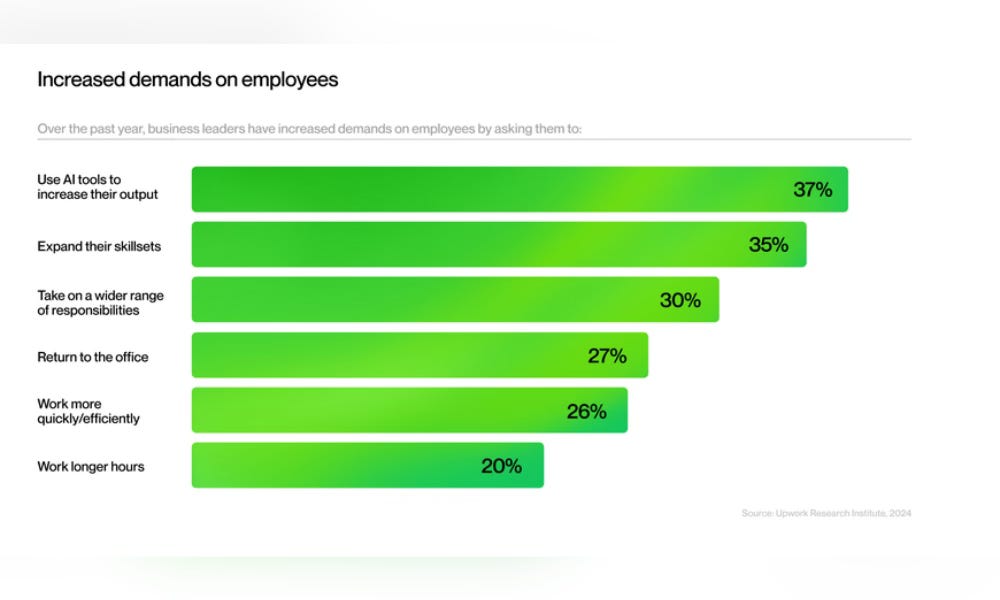
The average American manager now oversees 12 direct reports, nearly double what Gallup tracked in 2013, as AI-enabled cost-cutting guts middle management ranks. Some big companies taken the logic to its extreme with 50-to-1 employee-to-manager ratios. The human ledger is looking considerably worse than the balance sheet with these moves: 75% of HR leaders say managers are already overwhelmed, and 69% say they lack the skills to lead change effectively even before full AI integration takes hold.
Workers don’t know how to use AI
Forrester measured employee understanding of AI tools and found the results "alarming." Prompt engineering comprehension, integral to tools like Microsoft 365 Copilot, increased by only 4% from 2024 to 2025. Meanwhile, 96% of C-suite leaders expected AI to increase output while 77% of employees say AI tools actually increased their workload. Companies bought the tools and skipped the change management.
Decision-making by consensus increasingly doesn't work
The speed of AI-driven change has outpaced the consensus model. HBR argues that the companies surviving the next decade will be those courageous enough to establish clear decision rights rather than democratic processes. The organizations winning are not those with the best algorithms or the most data. They are the ones that have fixed how decisions get made.
In Other News
America’s gig economy - Self-employment, at both the high and the low end, is keeping consumption afloat — but for how long? (Financial Times)
New graduates say they would sacrifice pay for job stability. (HR Dive)
The sneaky truth about the wave of AI layoffs: Tech companies are axing full-time roles. They’re hiring some back as contractors. (Business Insider)
Oracle cutting thousands in latest layoff round as company continues to ramp AI spending. (CNBC)
Jack Dorsey and Roelof Botha think AI can make middle management obsolete. (Fortune)
Trump Team Scraps College Degrees for Hundreds of Federal Jobs. (Bloomberg)
Jensen Huang just painted the most bold image of AI’s future: 7.5 million agents, 75,000 humans—100 AI workers for every person. (Fortune)