

Welcome back to Human Capital Intelligence! Your go-to source to keep up with the best insights from over 250 leadership, HR, and people sources. As always, we would love to hear from you at ken@reyvism.com with questions you’d like answered or topics covered.
Sent this by a friend? Sign up here to receive HCI in your inbox every week.
By Ken Stibler; Powered by Reyvism Analytics
You have to win the workplace before you can win your market

In the rush to avoid falling behind on artificial intelligence, organizations are forgetting the human foundation required to actually deploy it. The disconnect is stark: 88% of employers agree AI requires their workforce to develop new skills, yet four in five prioritize automating routine tasks over investing in people strategies.
Aon calls it a “clear misalignment.” Companies are pushing automation while underinvesting in the people required to align those tools with business goals. The result is a workforce that feels the pressure to adapt but lacks the support to do so.
The financial engineering approach to this problem is failing. When CFOs treat AI adoption as a spreadsheet exercise, the workforce strikes back. Docebo found that 56% of employees are so overwhelmed by manual tasks they do not have time to learn the AI tools intended to save them time. Culture Amp data shows AI tools are actually increasing workloads and driving engagement downward.
The organizations getting this right are the ones treating AI fluency as a leadership mandate, not just an IT rollout. AlphaSense CFO Samantha Greenberg dedicates 10 hours a week to learning AI skills herself, operating as a “player coach” to ensure her finance team understands how to use the technology as a thinking partner rather than just a productivity hack.
The market rewards the companies that get the workplace right first. Organizations with a dual focus on culture and performance experienced a 47% increase in share price, according to Culture Amp. The alternative is the cycle of financial engineering seen at companies like Coinbase, where leadership attempts to force an “AI-native” structure through mass layoffs and flattened org charts. You cannot financially engineer a culture of innovation. If you want to win the market in the AI era, you have to win the workplace first.
Build vs buy, organizational AI version
The fastest path to organizational AI gains is training your existing workforce, but companies are increasingly deciding it is easier to just buy new talent. General Motors recently laid off 600 IT workers, roughly 10% of the department, in a deliberate skills swap.
They are clearing out legacy employees to make room for hires with specific AI-native development and data engineering backgrounds. It is a stark admission that retraining legacy IT staff is proving too slow or too difficult for the pace of the current market.
This “buy over build” strategy is an expensive dilemma to get wrong. Coinbase took a similar approach, cutting 14% of its staff to rebuild around “AI-native pods” and eliminate pure managers. But buying talent is not a silver bullet. Poor engagement and the rapid atrophy of AI skills mean companies will eventually be forced to develop effective training programs regardless of who they hire.
Companies and academia are not equipped to teach these skills because the curriculum development process is too slow. The organizations that figure out how to build “AI builders” internally will have a sustainable advantage over those constantly trying to buy them on the open market.
Quote of the Week:
"Companies buy talent, they don't build it."
— Sam Caucci, founder of 1Huddle
Reading List:
New employees are already dis-engaged by the time they hit their desk
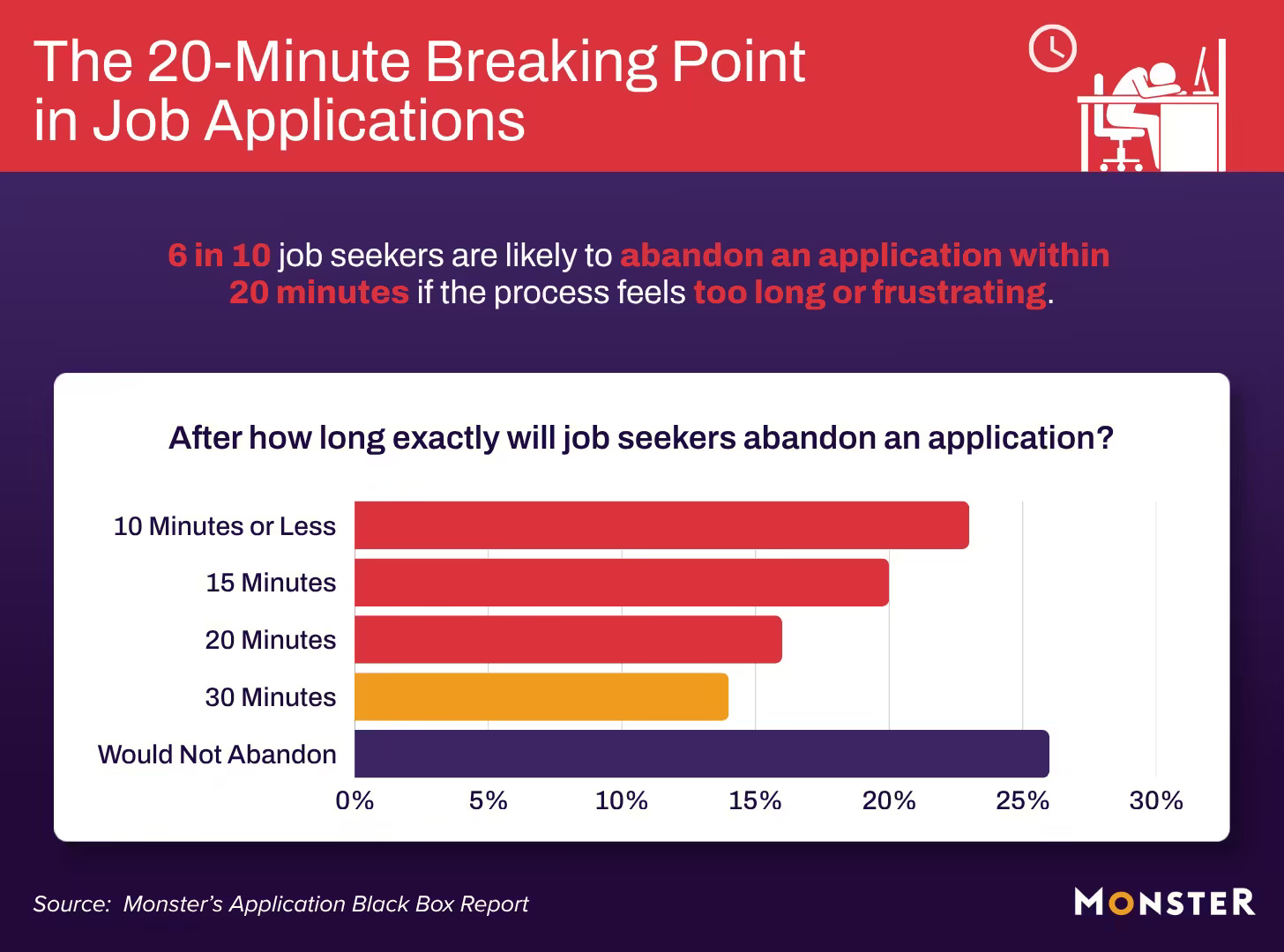
The hiring process has become so opaque and impersonal that candidates are burning out before they even receive an offer. A Monster report found that 60% of job seekers say the most exasperating part of the hunt is not knowing if a human ever looked at their resume. The frustration is driving behavioral changes: 48% of candidates resort to "spray and pray" applications, and 38% of U.S. candidates have withdrawn from a hiring process simply because it included an AI interview. When 54% of workers favor banning applicant tracking systems entirely, the system is actively damaging employer brands before day one.
New “code of conduct” phishing campaigns show concerning effectiveness
Malicious actors are weaponizing workplace anxiety. A new phishing campaign identified by Microsoft uses "code of conduct" violations as bait, targeting 35,000 users across 26 countries in just two days. The emails use genuine delivery services, HIPAA-compliant encryption banners, and polished enterprise templates to create a false sense of urgency. By preying on the fear of HR disciplinary action, attackers are successfully triggering credential harvesting flows, showing that the next generation of cyber threat is as psychological as it is technical.
The pay for performance era arrives
The era of "peanut butter" raises, where every employee receives an equal percentage increase, is ending. Only 4% of U.S. employers are still distributing raises this way, according to Mercer. The shift is being driven by the AI divide in the workplace. While 54% of workers are bypassing their company's AI tools to work manually, a distinct group of AI "super users" has emerged. These super users are three times more likely to have received a promotion and a pay raise in the past year. As the gap between high performers and stragglers widens, companies are realizing that equal treatment is no longer fair treatment.
Data Point:
38%
The percentage of U.S. candidates who have withdrawn from a hiring process because it included an AI interview.
In Other News
The OpenAI trial is exposing a brutal truth about workplace texts - they’re all in bounds legally. (Business Insider)
Colorado passes bill outlawing wage setting based on AI surveillance. (HR Dive)
AI coders are carrying half-open laptops through airports, offices, and ice rinks. (Business Insider)
No one really wants to speak up at work — especially about AI errors, study shows. (HR Dive)
A $2 billion tech firm is pausing 401(k) contributions for staff in the latest corporate benefit rollback. (Business Insider)