

Welcome to the latest edition of Human Capital Intelligence, your weekly brief synthesizing over 250 leadership, HR, and people sources to filter out the noise. As always, we would love to hear from you at ken@reyvism.com with questions you’d like answered or topics covered.
Sent this by a friend? Sign up here to receive HCI in your inbox every week.
By Ken Stibler; Powered by Reyvism Analytics
Deep Dive:
The competitive imperative of AI adoption
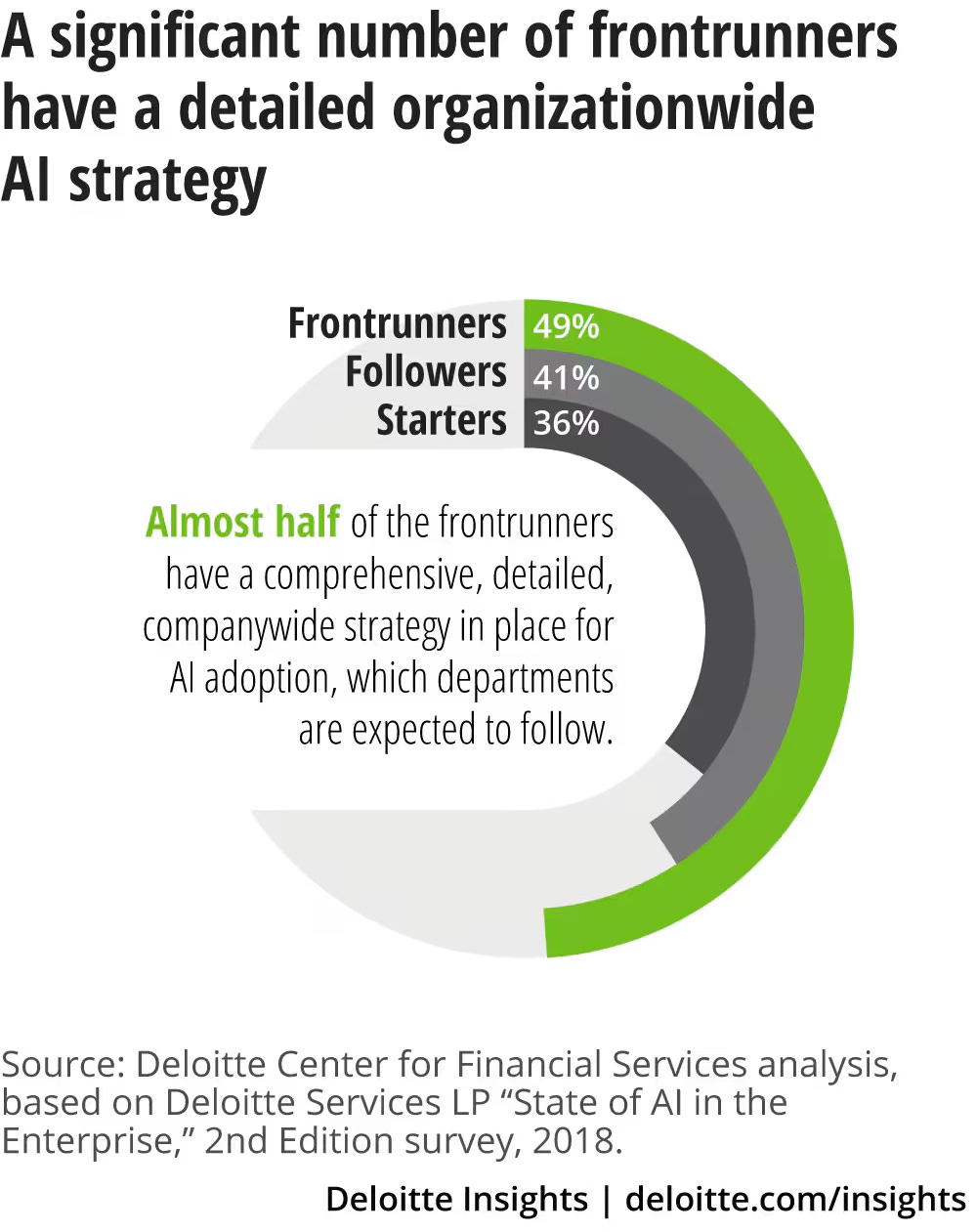
For CEOs, AI adoption is no longer just an efficiency play, it’s fast becoming a survival test against rivals willing to push the boundaries first. Ocado’s leap from 25 minutes of human labor per grocery order to just 10 is a signal of how competitors using AI to shrink costs and accelerate delivery are quietly resetting the bar for everyone else. In this race, standing still means losing ground to the faster, leaner, more adaptive firms next door.
In five years, your competitors won’t be other companies adapting AI to fit their needs—they’ll be companies built with an AI-first approach from the ground up.
— MATTHEW KROPP, BCG CTO
The real question isn’t whether AI will reduce headcount or save dollars, it’s who controls the speed and margin advantage when everyone in your sector has the same tools. British Telecom is exploring deeper levels of cost cutting, while marketing firm WPP is warning that AI is a threat to the company itself. Looking at its stock performance, Wall Street agreed.
In the coming quarters, boardrooms that treat AI as a one-off pilot risk being blindsided by peers who bake it deep into workflows, customer delivery, and decision-making. This is the competitive imperative now: don’t ask if AI will change your business model — ask whose business model it will change first, and whether yours will be better or obsolete when it does.
A rock and a hard place: Between rising employee expectations and falling leverage
Employees want more room to breathe, more flexibility, and more genuine support than ever before, yet their leverage to insist on it is fading fast. As job openings tighten and layoff chatter grows louder, many settle for roles they’ve outgrown, trading career ambition for the safety of a paycheck. Managers feel this tension daily: expectations stretch upward while the willingness to speak up shrinks, leaving frustration simmering just beneath the surface.
Job confidence is at record lows, yet calls for healthier workloads, better balance, and honest care haven’t disappeared with the job ads. This dynamic makes it tempting for bosses to bring down the hammer over employee entitlement.
Yet rather than revenge for the last couple years of employee pressures, sharper priorities, clearer guardrails, and real listening, might be the difference between teams that endure a downturn and teams that quietly fall apart in plain sight.
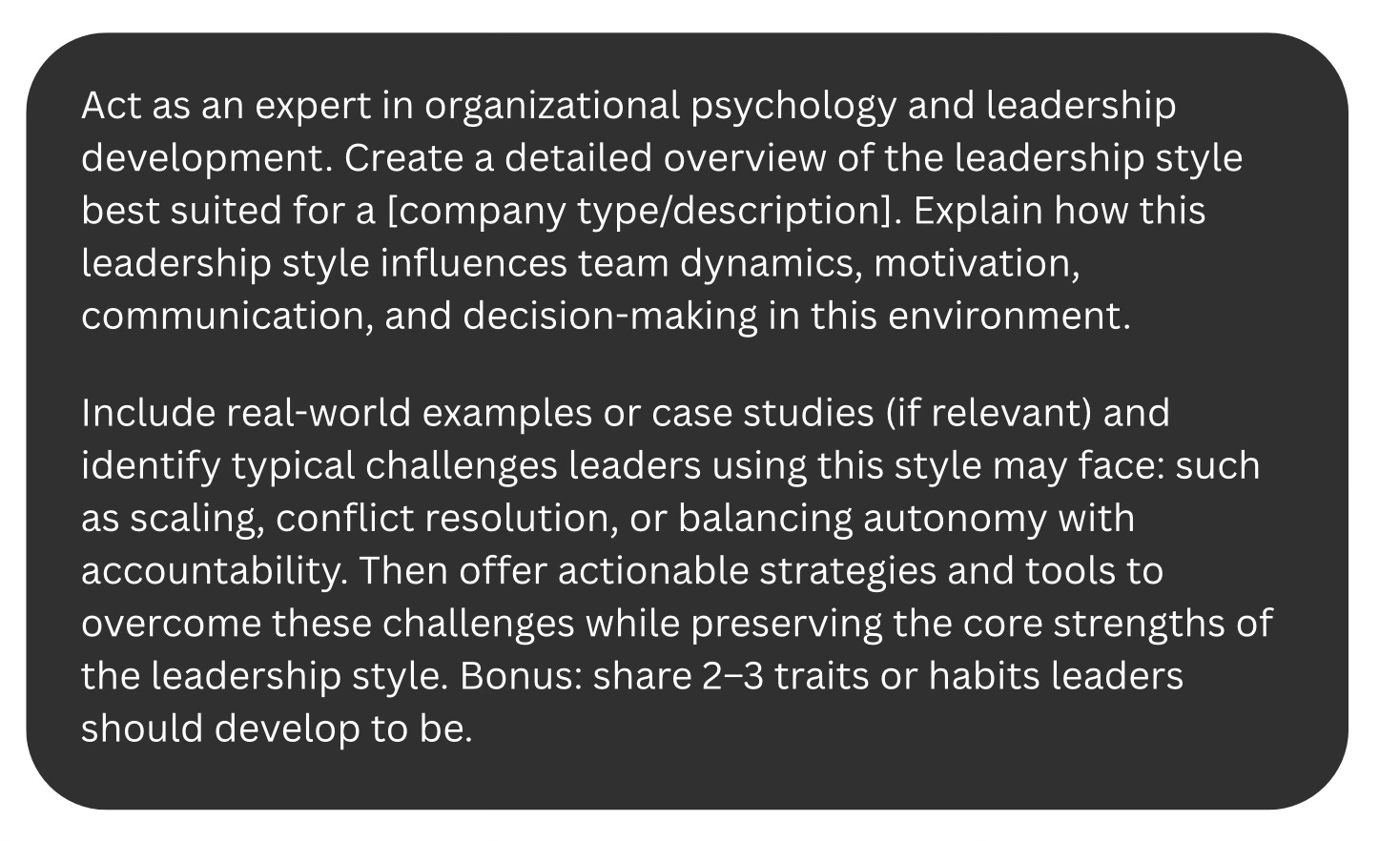
Prompt of the Week: Turning Leadership Profiles in Customized Action
Reading List:
Starbucks bets big on human capital, Wall Street doesn't like it
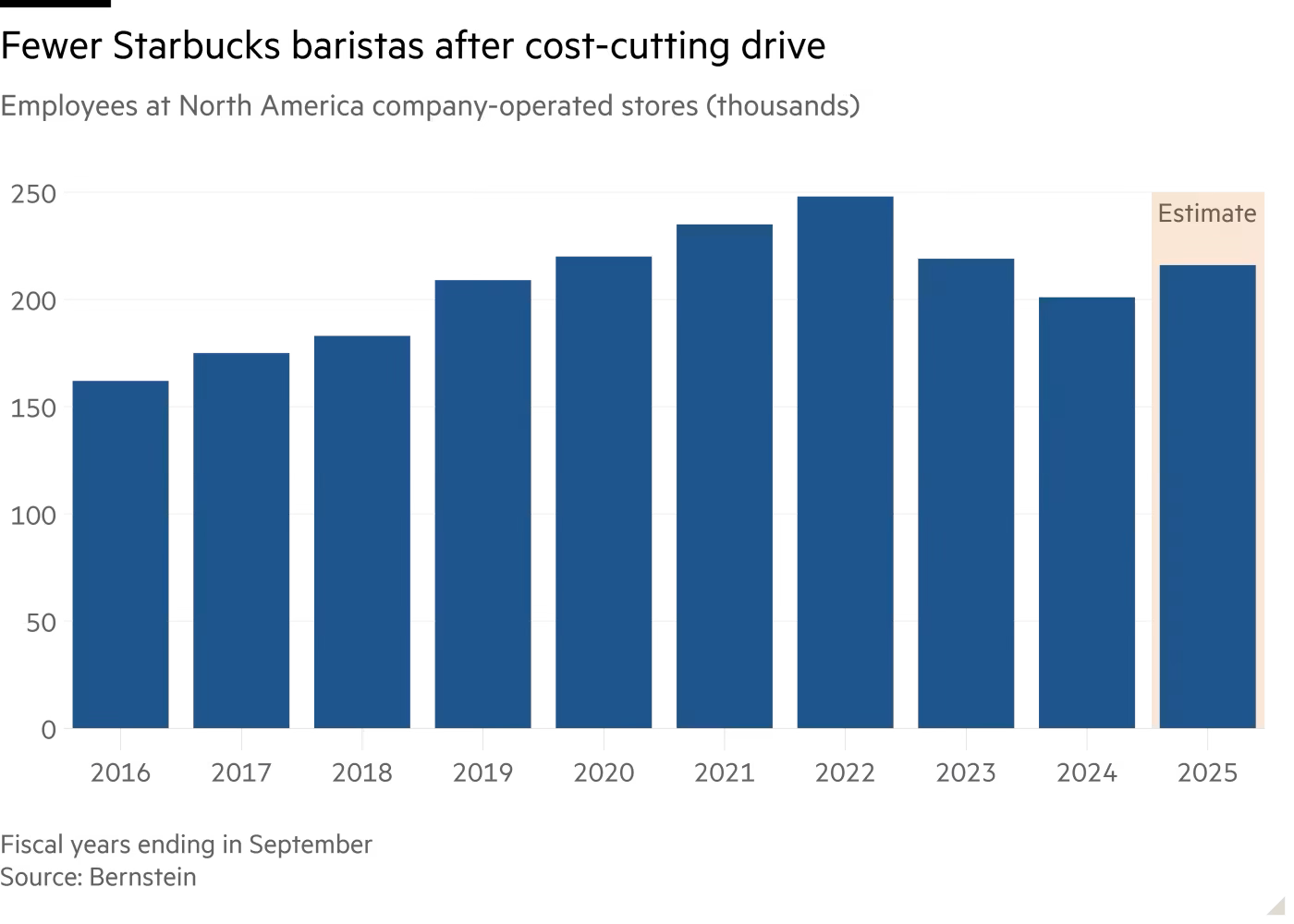
Starbucks is pouring billions into hiring more baristas and restoring warm, personal service in what CEO Brian Niccol says is the biggest investment in human connection the company has ever made. While store managers cheered, Wall Street wasn’t happy: analysts warn labor costs could jump from $7.3 billion this year to over $10 billion by 2027. For Starbucks, though, the bet is clear: better coffee comes with better people, and no machine can replace that.
Soft skills rise in importance as technical skills mirror “factory work”
Sixty percent of employers say soft skills matter more today than five years ago, while 78% admit hiring technically strong candidates who flopped without them. With AI making technical coding work feel like factory output, demand for critical thinking, adaptability, and collaboration is surging. In this new reality, soft skills aren’t nice-to-have; they’re the difference between promotion and underperformance.
The great “dimming” of top talent
No, it’s not just the summer, or your imagination, the individuals around you are starting to pull back. In recent conversations with over a dozen managers, HCI kept hearing the same thing: the smartest, most capable people in their orbit just seem to care a little less. As AI flattens once-artful work into quick outputs and the sheer pace of change wears down even the most curious minds, top talent is quietly swapping initiative for caution.
Layer on a fog of economic anxiety, and you get exactly what we’re seeing now…high performers who do what’s asked are dimming. Leaders would be wise to catch this drift early: restoring a sense of mastery, purpose, and human depth may soon be the only edge AI can’t replicate.
Data Point: Crisis of Confidence
44%
Employee confidence in May, its lowest level on record as uncertainty around tariff policies and layoffs clouded workers’ views of their employer’s business outlook
In Other News:
AI is helping blue-collar workers do more with less as labor shortages are projected to worsen. (Fortune)
Need a chief AI officer? Look to these British orgs that have made the hire. (HR Executive)
How immigration raids in California reverberate across the labor market. (Marketplace.org)
The career boost of marrying well: Emotionally competent partners are valuable to workers and bosses alike. (FT)
What’s in a title? The rise and fall of Chief Human Resources Officer. (HR Executive)
Dropbox CEO Drew Houston says mandating a return to office is 'like trying to force people back into malls and movie theaters'. (Business Insider)
AI is forcing consulting to reinvent itself, or be left behind. (LinkedIn)