

Welcome to the latest edition of Human Capital Intelligence, your weekly brief synthesizing over 250 leadership, HR, and people sources to filter out the noise. As always, we would love to hear from you at ken@reyvism.com with questions you’d like answered or topics covered.
Sent this by a friend? Sign up here to receive HCI in your inbox every week.
By Ken Stibler; Powered by Reyvism Analytics
Deep Dive: The workplace digital divide is set to get more extreme
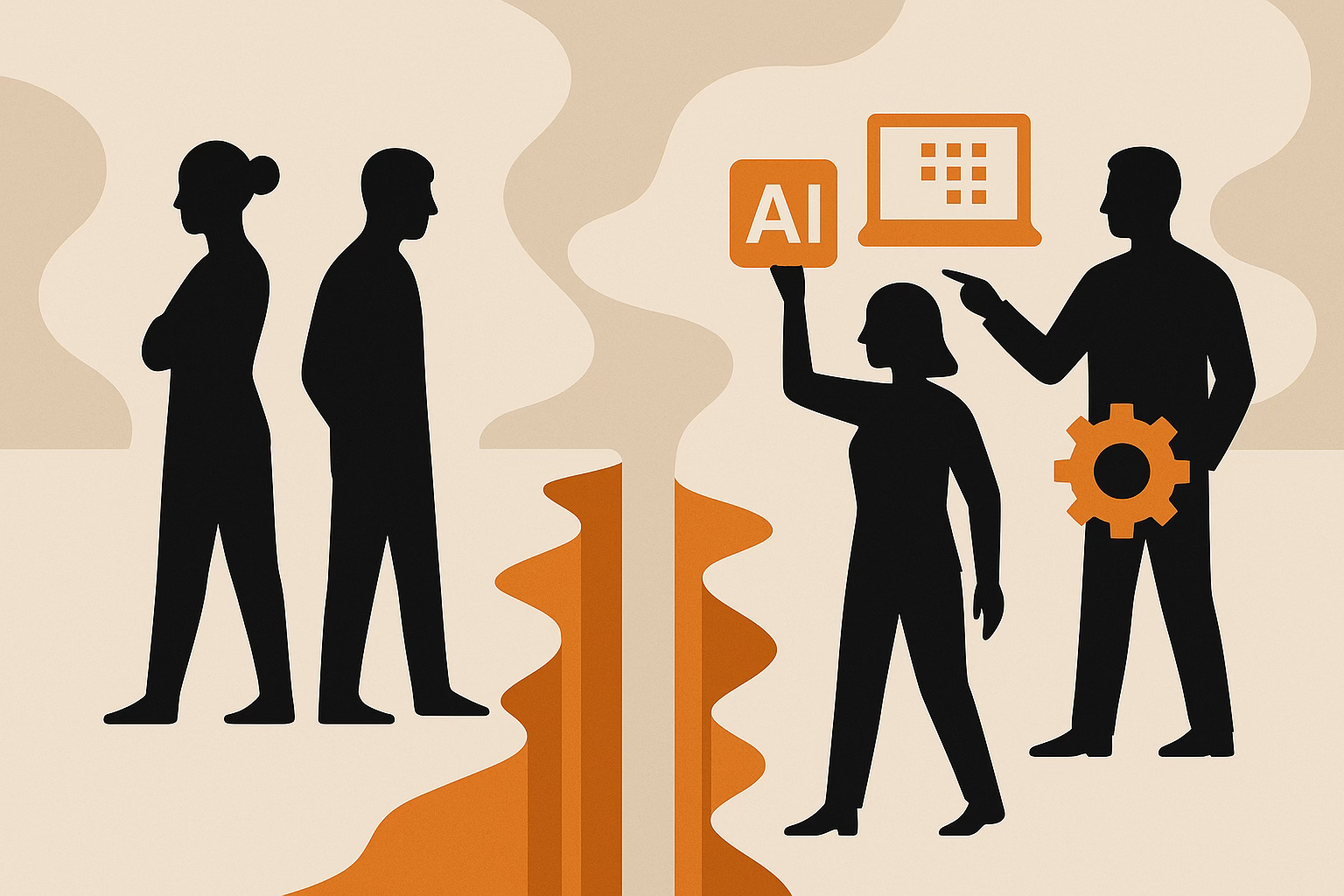
The AI adoption crisis is accelerating toward permanent workforce stratification as organizations face an impossible choice: wait for reluctant workers to adapt or advance with AI-native talent. Gallup's latest research reveals 64% of US adults plan to resist using AI for as long as possible, while Deloitte's Tech Executive Survey shows 45% of C-level leaders identify GenAI skills as their most urgently needed competency. This isn't a temporary skills gap, it's the emergence of two distinct worker classes that will define competitive advantage for decades.
The mathematics of this divide are unforgiving. Goldman Sachs' Marco Argenti warns that only "AI natives" can shape the future of work, while BambooHR confirms this "widening AI training gap" creates "the birth of a new digital divide." Companies like Workday, systematically enabling all 20,000 employees to use AI effectively every day, will outperform competitors clinging to traditional approaches by margins that make resistance economically unsustainable. The World Economic Forum projects 4 in 10 employers will reduce workforce where AI can automate tasks, creating pressure that will force the ultimate workforce sorting.
The window for bridging this divide is closing rapidly. Organizations must implement immediate AI fluency requirements, not optional training but mandatory competency standards with career consequences. This means establishing AI literacy as a baseline job requirement, creating intensive mentorship programs pairing AI-natives with domain experts, and accepting that some employees will choose departure over adaptation. The alternative is organizational obsolescence as competitors gain insurmountable advantages through systematic AI integration while others remain trapped by workforce resistance.
HCI View: The digital divide isn't a training problem, it's a leadership courage problem. Leaders who treat AI adoption as optional are choosing short-term comfort over long-term survival. The companies that thrive will be those willing to make hard decisions about workforce transformation today.
Upskilling Imperative: Mindset + Skillset + Toolset ≠ $20 AI Course
The delusion around upskilling as optional has reached crisis proportions as organizations mistake course purchases for capability building. Workday's systematic approach—ensuring all 20,000 workmates build the mindsets, skills, and habits to use AI effectively every day—exposes why superficial training fails while comprehensive transformation succeeds. Their research revealed the real barriers: 43% of employees lack time to explore AI tools, 37% aren't sure how to use them effectively, and 37% have concerns about reliability. These aren't problems solved by weekend courses but by sustained organizational commitment to workforce evolution.
The evidence against quick-fix solutions is overwhelming. Microsoft's research identifies specific core skills for AI-augmented workplaces that require sustained development, while Capital One's survey shows 28% of recent graduates feel they lack required skills to progress. BCG's CEO readiness analysis confirms that leadership development for AI integration demands deep, sustained effort…not training checkboxes. Organizations must establish dedicated upskilling budgets equivalent to 3-5% of payroll, create cross-functional teams linking HR strategy with technology planning, and accept that meaningful transformation takes 12-18 months of sustained effort, not procurement decisions.
HCI View: The $20 course mentality reflects the same thinking that created the skills crisis. Real upskilling requires the same commitment as any major business transformation: significant investment, sustained effort, and leadership accountability.
Quote of the Week:
"The future of work isn't man versus machine, nor is it man replaced by machine. It's man with machine."
— Bernard Marr, Forbes contributor, on Microsoft's mandatory AI adoption and the evolution of workplace skills
Reading List:
Don't hold your breath for clarity
The job market will remain deliberately opaque because uncertainty has become a strategic advantage for both employers and workers. HR Dive's analysis reveals mutual waiting strategies where both sides seek "clearer signals," but this isn't temporary confusion, it's the new equilibrium. With AI-driven job cuts significantly underreported and late-career job losses blurring retirement expectations, leaders must abandon clarity-seeking and embrace uncertainty through scenario-based workforce planning rather than waiting for predictability that no longer exists in post-AI employment markets.
Revisiting the office dress code
Summer workplace attire has become increasingly revealing as companies abandon dress codes. WSJ found workers "flashing so much skin at the office this summer that you'd think they were headed to a barbecue," with only 57% of workers reporting any dress code policies. Examples include "corporate crop tops," shorts, and barefoot engineers who claim it helps them think. Generational tensions emerge, with one older employee telling the journal "younger people get all their information from crazy people on the internet, and you've got crazy people showing up half-naked."
Increasingly toxic relationships with work
47% of US employees now engage in "polyworking"—working multiple jobs simultaneously—driven by financial necessity (51% say additional income is "absolutely essential") and career diversification. Meanwhile, employers explicitly demand intensive commitments: new postings expect candidates to expect "60 to 80 hours every week." WSJ calls this the "brutal honesty era of talent acquisition" where both sides articulate previously unspoken expectations about work intensity.
Data Point: Digitally dividing the day
81%
of Gen Zers believe digitally disconnecting should be standard workplace practice
In Other News
Businesses at greater risk of cyberattack due to geopolitical tensions. (Offshore Technology)
Finding time for innovation is key to worker retention, SHRM speaker says. (HR Dive)
College grad unemployment surges as employers replace new hires with AI. (CBS News)
How employment is projected to transform during the AI era. (WorkLife)
Few employers plan to increase hiring in the second half of 2025. (HR Brew)
Mortgage benefits are the new 'must-have' for Gen Z employees. (Employee Benefits News)
AI-using managers rely on the tool to decide who gets promoted or fired, survey shows. (HR Dive)
Rewriting the book on recognition: It’s time to stop checking the box. (HR Executive)
TikTokers promote the construction trades to young workers. (HR Dive)