

Welcome back to Human Capital Intelligence! Your go-to source to keep up with the best insights from over 250 leadership, HR, and people sources. As always, we would love to hear from you at ken@reyvism.com with questions you’d like answered or topics covered.
Sent this by a friend? Sign up here to receive HCI in your inbox every week.
By Ken Stibler; Powered by Reyvism
Ensuring organizational sanity as AI "eats everything"

The initial promise of AI was frictionless efficiency. The reality is that organizations are paying massive software bills to watch their employees spend 6.4 hours a week “botsitting” automated output. Heavy AI users are submitting work they do not understand, generating “workslop” that degrades performance, and forcing managers to spend their time verifying rather than directing.
Yet more than half of CEOs still fear they are underinvesting in the technology. The pressure to adopt is so intense that companies are mobilizing internal AI superfans out of work and in to converting skeptics, treating hesitation as a culture problem.
This kind of pressure creates a trap for HR leaders. If you try to slow down unstrategic adoption, you look like a wet blanket standing in the way of progress. The way out is to claim the mantle of sanity. That means insisting that AI projects face a true assessment of return on investment. It means measuring the actual organizational costs of adoption: the engagement toll of botsitting, the time lost to verifying slop, and the hard costs of the licenses.
When Zuckerberg admits Meta’s AI restructuring is struggling despite hundreds of billions of dollars, it is a signal that the deployment-at-all-costs phase is ending (or at least should). The next phase belongs to organizations that treat AI as a capital allocation decision, not a religious movement. If you are the leader demanding that discipline, you are not slowing the company down. You are keeping it sane.
At this point, who is the job market working for?
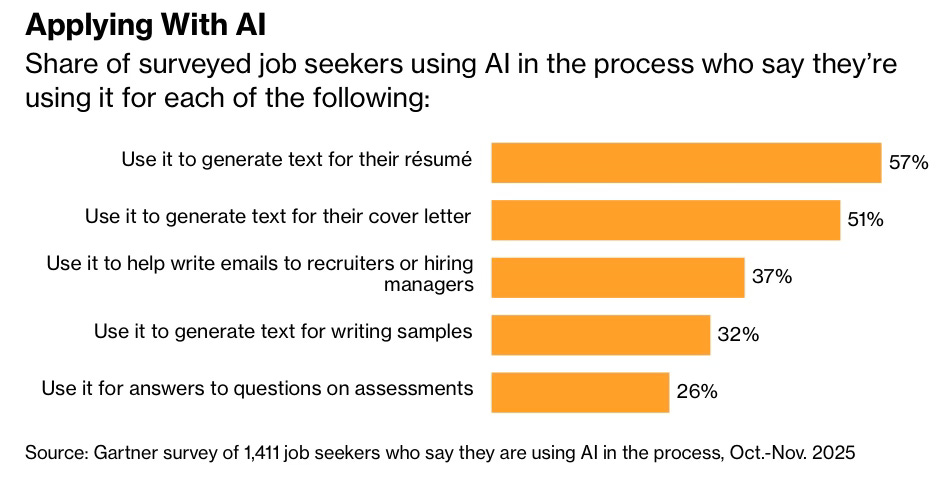
It increasingly seems like the hiring market is broken for everyone simultaneously. Recruiters are drowning in fraud. By 2028, Gartner expects one in four candidate profiles to be fake. Thirteen percent of applicants admit to using chatbots live during interviews, and the take-home assessment pass rate at startups has jumped from 25% to 80% because candidates are automating the tests. The result is a surge in “regrettable hires” and a retreat to defensive tactics. Target, Google, and L’Oreal are now requiring in-person or AI-free interview rounds just to verify that the person on the screen is the person who will show up to work.
Job seekers are equally miserable. Ninety-five percent have encountered suspicious job offers, and nearly half are skeptical of all recruiter outreach. They are wading through a gauntlet of scams while competing against automated applicants for a shrinking pool of entry-level roles.
This friction is happening exactly when the economy can least afford it. The United States is facing a projected shortage of 4.6 million to 6 million workers as baby boomers retire and immigration slows. The semiconductor industry alone will be short 67,000 technicians and engineers by 2030. We are entering a period of historic labor scarcity with a matching engine that neither side trusts. If your hiring strategy relies on inbound volume and remote screening, you are optimizing for fraud. The advantage belongs to organizations that rebuild high-trust, high-friction sourcing channels before the shortage peaks.
Quote of the Week:
We knew it was coming. It’s kind of like standing on a beach watching a tsunami headed toward you and not being able to flee.”
—Rachel Bernier-Green, a small business owner, on having to drop healthcare coverage for her six employees due to rising costs
Reading List:
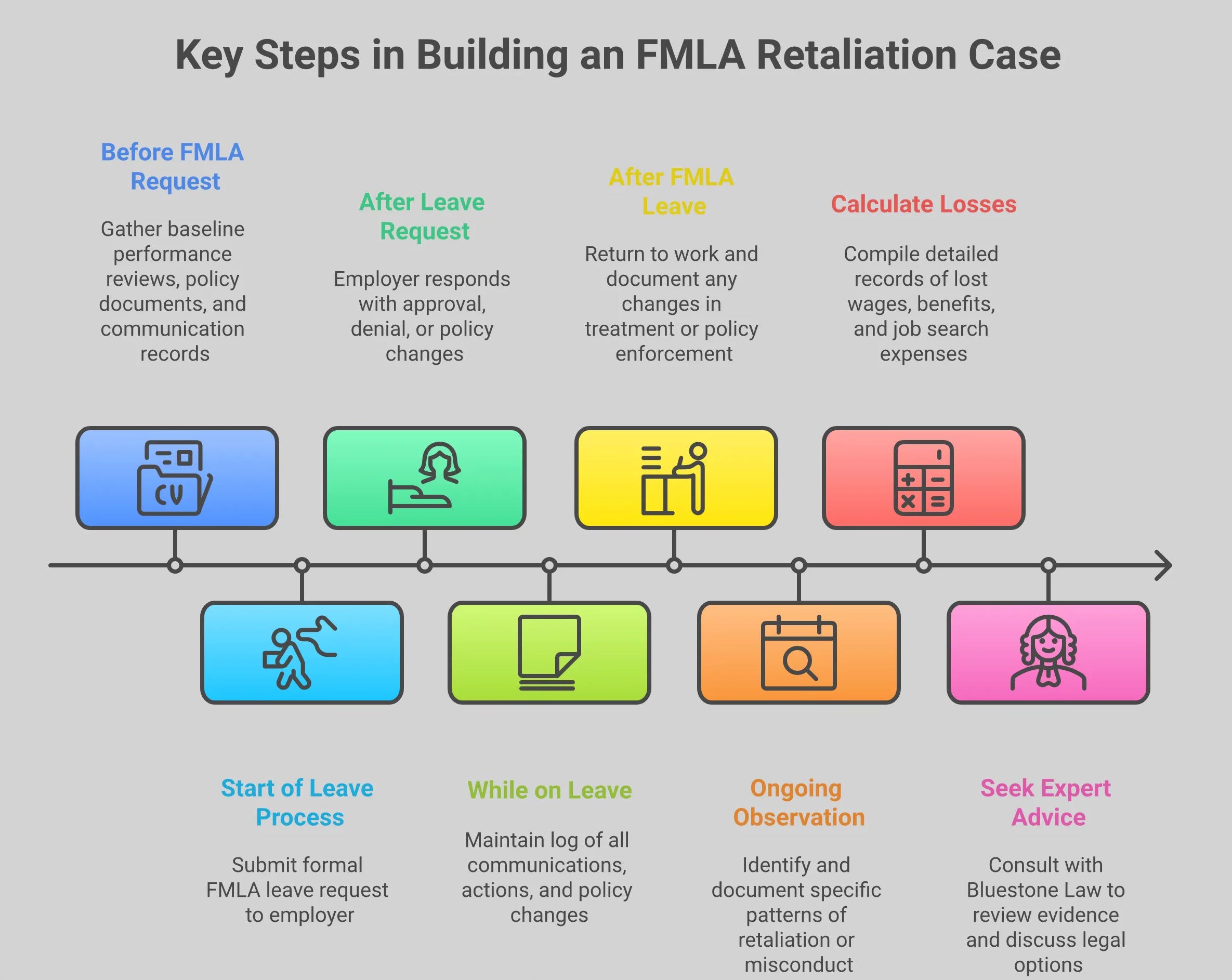
Workers use once-obscure law to take more mental health protection
One in six organizations saw a 25% jump in mental health leave over the past year. Workers are increasingly using the Family and Medical Leave Act to step away from burnout, anxiety, and depression. The cost of missed workdays now totals $47.6 billion annually in lost productivity. Companies expanded wellness benefits during the pandemic to reduce stigma, and it worked. Now, as organizations run leaner and demand more output, those expanded policies are creating operational strain.
Learning debt rises as education loses effectiveness
Forty-one percent of employees say their roles are evolving faster than their company can train them. To cope, six in ten are using AI to complete tasks they were never trained to do. That creates "learning debt": a growing backlog of unacquired skills masked by automated output. The debt comes due when the work requires judgment. The fix is program design. InStride data shows that 62% of top-performing education programs require no HR approval to enroll. They remove friction, tie directly to business priorities, and measure success by retention and capability. If your training program is hard to access, your employees will skip it and ask a chatbot instead.
Moving HR from compliance to coaching
Human resources professionals need to operate as coaches. Executive coaches argues that this transition requires establishing relationships before offering correction. If an employee only hears from HR when they are out of bounds, they will view the interaction as punitive. If the relationship exists first, the feedback becomes coaching. In remote environments, this means scheduling regular check-ins and observing behavior on video calls rather than waiting for a formal complaint. A coach is a vehicle that takes people from where they are to where they want to be. If your HR team is only managing risk, they are leaving performance on the table.
Data Point:
300%
Increase in job postings mentioning AI since 2022.
In Other News
The Company Founder Who Got Fired for Ignoring His Own Return-to-Office Rules: A former executive alleges his fellow co-owners used the policy as an excuse to push him out of the asset-management firm he helped run. (Wall Street Journal)
Great Leaders Know Which Emotions Their Feedback Will Trigger. (Harvard Business Review)
Faith in higher ed slips: 38% of adults report high confidence. (Higher Education Dive)
Tech used to be a mecca for young talent—now, AI start-ups are hiring fewer entry-level talent in favor of older workers with top degrees. (Fortune)
Lower-skilled workers could earn more in an AI world, research indicates. (Phys.org)
The hidden cost of empathy at work: White-collar women spend a full workday a week as their coworkers’ therapist. (Business Insider)