

Welcome back to HCI, your go-to source to keep up with the best insights from over 250 leadership, HR, and people sources. As always, we would love to hear from you at ken@reyvism.com with questions you’d like answered or topics covered.
Sent this by a friend? Sign up here to receive HCI in your inbox every week.
By Ken Stibler; Powered by Reyvism
How long do businesses have before labor weakness becomes a growth issue?

A weak labor market becomes a growth problem long before unemployment gets high. Payrolls fell by 23,000 in July, and May and June were revised down by 103,000. The unemployment rate still dropped to 4.1%, largely because people exited the labor force.
At the same time, small-business optimism reached an 11-month high, with one in five owners planning to hire and one in four planning capital spending. The quiet part out loud: those growth plans depend on customers feeling secure enough to spend, and the labor market is giving them fewer reasons to do so.
The pressure goes beyond a weak jobs report. More than half of workers say leaders live in a different world. Nearly one-third of CEOs say reducing headcount is the primary reason for AI investment, while almost half of employees report little or no employer-sponsored AI training.
A person who sees layoffs around them, watches their employer automate work and cannot see a path to their next role behaves differently as a customer. They delay purchases, trade down and hold cash. That spreads through the economy at different speeds: directly to consumer businesses, then to the manufacturers, service providers and suppliers behind them.
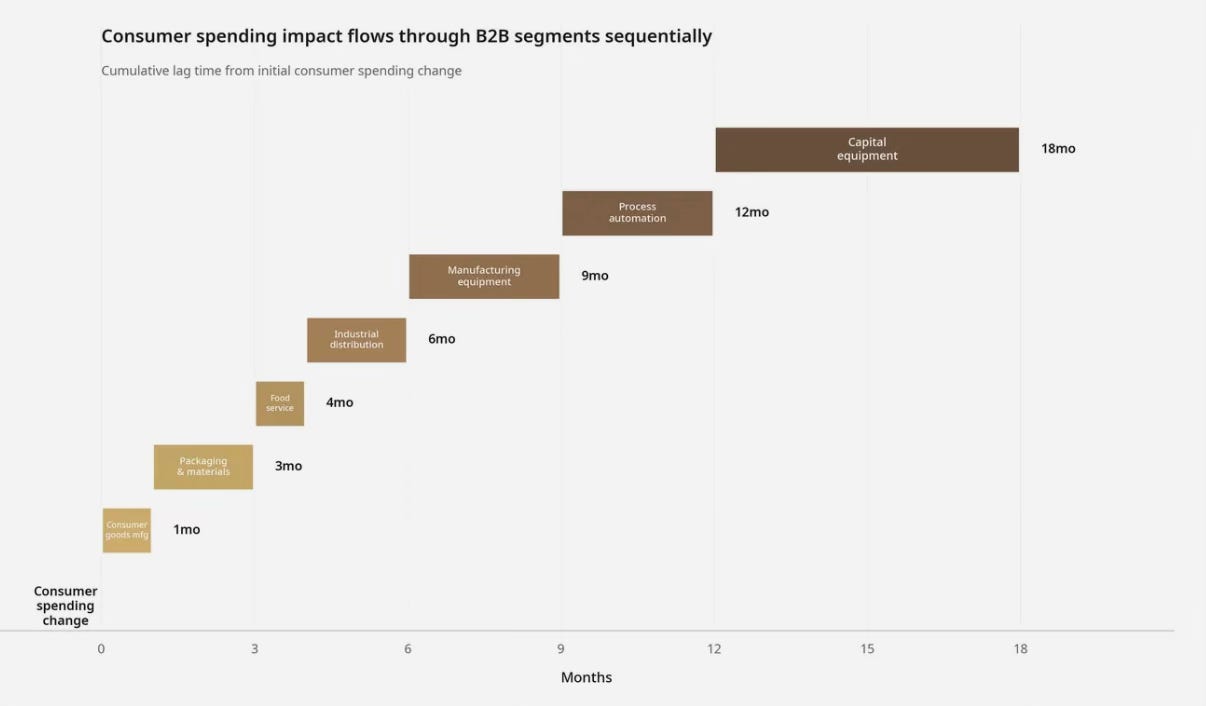
The response is more specific than a broad growth plan. Start by identifying where your revenue actually depends on discretionary demand and where customers are exposed to job insecurity. Then test those markets for real purchasing power, local hiring, order velocity and/or payment behavior.
Inflation-adjusted local income data is useful because headline GDP and retail-sales figures can hide flat demand. Shift sales coverage and growth investment toward the customers and geographies still expanding. Labor weakness is already a sales concern. Seeing it early preserves the ability to choose where to grow.
Engaging workers that are ‘coming in from the cold’
68,000 people came to a Texas job fair last week for roughly 670 employers. One recent graduate had been looking for six months without a single interview.
Another candidate said AI had scanned his resume, decided he was not good enough and ensured that no human saw it. People hired out of this market will arrive with a view of work shaped by months, sometimes years, of rejection, opaque systems and silence. They will not walk through the door with the trust of a normal new hire.
That makes engagement part of the hiring job. A welcome package and an orientation deck will not do much for someone who has learned that employers say one thing and do another. In the first month, show them the work they own, the decisions they can make, how performance is measured and where the role can lead.
Answer questions before they have time to become suspicions. More than half of employees already say their leaders live in a different world, and 72% say leadership made at least one decision last year that made no sense to them. A new hire needs evidence that the role is real and the person managing it has time for them. Engagement begins with proving you meant it when you hired them.
Quote of the Week:
“We are simply witnessing a historic exit from the American labor market.”
— Joe Brusuelas, Chief Economist, RSM US
Reading List:
Manager skill gaps create a weak link
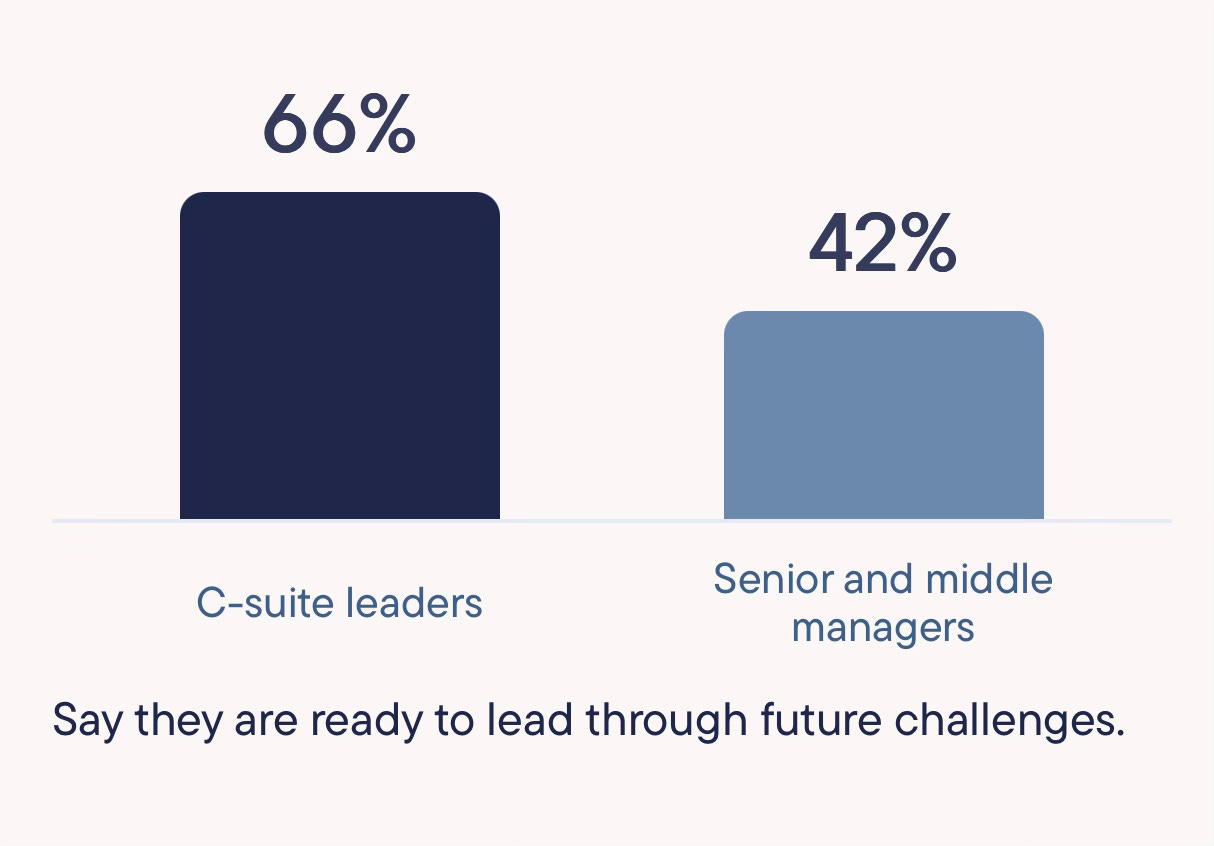
Senior executives may be the only layer that believes managers are ready. Two-thirds of executive-level people managers say they feel very prepared for today’s leadership challenges. Only 42% of senior and middle managers agree. Just 35% of managers say AI has made their job significantly easier; many report more employee anxiety and pressure to deliver with fewer resources. Every strategy on AI, career paths and organizational change reaches employees through this layer. If managers lack the skills for difficult conversations, new tools and shifting expectations, the weak link sits between the executive team and the workforce.
Job postings as competitive intel
Your competitor’s job posts may tell you more about next year’s strategy than its earnings call. Amazon began advertising satellite-engineering roles months before announcing Project Kuiper. Apple’s cluster of motion-science and optical-engineering openings pointed toward augmented reality well before it disclosed a product. The signal is in a pattern, not a single listing: recurring roles, changing seniority, new locations and unfamiliar technical requirements. Give someone on your team a monthly responsibility to track those patterns across your closest competitors. They are hiring for the future before they announce it.
Merging cultures is an increasingly valuable skill as every org is forced to change
Every organization is becoming a culture merger. Rocket Companies CEO Varun Krishna has spent three years blending Silicon Valley talent with Detroit grit, then took that work into $16 billion of acquisitions and an alliance with Compass. Half his leadership team came from Seattle, San Francisco, New York and Boston. His point is not that one culture wins. Loyalty, tenacity and institutional knowledge have value. So do outside perspective, speed and technical range. The work for leaders is deciding which habits to protect, which to retire and how to bring in new people without treating the people who built the business as the problem.
Data Point:
36%
Number of small-business owners that say they have positions sitting vacant, the highest share since June 2025, according to the National Federation of Independent Business
In Other News
Stop Doing Low-Value Work. (Harvard Business Review)
AI may be helping employees prepare for career mobility: Workers say they are using artificial intelligence to seek out development opportunities within their existing roles as well as outside their organizations. (HR Dive)
Entry-Level Jobs Require More Specialized Skills as AI Automates Tasks: AI know-how is one way fresh college graduates can stand out, study finds. (Bloomberg)
Saying ‘please’ or ‘ASAP’ may actually slow work down. (HR Dive)
14 Ways To Create An Onboarding Experience Employees Want To Stay For. (Forbes)
Employment Law Is Becoming The Law Of Information. (Forbes)