


Welcome to the latest edition of Human Capital Intelligence. As always, we would love to hear from you at ken@stibler.me with news ideas, feedback and anything else you find interesting.
Sent this by a friend? Sign up here to receive HCI in your inbox every week.
By Ken Stibler; Powered by Reyvism Analytics
What’s Working

Transmission of strategy to execution falters as managers ignore mandates
"Hushed hybrid" work arrangements reveal a deepening rift between executive leadership and middle management in corporate America. As CEOs push for stricter return-to-office (RTO) policies, a significant number of managers are covertly allowing their teams to maintain flexible work schedules, creating a precedent of the mid-level ignoring executive edicts. This phenomenon underscores a broader issue of strategy execution and highlights the increasing power of middle managers in today's corporate landscape.
The breakdown in policy implementation exposes a critical weakness in organizational structures, where leadership relies heavily on managers for ground-level intelligence and policy enforcement. This dependency has inadvertently granted middle managers substantial leverage, allowing them to quietly subvert executive decisions without immediate repercussions. The situation is exacerbated by a pervasive burnout epidemic among managers, who find themselves caught between meeting leadership demands and maintaining team morale.
This misalignment between strategy and execution poses significant risks for companies striving to adapt to post-pandemic work norms. The prevalence of "hushed hybrid" arrangements not only undermines organizational cohesion but also creates an environment of inequity and secrecy between teams. Moreover, it signals a broader lack of accountability within corporate hierarchies, as managers exploit their position to prioritize team satisfaction over company-wide directives.
Quote of the Week:
“What does it say if an employee feels they can’t take an extra day vacation or have to sneak out to go on vacation?...You don’t trust your employer, and that ultimately is a toxic relationship.”
—Nolan Church, co-founder and CEO of FairComp and Continuum, on manager mistrust contributing to the quiet vacationing trend
Counting the true cost of layoffs
While companies often view layoffs as a quick fix to reduce costs, new data reveals that the true price tag of workforce reductions extends far beyond severance packages. An exclusive Bloomberg News analysis of SEC filings shows that the average severance payout among US-listed companies is around $40,000 per employee, with health care firms offering some of the most generous packages. However, these direct costs are just the tip of the iceberg.
The hidden expenses of layoffs can be substantial and long-lasting. Productivity among remaining employees typically plummets after a downsizing event, with ActivTrak data showing an average loss of nearly an hour of productive time per day for each worker. This decline can cost a 100-person company over $50,000 per month in lost output. Furthermore, voluntary turnover rates spike by nearly 50% following a 10% workforce reduction, leading to significant replacement costs that can reach into the millions for larger firms.
Reading List
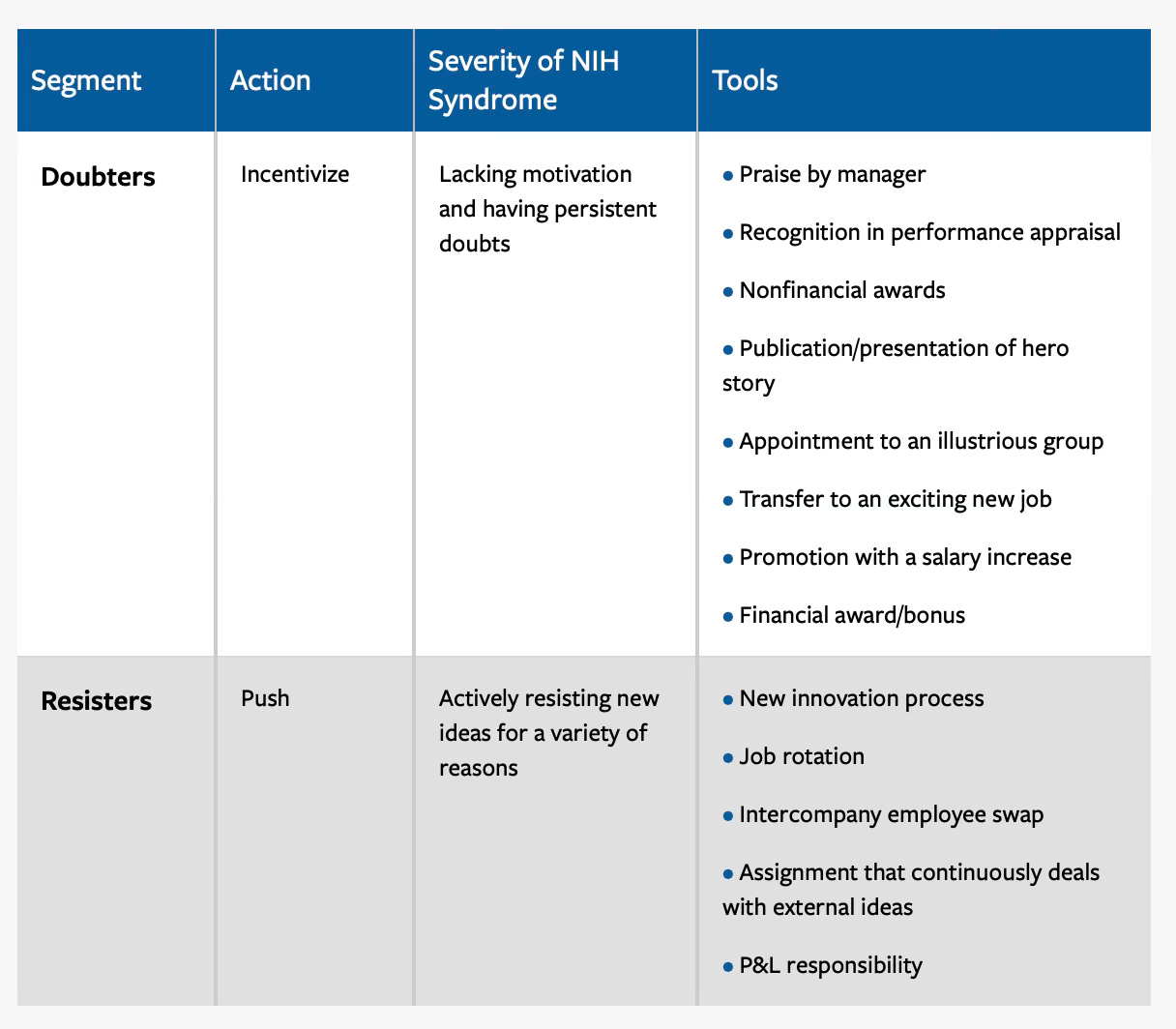
The cure for “Not Invented Here” syndrome
The "Not Invented Here" (NIH) syndrome, a bias against ideas originating from outside an organization, continues to plague companies and hinder innovation. A global survey of 565 innovation projects revealed that 84% were affected by NIH syndrome, correlating with reduced project success rates. To combat NIH syndrome, companies are implementing targeted strategies for two key groups: doubters and resisters. For doubters, incentives tied to openness to external ideas have proven effective. Other tactics involve cross-functional team assignments, job rotations, and employee swaps, as practiced by firms like BMW, Google, and P&G.
Read more from MIT Sloan
Avoiding direct messages helps boost transparency
In the era of hybrid and remote work, companies are exploring innovative strategies to maintain open communication and transparency across distributed teams. One emerging trend is the implementation of "No DM" policies on workplace messaging platforms, encouraging employees to conduct most conversations in public channels rather than through private direct messages.
Read more from WorkLife.
Amid structural labor shortages, countries turn to 6-day work weeks
As developed economies grapple with persistent structural labor shortages, some nations are resorting to unconventional measures, including the implementation of six-day work weeks. This trend, emerging in countries as diverse as South Korea and Greece, represents a stark departure from the global movement towards shorter working hours and improved work-life balance.
Read more in the New York Times.
In Other News
Skill gaps can cost employers a month of productivity each year, survey suggests. (HR Dive)
Is L&D Falling through the gaps? New report argues all of HR should take ‘ownership’ of L&D. (HR Brew)
How leaders can be confident, not arrogant, at work. (WorkLife)
My Employee Doesn't Have What It Takes to Do the Job He Wants - How do I let him down kindly? (Inc)
Are the 2024 elections to blame for the current labor market? HCI’s answer - no. (Employee Benefits News)
Adecco CEO says US tech hiring has likely bottomed out, but no upturn yet. (Reuters)
How job openings in the US cooled—without a spike in unemployment. (Goldman Sachs)
US Unemployment Rate Rises Again, Cementing Path to Fed Rate Cut. (Bloomberg)
Top economist: More people are looking for a job, but not because they were laid off. (Fortune)
Pandemic Shifted US Jobs Out of Big Cities Into Smaller Metros. (Bloomberg)
Employed job seekers express increasing concerns about unexpected layoffs. (HR Dive)
Employers used return-to-office to make workers quit. Then this happened. (The Hill)
It’s Getting Harder for Companies to Keep Politics Out of the Workplace. (Wall Street Journal)
Small Businesses Make Hard Choices as Insurance Costs Surge: Business owners rethink hiring and budgets as they confront higher premiums for health and other insurances. (Wall Street Journal)
The Insurance Industry Is Winning a Fight to Kill New Protections for Retirement Savers. (Wall Street Journal)
AI-enabled chatbots fuel chat-to-apply technology, which is one way employers can funnel high volumes of candidates through the hiring process. (HR Dive)