

Welcome back to HCI, your go-to source to keep up with the best insights from over 250 leadership, HR, and people sources. As always, we would love to hear from you at ken@reyvism.com with questions you’d like answered or topics covered.
Sent this by a friend? Sign up here to receive HCI in your inbox every week.
By Ken Stibler; Powered by Reyvism
What to do when the world is moving faster than your strategy

Most leaders are running 2026 organizations on 2024 assumptions. IBM’s CEO said as much when explaining his company’s 25% single day stock market collapse, to the Wall Street Journal this week. His assessment? The culture was too slow to change, the mindset still tied to massive licensing deals from a previous era.
This fear - and sometimes its real effects - are increasingly showing up in the C-Suite. ManpowerGroup surveyed 80 C-suite and senior talent leaders and found that only 3% are highly prepared to lead AI-enabled teams. Only 17% of organizations claim advanced workforce readiness. AI adoption keeps climbing. Employee engagement hasn’t moved. The tools showed up. The thinking didn’t.
The instinct when the world outruns your strategy is to build a new one. That won’t work if the assumptions underneath it haven’t changed. The better first move is personal: update your own mindset and resource allocation before you update the plan. Where are you spending your time? What are you reading? Who are you talking to? If the answers are the same as eighteen months ago, the new strategy will look a lot like the old one.
The redesign starts with how you organize your own attention. Block time this week to understand how AI is actually being used in your organization (or could). Talk to the people doing the work. You’ll find gaps between what was deployed and what is producing value. Those gaps are where your strategy needs to catch up. Trust me, you’ll feel better once you start.
Avoiding offloading talent to AI
Increasing amounts of the hiring market are becoming one person’s AI interacting with another’s. AI-generated resumes get screened by AI parsers. AI-written job posts attract AI-optimized applications. And the automation creep extends well beyond sourcing: 59% of managers now use AI when deciding who to lay off, 31% direct it to weigh sick days, 14% ask it to consider age, and nearly half of workers say they’d let AI negotiate their pay. Both sides are offloading the people decisions that matter most. The system is converging toward sameness.
This is happening while most organizations haven’t even equipped their people to use AI well. The Conference Board found that training still focuses on basic prompting, not advanced skills like managing AI agents. Only 14% of employees call themselves AI natives. Only one in three has done any employer-provided training in the past six months.
Strategically diverging from what is easy (putting human judgment back at the decision points that actually matter) is very quickly going to be the only way to differentiate when everyone else is defaulting to the machine.
Quote of the Week: Targeted re-design, not abstract change
“The ability to redesign how work is organized may become a more important determinant of success than technology deployment alone.”
— Sailesh Hota at Everest Group
Reading List:
Maybe don’t record that zoom call
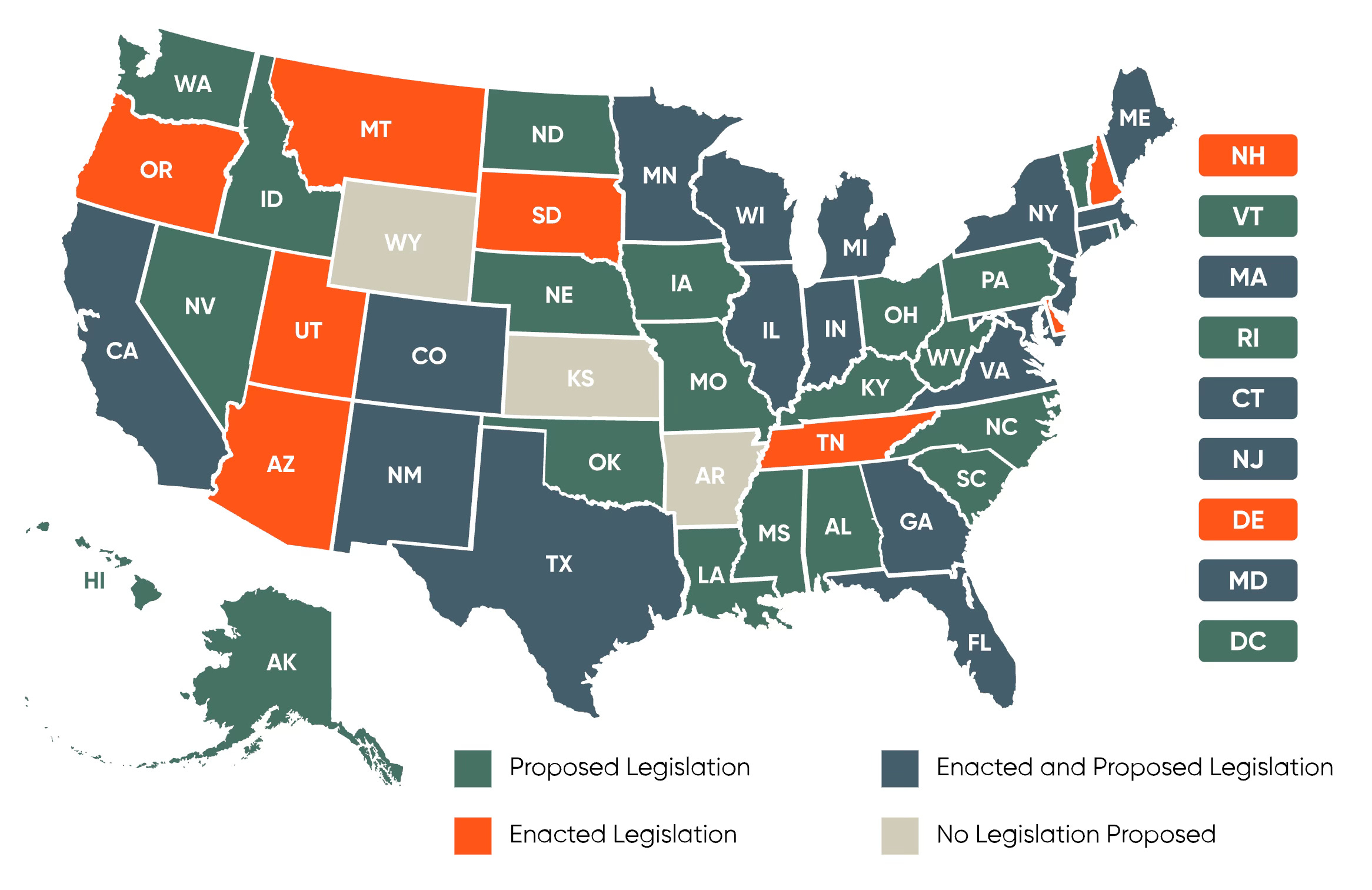
AI tools are recording almost every work meeting and social interaction now. Slim mics, wearables, notetaking apps that join calls uninvited. Eleven states require all-party consent to record conversations. Lawyers in turn are calling it a "ticking time bomb of legal risk" where every offhand comment becomes potentially discoverable. People are adding "I do not consent to transcribing or recording" to their Zoom display names. If your people are using AI notetakers and you don't have a policy governing it, you have an unmanaged legal exposure that grows every week.
Should you lead like Ted Lasso?
Ted Lasso is charismatic, empathetic, and beloved, increasingly a mascot of optimistic leaders in the hit eponymous TV show about an American coaching soccer. While Ted can offer some great lessons, he also ignores defeat, overpromotes based on belief rather than evidence, rebukes help, and never learns from his mistakes. Research in Current Directions in Psychological Science confirms what the show illustrates: good traits done to excess can backfire, optimism without accountability can be denial, and kindness without standards eventually become an inability to make hard calls. The leadership qualities you think are your greatest strengths may be the ones creating your biggest blind spots.
Big companies re-accelerate hiring
America's biggest companies are finding they might need more people after all. After a year of holding back, companies from CSX to Google have told investors they plan to hire to meet growth goals. The reason matters: executives are saying the costs and limitations of AI demand more people, not fewer. If you cut headcount during the pause and your competitors didn't, the re-acceleration is going to be expensive.
Data Point: Not a lot of confidence
3%
Number of leaders that feel highly prepared to lead AI-enabled teams according to ManpowerGroup/Everest Group.
In Other News
It’s still a tight job market, despite record-low initial unemployment claims: Initial claims for unemployment insurance fell to the lowest level since 1969 — but there are disturbing trends below the surface. (Marketplace)
AI is coming for job titles. Here’s what HR needs to know: The majority (63%) of AI-related job titles are in non-tech industries. (HR Brew)
AI Risk Disclosures Dominate Investor Filings This Year. (WSJ Risk and Compliance)
Setting limits on employee AI use: An inside look at how to establish AI spending guardrails without stifling innovation. (CFO Brew)
Confidence in HR may hinge on moving beyond task-level AI use. (HR Dive)
Nearly a third of workers admit to sabotaging their company’s AI—and smaller paychecks may explain why. (Fortune)