

Welcome to the latest edition of Human Capital Intelligence, your weekly brief synthesizing over 250 leadership, HR, and people sources to filter out the noise. As always, we would love to hear from you at ken@reyvism.com with questions you’d like answered or topics covered.
Sent this by a friend? Sign up here to receive HCI in your inbox every week.
By Ken Stibler; Powered by Reyvism Analytics
Deep Dive: Managing complexity as a key skill differentiator

Less stability, economic shifts, and rapid technological development mean that change management is getting a lot of airtime. Yet it’s actually managing complexity that’s the critical skill of the day. While change management focuses on helping people adapt to known transitions with clear start and end points, complexity management is about functioning in environments where variables are interdependent, goals conflict, and there may be no obvious path forward.
It requires pattern recognition, structured thinking, prioritization under uncertainty, and an ability to act decisively when clarity is partial or delayed. The pace of change is high, but the real challenge is that everything is changing at once, and nothing is linear.
In this context, complexity isn’t a risk to be avoided. It’s a capability to be cultivated. New research on employees found that early-career hires assigned to complex, high-status projects significantly outperformed their peers on promotions, recognition, and learning. Complexity meant exposure to cross-functional problems, deeper organizational systems, and the visibility that comes with being close to critical work.
Does this sound like change or complexity?
How AI fluency will change job requirements for benefit leaders. (Employee Benefits News)
Rise of AI deepfakes and fraudulent candidates are changing how TA recruits. (HR Brew)
Managing complexity at scale means building teams that can move without perfect conditions. It means hiring for and developing systems thinking, not just technical skills. And it requires intentionally exposing high-potential employees to messy work early whether difficult clients, multi-stakeholder projects, or ambiguous mandates. Complexity can’t be managed through checklists or change templates. It requires fluency in decision-making, risk framing, and information triage. In a world where AI, regulatory shifts, and operational interdependencies are accelerating, this is no longer optional.
Executives should treat complexity not as an environmental burden, but as an increasingly necessary strategic muscle. That means rewarding not just outcomes, but judgment under constraint. It means mapping roles where complexity is highest and ensuring those roles are pathways for growth. And it means building a culture where people are expected to stretch, because the ability to function in complexity isn’t innate. It’s developed. In unstable times, handling complexity may be the clearest differentiator between teams that merely respond and teams that lead.
Re-learning layoff best practices for the AI age
Layoffs have become a bragging point in the C-suite. From Wall Street banks to big tech, CEOs are openly linking headcount reductions to AI adoption, praising efficiency gains and cost discipline. The shift from cautious language to bold declarations carries risk. It threatens not only morale but also the successful rollout of the very technologies driving these cuts. The message may impress investors, but it often alienates employees whose buy-in is critical for the next wave of operational change.
Executives must remember that the more automated an organization becomes, the more fragile it is to the loss of key personnel. Many of the remaining employees are now single points of failure embedded in increasingly complex systems. This makes the fundamentals of layoff execution more important than ever. Clear communication, a single round when possible, and immediate re-engagement of those who remain are not outdated practices; they are safeguards for continuity and performance.
A leaner workforce does not guarantee a stronger one. In an AI-enabled enterprise, layoffs done poorly can erode trust and impair adoption of new systems. Managing reductions well is no longer just about empathy or optics. It is a strategic function of operational resilience.
Quote of the Week: Big company, small payroll
"Over the last 15 years or so, we went from 300,000 people to 212,000 people. We just got to keep working that down."
— Brian Moynihan, Bank of America CEO on the company’s headcount reduction efforts
Reading List:
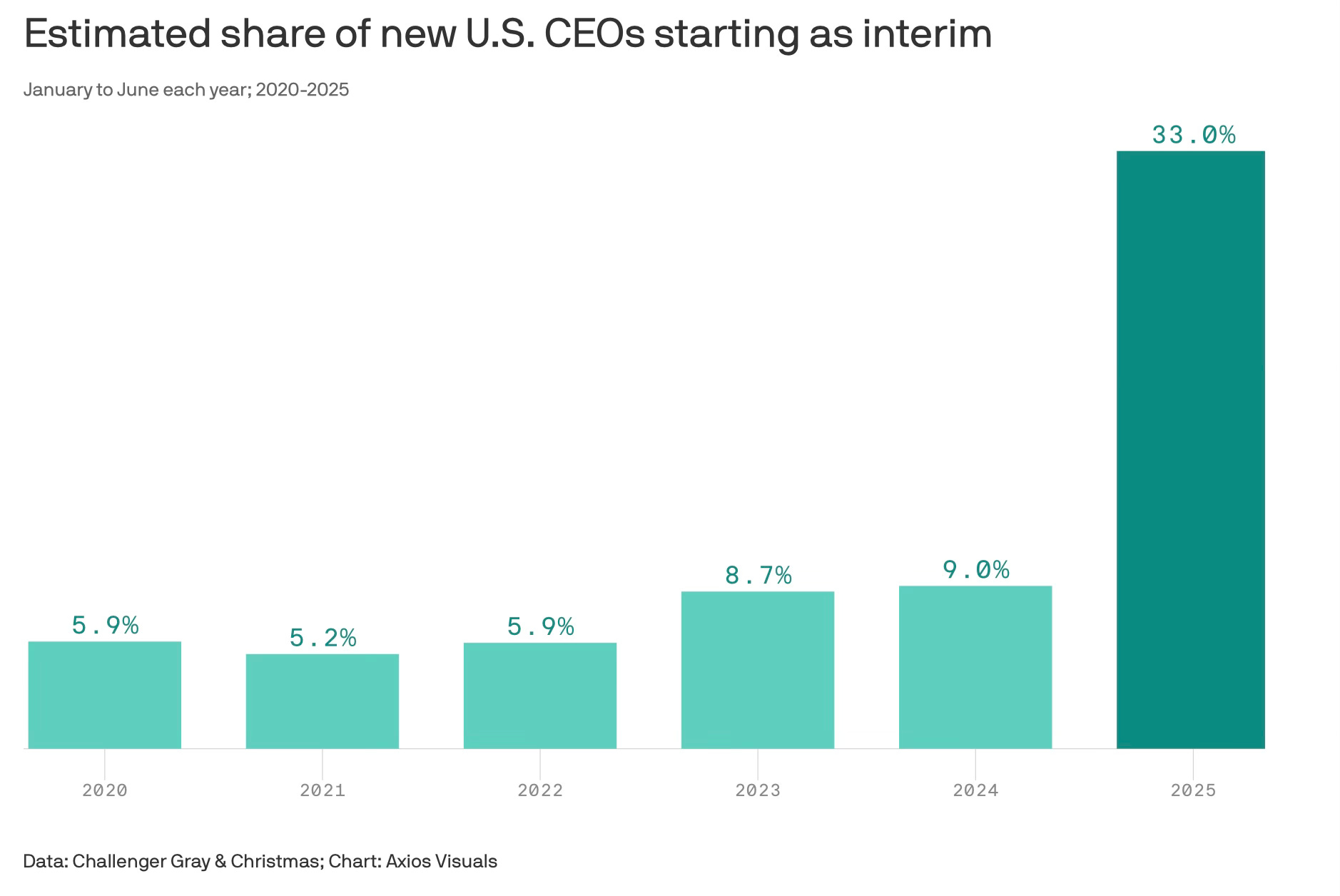
Changing CEO career paths
The path to the top is shifting, and Gen X is getting left behind. With baby boomers staying on longer and millennials rising fast, many Gen Xers are missing their window. Once seen as next in line, they’re increasingly bypassed in favor of leaders seen as more future-facing or cost-flexible. Interim and fractional CEO roles are also on the rise, adding to the sense that permanent leadership tracks are giving way to shorter, more transactional tenures. For Gen X, the lesson is clear: experience alone isn’t enough: visibility, adaptability, and positioning now matter more than ever.
Why do leaders prefer “yes men”?
New research shows leaders are less likely to empower employees who raise concerns and more likely to favor those who praise the status quo. While critical voices often drive better outcomes, they are perceived as threats unless paired with consistently helpful behavior. This bias shapes who gets heard, who gets promoted, and who gets sidelined. The result is a quiet tilt toward compliance over insight that discourages the very input that could prevent costly mistakes.
Preparing for personalization quicksand
As AI enables deeper personalization across benefits, learning, and development, it also invites complexity that most organizations are unprepared to manage. What begins as a competitive advantage such as more tailored experiences, higher engagement, and better retention can quickly become operational quicksand. Systems fragment, expectations spiral, and costs rise faster than value. The ability to personalize at scale is no longer a tech problem; it is a complexity management challenge. Without deliberate design and governance, companies risk delivering fractured experiences that drain resources and disappoint the very employees they aim to serve.
Data Point: Feeling Underestimated
58%
Number of U.S. professionals who believe they have a wide range of skills that are being underutilized in their current roles, according to LinkedIn's Workforce Confidence survey
In Other News
HR should stop thinking of employees in headcount—consider them as a collection of skills. (HR Brew)
Hiring confidence shifts as US employers become more cautious. (HR Dive)
Experience Requirements Have Tightened Amid the Tech Hiring Freeze. (Hiring Lab)
Good Luck to Them: Nearly Half of Workers Are Likely to Search for a New Job in the Next 12 Months. (Bankrate)
81 and working to survive. (Business Insider)
Why it's OK that fewer companies are offering unlimited PTO. (Employee Benefits News)
Leading indicator: California Approves Landmark AI Employment Regulations. (Littler)
AI adoption may heighten workplace isolation, survey shows. (HR Dive)
Strongly agree with your take on layoffs. Will go from celebrating if we managed not to get sued to celebrating if the business still runs properly.