Welcome to the latest edition of Human Capital Intelligence. As always, we would love to hear from you at ken@stibler.me with news ideas, feedback and anything else you find interesting.
Sent this by a friend? Sign up here to receive HCI in your inbox every week.
By Ken Stibler; Powered by Reyvism Analytics
What’s Working:
Clarity offers a powerfully simple way to motivate employees
I hear it from CEOs all over the country: the levers we used to pull to motivate employees aren’t working anymore. And in the fear, uncertainty, and doubt that comes with declining power to change behaviors, increasingly unorthodox attempts to push employees have emerged.
However, a new McKinsey survey shows that leaders need not fret about innovative motivation. Instead, going back to basics and providing workers with clarity about their role, how they’re assessed, and where the company is going has a higher impact than traditional tools like feedback or rewards alone.
Aligning employee goals with clear company objectives requires a coherent framework; with goal setting, performance reviews, feedback, and rewards all necessary to reinforce the connection between clarity and output. Employee engagement in the goal-setting process is shown to be critical for boosting motivation.
Managers’ skill in conducting performance reviews is a “make or break” for the motivational effects. The study found a significant motivational disparity between employees who receive ongoing feedback and those who don't. The study also found that performance ratings may have negligible impact on motivation, contrasting with the positive effects of reviews that reflect individual goal achievement.
While the right answer may be intuitive, leaders may face a negative feedback loop, struggle to retool their processes as immediate demands preventing time investment in longer term process redesign. Meanwhile for industries in flux, leaders themselves may not have the clarity their people are asking for.
Yet AI tools are increasingly offering a mirage of clarity when CEOs can’t, or won’t. Another recent survey found employee’s number one desire for AI usage was to provide feedback on their work and clarity around how to improve. Alternately, managers focused on improving output, highlighting a messy middle where strategic priorities breakdown on their way to becoming employee realities.
Thanks for reading Human Capital Intelligence! Subscribe for HCI in your inbox every week
Workers increasingly live paycheck to paycheck
Despite wage growth outpacing inflation by over $1,400 over the last three years, 44% of the American workforce still do not earn enough to cover their family's basic needs, assuming a dual-income household with two children.
PNC Bank's Financial Wellness in the Workplace Report, also found that 60% workers are living paycheck to paycheck, with 31% expressing a need for early access to their wages to make ends meet.
“Key aspects of the American dream seem out of reach in a way that they were not in past generations.”
Emerson Sprick, an economist the Bipartisan Policy Center.
A Wall Street Journal/NORC poll found that while the vast majority of Americans consider homeownership, financial security, and a comfortable retirement out of reach. With marriage increasingly being put off as well, GenZ are slowly gaining the moniker “doomers” as they are characterized by declining economic prospects, pessimism, and a lack of trust.
Managers may very well see this as “not their problem” but for business leaders —whom the NORC poll shows are the most trusted institution in America — the situation is an opportunity to step up, and provide a new bargain of stability and opportunity for loyal and engagement.
Retirement crisis hits the first rungs on the employment ladder
Competition for entry-level positions and internships has reached a fever point, with the number of graduates steadily increasing while the number of available jobs and internships drops. Many blue-chip employers are seeing competition for their entry-level slots drastically rise, sending acceptance rates below 1%- making a company like Verizon more selective than Harvard by over 350%.
With Americans living and working longer, and ChatGPT about as productive as your standard entry level employees, graduates increasingly find the white collar job market backed up. This combination isn’t going anywhere. Life expectancies are expected to continually rise, putting pressure on retirement savings and making later retirements the new normal.
While parents and students are worried, businesses so far are sanguine. With internship programs expensive and older workers more culturally aligned to many business owners’ expectations, CEOs understandably meet the plight of college grads with a shrug.
However, several years of slow recruitment risks creating a massive succession risk. As early career employees miss mentorship opportunities, companies face a smaller pool of skilled mid-level talent, pushing prices up for this critical level.
Quote of the Week:
The good news for Gen Z workers is that those who don’t land great entry-level gigs may become more resilient by creating work on their own with free courses or small projects. If companies don’t want to train them, they’ll train themselves. Rejection can go both ways.
— Diane Brady, senior editorial director of the Fortune CEO Initiative
Reading List:
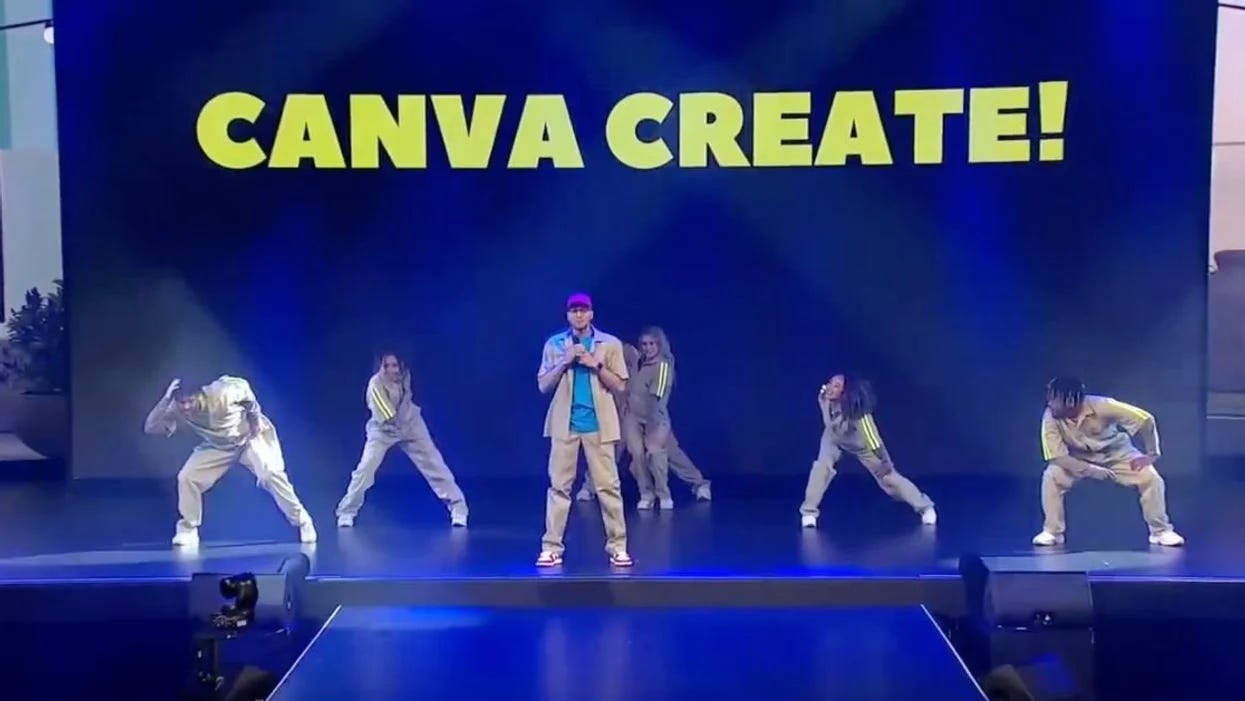
The Canva musical featuring company executives was widely made fun of, but is worth a watch for a laugh and a lesson in how to shred your legitimacy
Is relatability worth legitimacy?
In an effort to appear more relatable and humanize corporate narratives, executives are increasingly turning to social media to post quirky videos. From Canva to Blackjack, corporate communications professionals have decided that awkward videos trying to make complex concepts relatable to average employees is the next big thing. These videos have quickly gone viral, while many others from smaller companies float around platforms and receive engagement from employees. Yet while the employees may be laughing, don’t mistake their amusement for engagement, they are laughing at you.
Rise of digital regulations requires better HR-IT collaboration
The escalating threat of cybersecurity breaches has thrust human resources departments into the forefront of corporate defense strategies. With phishing attacks accounting for 16% of all data breaches, and costing an average of $4.76 million, CHROs are now tasked with spearheading anti-phishing training and fostering a culture of cybersecurity awareness. This shift underscores the critical role of HR in safeguarding sensitive employee data and mitigating the risks associated with human error in security incidents.
Facing low engagement, companies increasingly turn to coaching
While disengaged employees are estimated to cost $8.9 trillion globally, organizations have spent years trying, and failing, to get their people to show up rather than just clock-in to work. As compensation and flexibility have failed, many businesses are turning to coaching as a remedy. While managers often lean into pushing productivity rather than developing or mentoring, external coaches are being brought in to assess current engagement levels, set clear individual goals, and serve as a conduit to open up communication.
Bosses Are Finding Ways to Pay Workers Less: After a tumble in pay for white-collar job openings, wages for new hires are now falling. (Wall Street Journal)
Federal judge strikes down FTC noncompete ban. (HR Brew)
Fertility benefits are on the rise: report: Stakeholders have long emphasized the positive impact of such benefits on recruiting and retention. (HR Dive)
Jobs must be redesigned to align with evolving company needs, McLean & Co. says. (HR Dive)
Losing Your Job Used to Be Shameful. Now It’s a Whole Identity. (Bloomberg)
Faced with bullish bosses, workers in Japan hire firms to help them quit. (Fortune)