

Welcome back to HCI, your go-to source to keep up with the best insights from over 250 leadership, HR, and people sources. As always, we would love to hear from you at ken@reyvism.com with questions you’d like answered or topics covered.
Sent this by a friend? Sign up here to receive HCI in your inbox every week.
By Ken Stibler; Powered by Reyvism
Companies are rushing back to human intelligence

Consultancy EY is putting $100 million into cash awards for adaptability, innovation and judgment. It is a not-so-small and very telling sign of a quiet rush back to human intelligence.
Knowledge work has always depended on the person who can build trust, ask the question nobody else asked, see trouble coming and take responsibility for a hard call. That work is suddenly easier to distinguish from routine output.
Professional-services firms are seeing it first, putting more junior people beside experienced colleagues because the work that once brought them together is disappearing. Remote work weakened that apprenticeship and automation can hollow it out further, leaving companies with polished employees who have never made a difficult call, fought a difficult client, or had to manage senior expectations on a project they didn’t fully understand.
Human intelligence is refined by opportunities to use it. AI may continue to absorb most HR conversations for the foreseeable future, but making sure you’ve got simple ways to nurture struggling juniors is a hedge against the artificial intel not working out as promised.
The Jevons paradox shows that when work gets more efficient we do more of the same work - it’ll be up to us as leaders not to use cleared admin work to generate more, and instead spend on nurturing and challenging the humans on our bench.
It's time to re-assess recruiting spend as job market effectiveness crumbles
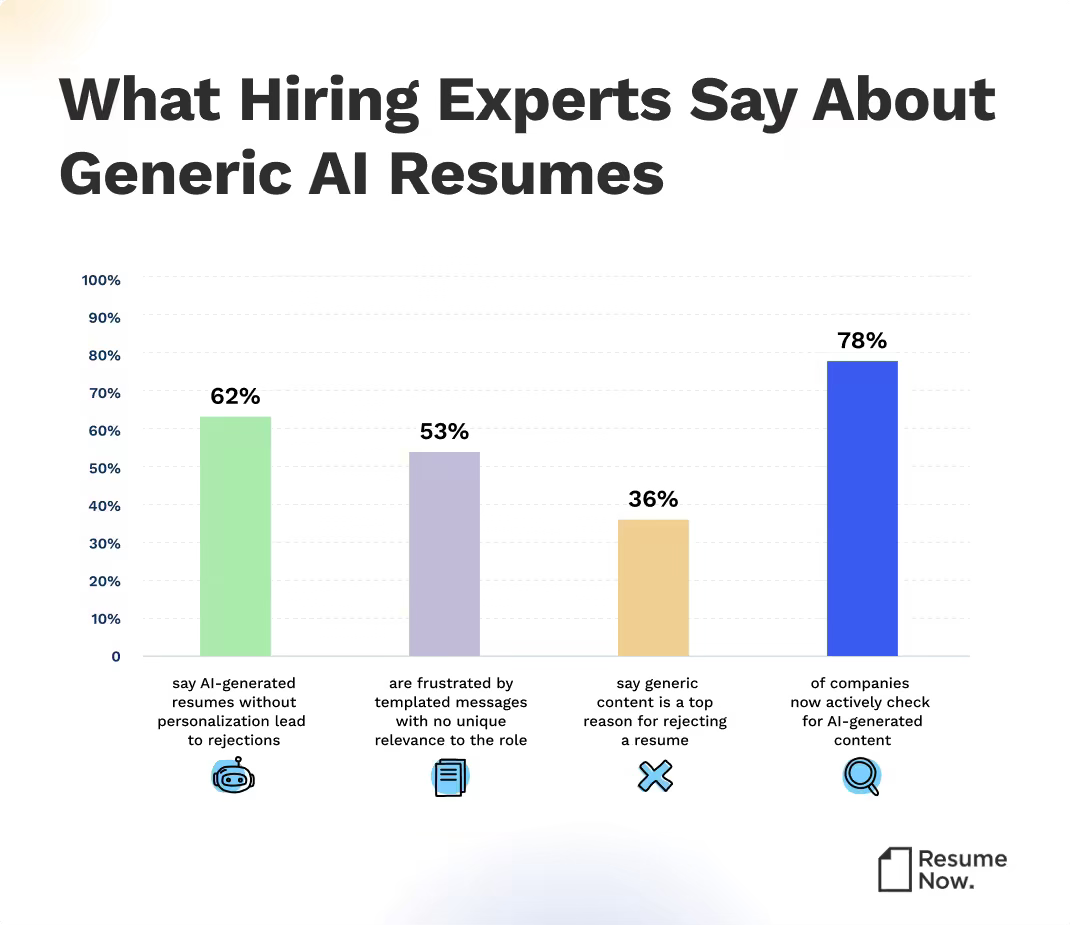
The résumé has stopped being evidence as applicants can generate polished, tailored applications at industrial scale. One company in the space found that 58% of job seekers use AI (those are the ones that admitted it) and those users submit 41% more applications. Employers have answered with automated filters resulting in an arms race in which candidates send more convincing material and screening systems see less meaningful difference between it. Good people disappear beneath an avalanche of polished noise.
That makes high-volume recruiting an increasingly ineffective cost center. You pay to source applicants, pay software to sort them and ask recruiters to clear the residue, even as each pass tells you less about who can actually do the work. A keyword filter and one-way interview can reduce visible workload while hiding the candidate you needed.
The first screen increasingly now requires more care - and spending - timed work samples, referrals and live assessments work because they create evidence that cannot be mass-produced. This changes the economics of hiring in a way many firms haven’t fully thought through.
Without some magical (there are technical ways to do this with natural language processing, but it’s complex) way to identify the intersection of authentic resumes and component applications, you are paying to reject increasingly similar applications while the talent you want gets buried.
Quote of the Week: Pain in the Application
“It’s almost impossible to identify the signal from the noise.”
— Anthony Cheung, chief content and culture officer, AmplifyME
Reading List:
Managers cover confidence gaps with AI
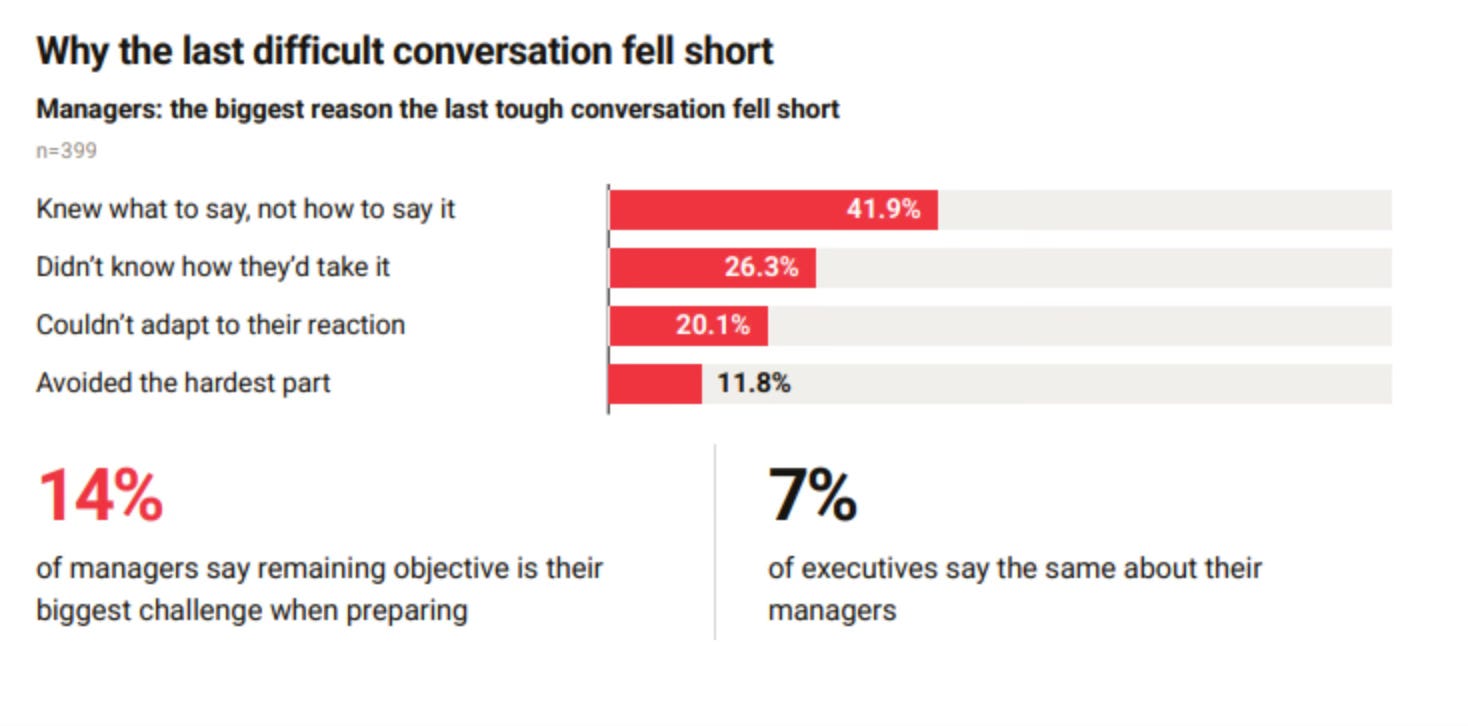
A manager has a hard conversation on Friday and no idea how to prepare. The public chatbot is open, immediate and confident. The Predictive Index found that 72% see public AI tools as useful for this work, and 44% have entered employee names or performance information. 77% of frontline managers say their organization has not given them enough guidance for daily operational issues. This is a support failure with a privacy risk attached (especially as the usual states close in on tighter regulation). It’s worth giving managers a safe internal tool, conversation guides and direct support before a difficult case arrives.
Radical honesty is key to keeping up with rapid change
When the technology moves quickly, leaders feel pressure to sound settled before the facts are. That is how change gets magnified. A leader declares an AI direction, managers treat it as settled policy and teams start making choices around assumptions nobody has tested. Talogy found that 78% of talent leaders and practitioners struggle to assess AI skills, while only 38% feel very prepared to change job descriptions and career paths around AI. Say what is unclear. Ask the basic question. Name the decision that still needs evidence and invest in the learning to get it. That gives people a direction without pretending the answer is finished.
Remote work ROI shows why employees fight so hard not to return
A return-to-office mandate changes the compensation package, whether the pay stub changes or not. A recent study estimated that flexible arrangements added 56% to the effective value of pay through recovered time and avoided costs. The exact figure depends on assumptions. A commute still takes money, hours and attention; a separate survey found a one-third reduction in quit rates and no significant performance penalty over two years. Require office time where it improves mentoring, decisions or client work. Be ready to explain the return you expect from taking that value away.
Data Point:
44%
number managers surveyed had entered employee names or performance details into public AI tools while preparing for difficult conversations accord to data from Predictive Index
In Other News
Nextdoor’s HR team halts people work once a month and dedicates the day to AI. (HR Brew)
For young workers, the college advantage is breaking down. (Labor Matters)
Only daily AI users feel positively about job security. (HR Dive)
States Are Regulating AI Faster Than Washington—What Employers Must Know Now. (EBG Law)
Employers at an ‘inflection point’ as health costs near double-digit increases: But many won’t be able to take drastic cost-cutting measures until 2028 at the earliest, the Business Group on Health’s president and CEO said. (HR Dive)
AI-related growth edges out job cut fears in finance execs’ tech outlook: In an informal CFO Dive poll, 54% said they see AI’s biggest workforce impact being higher employee productivity. (HR Dive)
AI-proof? Younger workers desert the digital world for traditional crafts. (The Guardian)