

Welcome to the latest edition of Human Capital Intelligence, your weekly brief synthesizing over 250 leadership, HR, and people sources to filter out the noise. As always, we would love to hear from you at ken@reyvism.com with questions you’d like answered or topics covered.
Sent this by a friend? Sign up here to receive HCI in your inbox every week.
By Ken Stibler; Powered by Reyvism Analytics
From change management to change leadership

Executives have long treated “change management” as a necessary evil to roll out new systems or processes. That worked when change was episodic and predictable, like installing a new accounting system every decade. The world that SMBs face today is different. Shifts in technology, regulation, and customer expectations overlap and accelerate. Change is no longer an event to manage. It is a constant condition to lead.
Instead of management (which is about narrow and discrete standardization) today’s executives need to lead change. Change leadership reframes transformation as an ongoing responsibility. The goal is not simply to minimize disruption but to keep people focused, capable, and motivated when the path ahead is uncertain. Employees are already adapting, often faster than leaders expect. What they need is clarity about where the organization is headed, visible proof that leaders are committed, and confidence that the team can navigate setbacks without losing momentum.
Three imperatives make change leadership actionable.
Anchor every change in a clear purpose tied to outcomes employees can measure. A new tool or process should be framed not as cost cutting but as freeing time for higher-value work or improving customer responsiveness. When purpose is simple and specific, people can rally behind it.
Embody the values you want others to live. Leaders earn trust when they use the same systems, admit mistakes, and remove policies that conflict with the direction of change. Culture shifts when employees see leaders acting with consistency, not when they hear slogans repeated.
Maintain calm intensity. Change always brings surprises. Leaders who acknowledge problems without panic and keep a steady operating rhythm show that resilience matters more than perfection. Regular reviews, visible progress, and small wins create confidence that the organization can adapt.
The old model of change management tried to finish projects on time and on budget. The new reality demands change leadership, an approach that recognizes transformation is going to be a permanent need and builds an organization capable of learning and adapting in real time.
New term, older problem: Job hugging
After years of job hopping, many workers are now “job hugging,” clinging to their current roles despite frustrations. The Wall Street Journal notes that recession risk, hiring freezes, and AI-driven disruption have led American workers to feel the least confident about finding a job in recorded history.
For employers, this creates a paradox. Retention looks stable on paper, but the underlying driver is fear, not engagement. Workers who stay because they feel stuck are less likely to innovate, speak up, or seek growth opportunities. Over time, that stagnation can undermine culture and performance just as much as high turnover.
Leaders who want to avoid this trap should recognize job hugging as a warning signal. Doubling down on career development, internal mobility, and upskilling can turn defensive loyalty into proactive commitment. Otherwise, organizations risk building workforces that show up every day but are checked out in all the ways that matter.
Quote of the Week: Managers Diverge
“I can’t be a manager of this many people and also still be the go-to person for every single need.” — Stephen Condor, customer-service manager
“My mantra is simple: I don’t ask about their personal stuff at all. There is a boundary, and I do not cross it.” — Harsha Sanagaram, Microsoft engineering manager
Reading List:
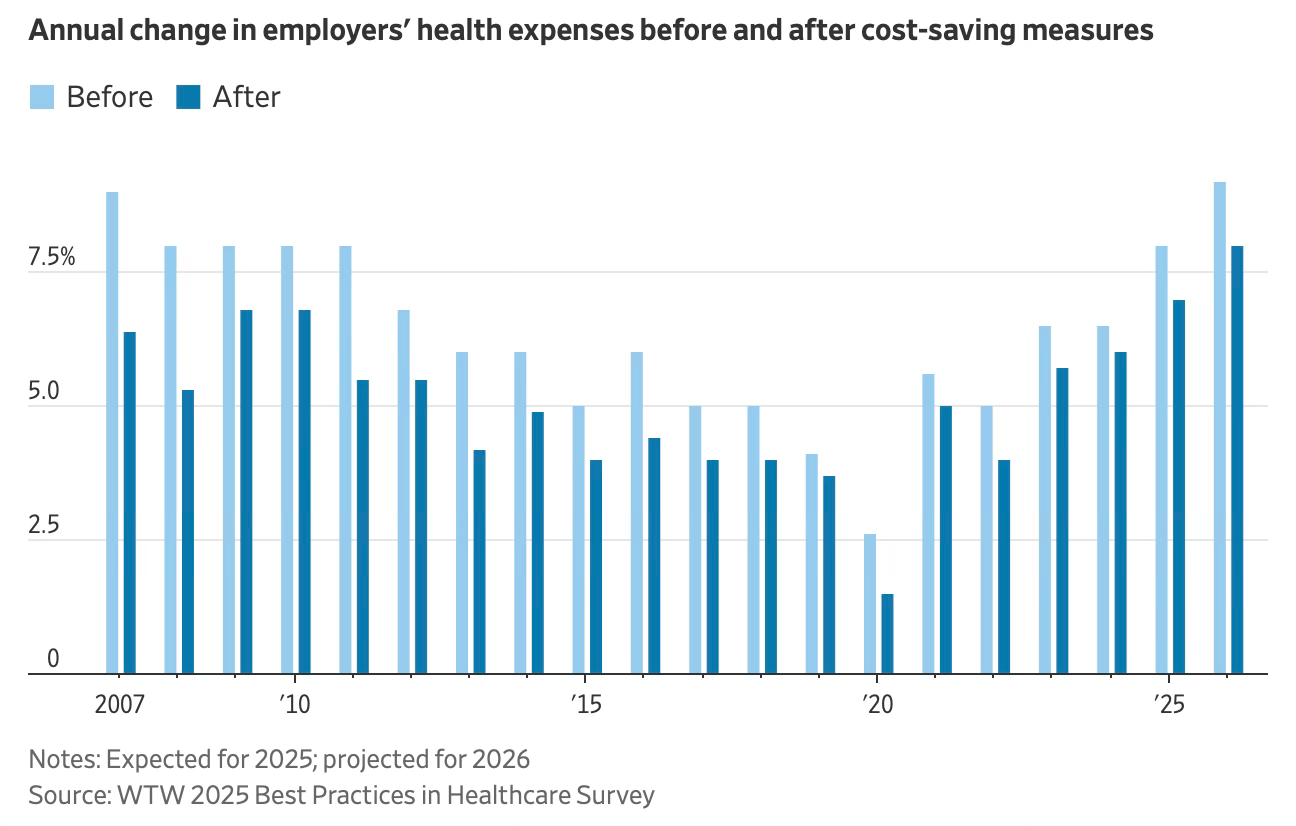
Health care costs hammer small businesses
Employer health-benefit costs are projected to rise 6.5% next year, the fastest increase since 2010. For small firms, that makes health coverage the second-largest expense after payroll, with many redesigning plans, raising premiums, and shifting more costs onto workers. For businesses already struggling with tight margins, these increases are no longer just a budgeting challenge but a rising financial risk.
How to manage your team without a clear strategic direction
While HCI has frequently covered the difficulty today’s CEOs have in setting strategy, that frustrating ambiguity can be debilitating for key execs; paralyzing teams, stalling momentum, and weakening credibility. New HBR research highlights that leadership in these moments is less about waiting for decisions and more about creating the conditions for progress. For key executives constantly frustrated, the report is worth a read.
What to do if ICE comes to your workplace
Immigration enforcement has become a realistic risk as federal audits and raids increase across industries and business sizes. Businesses unprepared for a visit risk legal exposure and a sharp hit to workforce morale. Reviewing I-9 records, designating a legal point of contact, and training managers on protocols are no longer best practices—they’re necessary defenses that can help a company protect both its people and its reputation
Data Point: Massive mental health
300%
The increase in the share of workers taking leaves of absence for mental health reasons between 2019 and 2024, according to a new analysis from ComPsych.
In Other News
The costs and benefits of awarding flat raises during down years. (HR Brew)
McKinsey is doubling down on entry-level hires — even in the AI era. (Business Insider)
Bosses admit they’re using return-to-office mandates to trim down teams—without needing to announce layoffs. (Fortune)
FTC drops Biden-era noncompete ban but promises continued enforcement. (HR Dive)
Older job seekers’ complaints about ageism have skyrocketed, Glassdoor says. (HR Dive)
Gallup: Hybrid work rates have stabilized. (HR Dive)
AI Use at Large Companies Is in Decline, Census Bureau Says. (Gizmodo)