


Welcome to the latest edition of Human Capital Intelligence. As always, we would love to hear from you at ken@stibler.me with news ideas, feedback and anything else you find interesting.
Sent this by a friend? Sign up here to receive HCI in your inbox every week.
By Ken Stibler; Powered by Reyvism Analytics
What’s Working:

Embracing bottom-up innovation in the workforce
While CEOs fret about AI-business model impact and compliance officers worry about risk, employees are busy adopting AI - whether their company supports it or not. Recent surveys from McKinsey show that 91% of employees are already using generative AI for work, either through internal or publicly available tools. This grassroots adoption highlights the workforce's agility, and eagerness, to leverage new technologies, often outpacing their employers' formal strategies.
This bottom-up innovation presents both challenges and opportunities for companies. While organizations grapple with defining roles and responsibilities for AI usage, with only 10% of US chief legal officers believing these are clearly defined, employees are forging ahead. While there is a tendency to equate new as risky and approach with policies and regulation, the line can become a rich source of organic innovation. Employees have a better understanding of practical use cases and can implement solutions with less bureaucratic friction.
Meanwhile, talent leaders have been repeatedly sounding the bell about the lack of AI talent…which seems ridiculous to HCI. The current AI platforms are designed to be used by anyone, and often rewarding experimentation, play, and paths of least resistance. For the vast majority of companies, a 20-year-old motivated to get a task done faster is just as useful as a machine learning engineer.
"Gen Z is very strong in their willingness to take risks with technology and learn from failings."
— Jenny Maxwell, Head of Grammarly for Education
One area where skill gaps have emerged to haunt AI being critical thinking. A friend in the tech space described “prompt engineering” as 90% the ability to ask critical questions, and 10% knowing how an algorithm works. Without the ability to ask good questions, the power of AI systems turns into a double edge sword which increases key person risks and makes all work progressively mediocre. One BCG study on AI at work actually found that work product was better with a 70%, rather than a 90%, accurate model as it forced the humans to engage.
At the intersection of AI’s productive potential, and responsible employee-led innovation lies learning and development. Fortune 500 companies are exhibiting a growing emphasis on creating support systems and mentorship opportunities that allow for bidirectional learning between experienced employees and tech-savvy newcomers.
In all the rush, risk, and realignment that AI is forcing, leaders should consider supporting, rather than squashing, a natural environment which encourages experimentation and learning from failures. It can help avoid the pitfalls of top-down, centrally planned AI adoption programs that often misses nuance, use, and impact.
Employee loyalty is becoming a scarce asset
Recent data suggests that employee loyalty, once a cornerstone of corporate culture, is rapidly eroding. Only 23% of workers aged 42 and under expressed strong interest in staying with their companies long-term, with this figure dropping to a mere 18% for those aged 30 and under, according to a May study.
Employees are increasingly prioritizing their own interests over organizational loyalty, eroding a quiet, but critical, piece of the workplace engagement puzzle. The tendency can be to blame generational differences, but regardless of responsibility presents a significant challenge for leaders accustomed to relying on employees (as we’ve covered in past weeks with manager insubordination, quiet vacations, and more).
"I don't think loyalty pays off... It's all very transactional. You're only valuable for as long as they see you as valuable."
— Vera Lau, GenZ employee on her cohort’s views of loyalty
The days of fostering loyalty through simple perks like water cooler conversations and pizza parties are fading. Instead, companies must adapt to a new reality where loyalty is no longer a default state, but a precious asset that must be earned and continually reinforced.
In a world where talent is increasingly mobile, leaders that foster genuine loyalty (showing true concern and escalating trust while providing bth personal and professional clarity) will be better positioned to retain top talent, maintain institutional knowledge, and create a stable foundation for long-term success.
Quote of the Week:
“[During previous generations], if you stay loyal to an organization...they’ll take care of you for life. Right now, the retirement benefits are not livable.”
—Jerome Zapata, HR director at Kickstart Ventures, on why younger employees aren’t as loyal to their employers
Reading List:
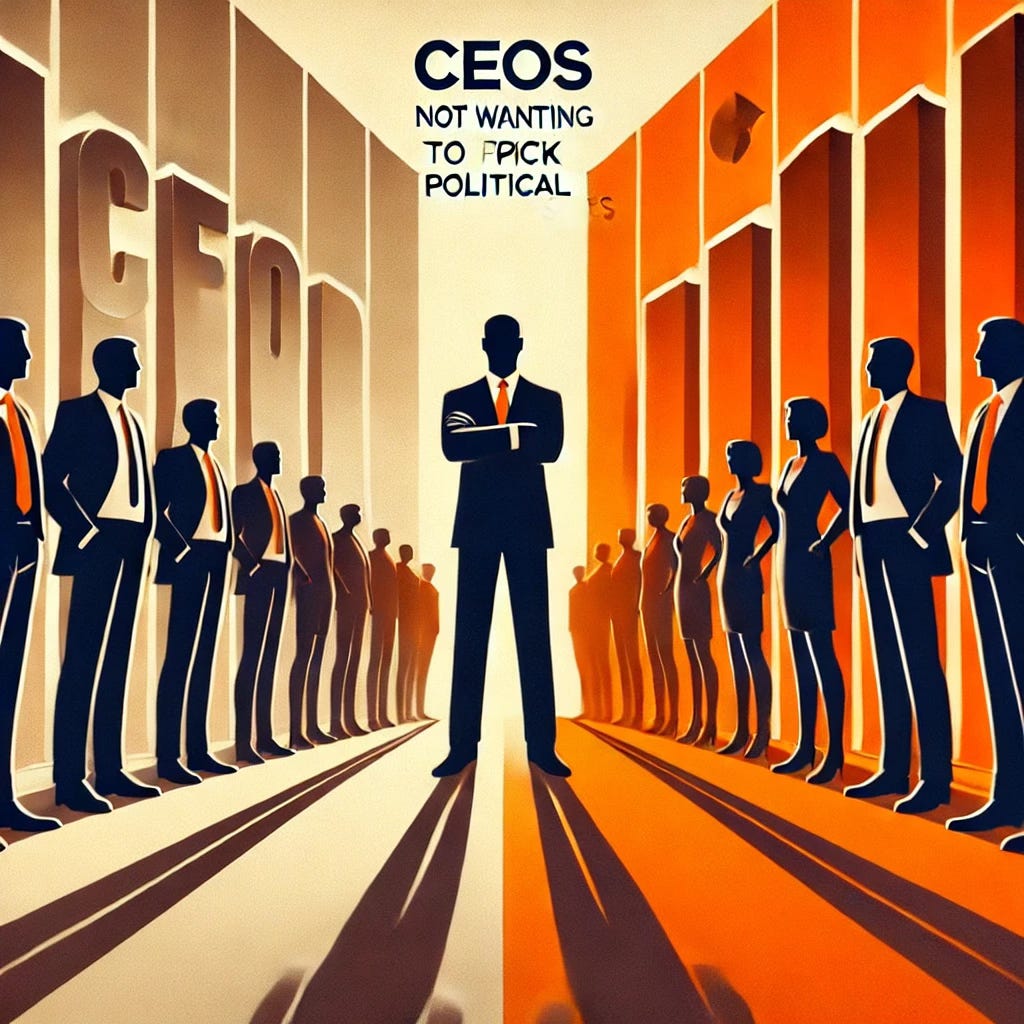
CEOs increasingly see the election as a choice between flavors of uncertainty
The upcoming US presidential election presents a quandary for many CEOs and business leaders, who find themselves without a clear political alignment. Traditionally pro-business Republicans have shifted away from their historically business-friendly stances on issues like free trade and regulation. On the other hand, Vice President Kamala Harris’s potential policies on taxes and regulation remain unclear, leaving business leaders to choose between two uncertain risks.
Read more about the two ambiguous election platforms on Wall Street Journal.
Gamification - your new favorite system for managing engagement
As employee engagement languishes at near-decade lows, gamification - building in elements of reward and play into processes - is emerging as a critical tool for boosting employee engagement. Real-world success stories underscore its effectiveness: Autodesk reported a 40% increase in trial usage and a 15% boost in conversion rates, while Extraco Bank saw a remarkable 700% increase in client acquisitions. For organizations looking to implement gamification, key elements include engaging storylines, point systems, real-time feedback, and structured progression levels.
Read the full HCI guide to gamification for engagement on www.KenStibler.com
“Do as I say, not as I do” works as well for employees as kids
Starbucks' new CEO Brian Niccol, won't relocate to Seattle but will have a remote office in California. Meanwhile the company’s rank and file are required to be in the office at least three days a week if they live within an hour of headquarters. This disconnect isn’t worth the work from home: when leaders exempt themselves from policies they enforce on their workforce, they send a powerful message about what is tolerated while breeding resentment and mistrust. This approach reduces engagement just as dissatisfaction and insubordination are rising, and can create real risks (as exhibited below).
Read more in the Bloomberg.
How Bank of America’s rules hid a culture of dangerous non-compliance
Following the death of an intern in 2013, Bank of America instituted rules limiting work hours and mandating protected weekends. However, a Wall Street Journal investigation reveals that senior bankers have found ways to bypass HR controls, often pressuring junior staff to participate in the deception. The culture of non-compliance is reinforced by a widespread acceptance of rule-breaking as part of the industry's rite of passage. The disconnect between BofA stated policies and its line-level reality underscores a critical failure in corporate governance and raises serious questions about the bank's commitment to employee safety and well-being.
Read more in the Wall Street Journal.
Data Point:
28%
The percentage of US employees job hunting in July, up almost 10% YOY on fears of layoffs and continued dissatisfaction with how the great resignation shook out.
In Other News:
A leadership exodus looms as HR leaders consider leaving their jobs. (HR Dive)
Manager tenure is often correlated to high performance, but manager effectiveness trends downward over time. (HR Dive)
Corporate loyalty does not pay off, HR expert says, as job hopping gains currency among young people. (CNBC)
Despite softening labor market, companies still hunger for sales and marketing talent (Benefits Pro)
Volunteering as a retention and recruitment strategy. (Employee Benefits News)
Employee Happiness Plummets in Q2: While Employees at Large Organizations Are Unhappier Than Ever. (Bamboo HR)
Employers are increasingly forced to respect the ‘right to disconnect’. (Financial Times)
What to know about WARN Act notices and why they precede big layoffs. (Detroit Free Press)
Human resources needs a major overhaul. (Fast Company)
Your boss is not your parent: It is harder now to be both. We ask way more of each other than we once did. (Financial Times)
The oldest members of Gen X are turning 60 next year. Many can’t afford to stop working any time soon. (Wall Street Journal)