


Welcome to the latest edition of Human Capital Intelligence. As always, we would love to hear from you at ken@stibler.me with news ideas, feedback and anything else you find interesting.
Sent this by a friend? Sign up here to receive HCI in your inbox every Monday morning at 6am sharp.
By Ken Stibler; Powered by Reyvisum Analytics
What’s Driving the Week
Labor Market Turns More Business-Friendly, but Employee Engagement at Risk
Labor productivity for US workers is on the rise, experiencing its most significant increase in three years with a 4.7% annualized rate in the third quarter. This surge in productivity, along with a 0.8% decrease in unit labor costs, signals efforts by companies to enhance efficiency amid high borrowing costs.
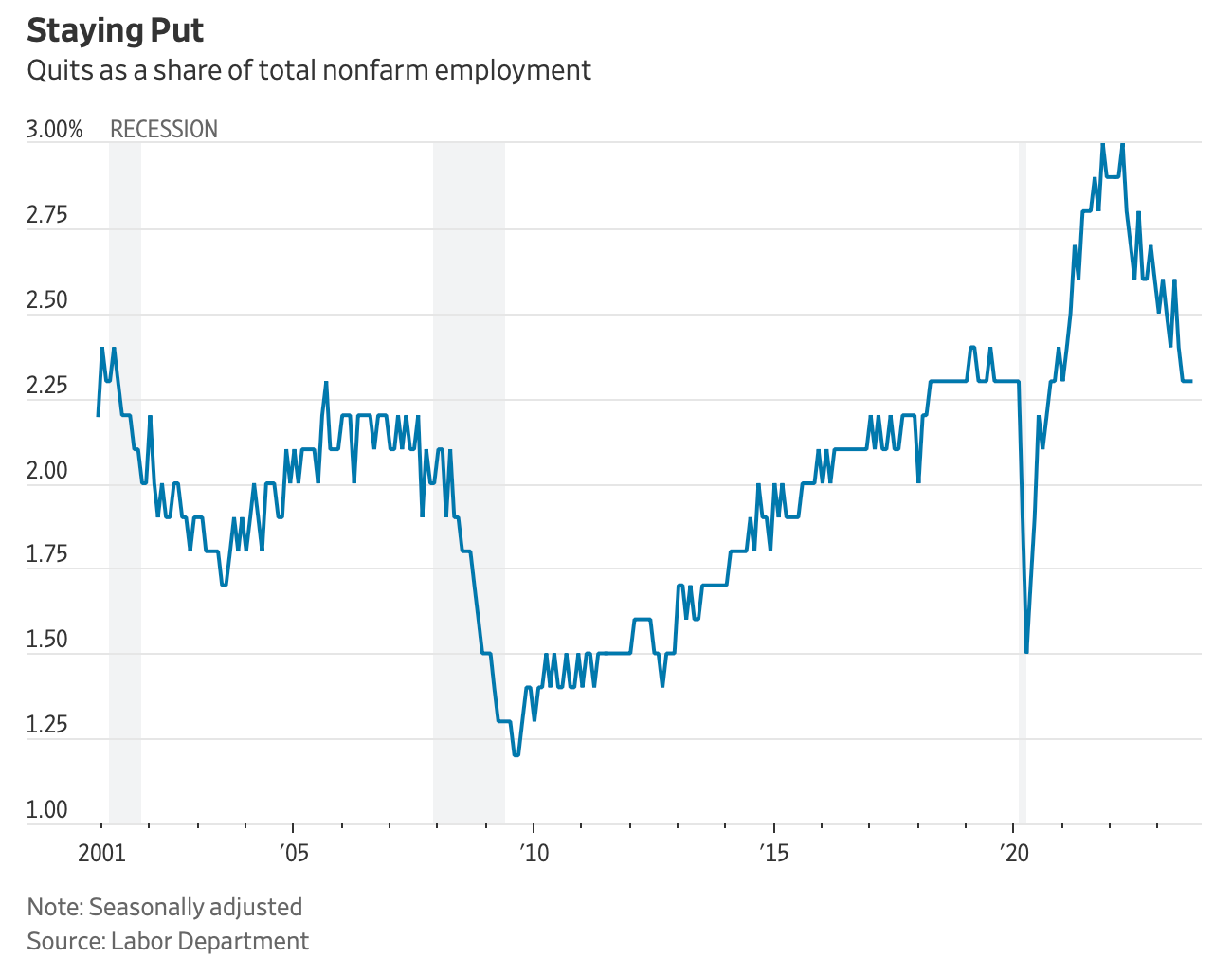
Meanwhile, the white-collar labor market is softening, pushing voluntary turnover to pre-pandemic levels and prompting new concerns about budgetary challenges and decisions, such as staff cuts and project postponements. The decline in attrition is prompting a reassessment of workforce management strategies, with companies navigating challenges in the financial sector.
In 2023, 96% of businesses implemented downsizing, and despite ongoing workforce challenges, 92% of employers anticipate additional layoffs in 2024, according to Randstad's Global Severance research report. The study highlights that most organizations are ill-prepared to support their employees through these cuts, emphasizing the ongoing shifts and challenges post-COVID.
These broader layoffs is that they’re not at all related to performance…They’re related to just the company needing to function moving forward with slimmer margins and better, just tighter books.”
—Teal Pennebaker, a managing partner at Shallot Communications, on what’s driving job cuts
Despite a business imperative to offer severance and career transition benefits, only 28% of entry-level employees are included in severance packages. Positive changes, such as bonuses, health benefits continuation, cash payouts, outplacement services, and retraining for alternative roles, have been made by 55% of employers, reflecting efforts to revise severance policies and prioritize employee retention. However, the continued expectation of layoffs poses challenges for businesses despite the easing of labor scarcity.
Individual Contributors Don't Want Promotions as Employee Preferences Change
Employee preferences are undergoing a significant shift, evident in surveys by Gallup and Pew Research, which reveal that the allure of prestigious jobs is diminishing. Candidates are increasingly prioritizing higher pay over the prestige associated with certain roles, challenging traditionally revered sectors. A recent survey by Visier adds to this, pointing to a "succession gap" where nearly two-thirds of individual contributors do not want to be promoted to people managers. The changing focus among U.S.-based, full-time employees is marked by a prioritization of compensation and lifestyle and wellness goals over career ambitions.

Driving these changing employee preferences are factors such as inflation, housing costs, and student debt, making the concept of a prestige discount impractical for many workers. The surveys highlight a shift in focus towards compensation, with concerns about increased stress and longer working hours dissuading promotions. Reasons for avoiding advancements include the fear of heightened pressure (40%) and longer hours (39%). Only 37% express a desire for their boss's job, and 35% aim for the C-suite, indicating a changing landscape in career aspirations.
These trends have significant implications for businesses. The decreasing appeal of prestigious roles and the growing emphasis on pay require a reevaluation of compensation structures and benefit packages to stay competitive in talent acquisition. The "succession gap" poses challenges for leadership development, urging organizations to reconsider strategies for transitioning individuals into managerial roles. As employees prioritize work-life balance and flexibility, businesses must adapt their cultures accordingly. The significance of pay in motivating managerial role acceptance suggests a need to revisit incentive structures and career advancement opportunities. In essence, businesses must foster an agile approach to talent management that aligns with the evolving expectations and priorities of the modern workforce.
GenZ brings political watercooler talk into the workplace
The traditional notion of workplaces as politically neutral zones is eroding, as more politicized younger generations bring contentious issues to work with them. A Glassdoor report reveals that political discussions at work, once considered taboo, are now prevalent with three out of five employees report talking about politics.
The polarization of political conversations, exacerbated by events like the Israel-Hamas conflict, has heightened ideological divides. This poses challenges for CEOs leading politically diverse teams, with the upcoming 2024 election cycle likely intensifying these issues.
While 82% of workers are comfortable collaborating with colleagues holding different political views, less than half of Gen Z would apply to a company if they disagree with a cause the CEO supports - Glassdoor
This contrasts with older generations, where CEO politics have a lesser impact on decisions. Younger employees also express a stronger sense of support when their company takes a public stance on issues they care about.
For younger generations, politics has taken on heightened significance, touching on existential issues such as climate change, gun violence, LGBTQ rights, and the preservation of democracy. As companies navigate this landscape, the historically tight labor market has compelled greater transparency and accountability. However, the complexity of political conversations in and outside the workplace is unlikely to diminish.
HR Reading List

One-third of corporate leaders are driven by fear, preoccupied with looking bad or failing, a decline in employee productivity, and their direct reports' dissatisfaction with their jobs. This estimated 40% of leaders lose 10 hours a week, amounting to approximately $29,000 per leader annually or a staggering $36 billion collectively. Many managers are unaware they lead with fear, as the survey focused on how often they experience fear-related sentiments like anxiety, micromanagement, imposter syndrome, and avoidance. (HR Dive)
Small businesses providing family-friendly benefits, such as health coverage, parental leave, and flexible work options, witness improvements in employee productivity, motivation, satisfaction, and health. Those offering health coverage quadrupled their likelihood of having high-performing employee, while those providing maternity leave were more than 50 times more likely to have high performers. Noncore benefits like remote work options, paid time off, and child care assistance also yielded positive effects. (The Best Place for Working Parents)
Financial planners suggest late boomers may need to work longer or cut costs to bridge the gap. Late boomers (born 1960-1965) impacted significantly by the 2007-2009 financial crisis during their peak earning years, have 19% less retirement wealth than early boomers did at the same age. Factors include job losses during the recession, difficulty reentering the workforce, and the shift to defined-contribution plans like 401(k)s, leaving them with less guaranteed retirement income. (Employee Benefits News)
As AI tools are increasingly adopted in human resources for tasks like drafting job descriptions and responding to inquiries, there's a growing discomfort that jobs traditionally viewed as requiring a human touch may be at risk. Lawsuits are increasingly alleging age discrimination when older workers are laid off due to increased reliance on AI, raising concerns about assumptions that older workers are slower to adapt to new technology. (Bloomberg Law)
Quote of the Week
“78% of workers are concerned they lack the skills they need to advance their careers yet half of executives think learning and development (L&D) functions are a waste of time” - - Workplace Intelligence 2023 Survey
In Other News
How to tell an employee to stay in their lane when you don’t have hours to explain decisions and processes that have nothing to do with their job. (Inc)
5 key hiring ‘blind spots’ and how to eliminate them. (Startups)
To avoid talent shortages, emphasize skill development, Udemy says. (HR Dive)
Why everyone is lacking confidence in L&D programs. (WorkLife)
4 tips to craft job posts that land hires. (HR Dive)
Unemployment at a 2-year high as job growth slows. (Employee Benefits News)
Labor Shortages, Remote Work Fuel Job Gains for Workers With Disabilities. (WSJ)
LinkedIn unveils generative AI tool to guide job-seekers to the right job listing. (HR Brew)
A Strong Purpose Can Make Your Company a Magnet for Talent. (Harvard Business Review)
Employees increasingly want legal benefits, MetLife says. (HR Dive)
Robot interviewers: How recruitment is evolving for Gen Z professionals. (WorkLife)
Podcast: How to Motivate a Demotivated Team. (Harvard Business Review)
Work Shift: Labor’s Big Wins in Five Charts. (Bloomberg)
HR professionals transitioning to unionized workplaces in the US are more likely to encounter complex union-management dynamics. (SHRM resource)
Here’s how rising pay transparency is causing an employer compensation information ‘arms race’. (CNBC)
Make a plan ‘right now’ for $55K overtime rule, attorney says. (HR Dive)
How a ‘speak up’ culture can have unintended consequences for DEI. (SHRM)
Why 75% of companies plan to downsize office space next year. (WorkLife)
Conservative group takes aim at DEI policies of 3 major airlines. (HR Dive)
Revisions to New York Unemployment Notice To Take Effect. (Employment Law Outlook)
49% of CEOs say AI could do the bulk of their work. What does it mean for the C-suite? (Employee Benefits News)
KPMG found in a survey that 55% of executives do not expect AI to replace financial reporting jobs. But 39% of respondents disagree. (CFO Dive)
Mid-career professionals, managers most at risk for generative AI disruption, Indeed says. (HR Dive)
25% of Gen Z workers are supporting family members — and risking their own financial future. (Employee Benefits News)
How Gen Z is increasingly building successful careers without college degrees. (Employee Benefits News)