


Welcome to the latest edition of Human Capital Intelligence. As always, we would love to hear from you at ken@stibler.me with news ideas, feedback and anything else you find interesting.
Sent this by a friend? Sign up here to receive HCI in your inbox every week.
By Ken Stibler; Powered by Reyvisum Analytics
What’s Working

‘Policy hygiene’ enables a proactive position amid shifting policy sands
As businesses navigate an accelerating change and fragmentation in employment law and regulations, the importance of maintaining up-to-date and compliant HR policies cannot be overstated. Outdated policies not only expose companies to legal risks and potential fines but can also hinder talent acquisition, demotivate employees, and stifle innovation. To mitigate these risks and ensure a thriving workplace, organizations must adopt a proactive approach to "policy hygiene."
Policy hygiene is a collaborative effort that involves harmonizing HR policies with legal requirements, business objectives, and the evolving needs of the workforce. By engaging various departments within the organization, HR can create comprehensive and effective policies that address the nuances and specific rules of different areas. This approach ensures that policies remain legally compliant, strategically aligned, and reflective of contemporary working styles.
The importance of policy hygiene is particularly evident in a surge of new regulations from federal, state, and judicial decisions, often times at odds among themselves. For example, the National Labor Relations Board's joint employer final rule, which seeks to broaden the standard for determining joint-employer status, has faced significant opposition from business groups and has been struck down by a federal judge. As the rule's fate remains uncertain, businesses must remain prepared to adapt their policies accordingly.
AI-driven productivity gains are being held up by fear
Despite the potential for artificial intelligence (AI) to revolutionize the workplace and drive significant productivity gains, many organizations are grappling with the challenges of integrating this technology into their operations.
A recent survey by Pearl Meyer found that while some companies are actively making leadership decisions and communicating with employees about the impact of AI, others are taking a more cautious approach or have yet to evaluate the technology at all. This hesitation is understandable but competitively undesirable as changes are already rippling across top organizations.
We’re committed to collaborating across sectors to ensure workers of all backgrounds can use AI effectively and develop the skills needed to prepare for future-focused jobs.”
— Lisa Gevelber, founder of Grow with Google, on the AI-Enabled ICT Workforce Consortium, a collective of big tech companies aimed at upskilling workers
The delayed impact of AI on productivity is not unique, as historical examples like the introduction of electricity and personal computers demonstrate that it can take years or even decades for the full benefits of new technologies to be realized. However, some experts believe that the impact of AI may be felt more quickly due to the existing infrastructure and the ease of access for end-users.
Nevertheless, before investment in consultants, training, and new tools can bear fruit, a top-down mindset change is necessary. The fabled “productivity gains” will only materialize if executives are able to strong lead out of curiosity and excitement rather than fear of the next era of business tech.
Reading List
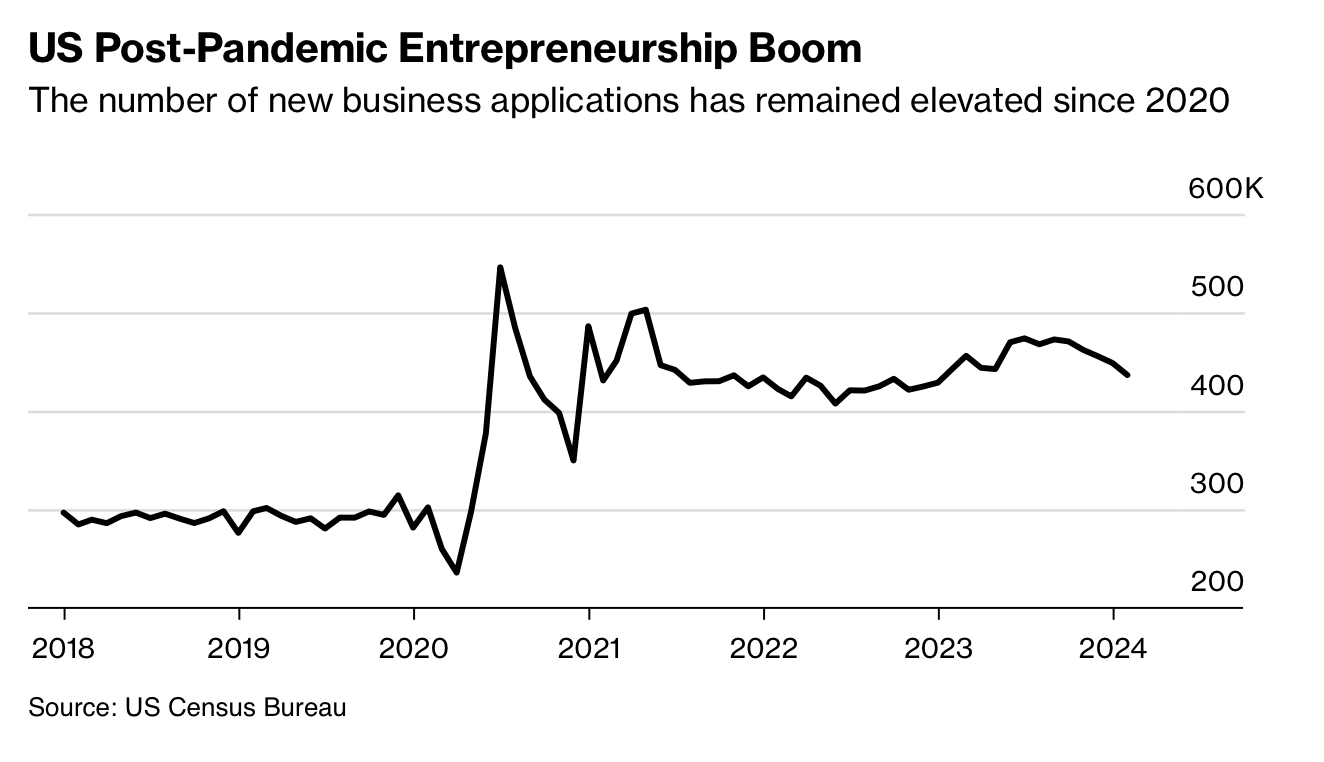
Amid collapsing workplace confidence, business owners break the trend
Amid consistently low job satisfaction and employee engagement, business owners are bucking the trend with greater well being and engagement. A recent Gallup survey reveals that nearly 70% of owners consider their lives to be “thriving”, compared to just half of all other workers. This stark contrast highlights the potential benefits of entrepreneurship, particularly when it involves building and leading a team.
Read more about how better engagement is combining with economic uncertainty to power a post-pandemic wave of entrepreneurship.
Hiring managers don't want to hire GenZ, but businesses have no choice
A recent survey by Resume Builder reveals that a significant portion of hiring managers hold biases against both Generation Z and older candidates. The study found that 36% of hiring managers are biased against Gen Z applicants, citing concerns about lack of experience, job-hopping tendencies, and questionable work ethic. Similarly, 34% expressed reservations about hiring candidates over 60, fearing imminent retirement, potential health issues, and insufficient technology skills. Beyond being impractical, such sentiments run the risk of ageism lawsuits coming from the litigious generation.
Read more about how enable GenZ’s to better engage at work.
Recruiting gets creative as talent shortages look long term
While headline figures have indicated falling labor shortages, many businesses are still dealing with consistent labor shortages. The combination of failing educational institutions, an inefficient labor market, and declining demographics suggest that employers will struggle with shortages in talent for the foreseeable future. With salary budgets tapped out, many employers are getting creative with talent sourcing, from building alumni programs to doubling down on retention.
Read more about the emerging tactics for adapting to structural shortages.
Management crisis forces rethink of traditional promotion pipelines
A recent Gartner study reveals that nearly half of all managers are at risk of failure, a staggering statistic that highlights the growing challenges faced by those in leadership roles. With organizations becoming increasingly flat and the average number of direct reports per manager nearly tripling in the past six years, the job of a manager has become increasingly unmanageable. This crisis is taking a toll on both managers and their teams, with employees reporting to at-risk managers being 91% less likely to be high performers and three times more likely to want to leave their organizations.
Read more on how the crisis is forcing a rethink of the individual contributor-manager pipeline.
Stat of the Week
In Other News
Leading Through The Great Disruption 2024. (The Adecco Group)
In need of more teachers, L.A. County offers free schooling and on-the-job training. (KTLA)
3 Key Ways Learning Benefits the Business. (Linkedin)
Are Nonlinear Career Paths the New Normal? 5 Ways You Can Support Employees While Benefiting Your Company. (Fisher Phillips)
The Big Work Lie: Being Indispensable Will Save Your Job: Becoming the only staffer with certain skills might feel like insurance. To some bosses, it’s a red flag. (Wall Street Journal)
Stanford Professors On the Counterintuitive Strategy That Helps Google Hire Top Talent We assume that the best processes are seamless, but a little friction can go a long way. (Entrepreneur)
Why the US Job Market Isn’t So Hot After All. (Bloomberg)
Employee sentiment rebounds, likely reducing exits, consulting firm says. (HR Dive)
Climate-centric job ads spike across industries as businesses tighten targets. (WorkLife)
The Best Parts of Your Culture Aren't Scaling — Yet. (Gallup)
HR’s New Role: In this tight labor market, cost cutting is out. Championing employee concerns is in. (Harvard Business Review)
Credits And Incentives Available To Retirement Plan Sponsors. (Haynie and Co)
Dartmouth basketball vote shows unionization ‘can happen anywhere,’ attorney says. (HR Dive)
The evolving role of the CHRO. (Employee Benefits News)
Free gas and unlimited PTO: 13 benefits that would encourage employees to return to work. (Employee Benefits News)
Envoy made RTO part of performance reviews. Could your company do the same? (HR Brew)
AI is causing massive hiring discrimination based on disability. (The Hill)
The Post-Pandemic Customer: More Demanding, Harder on Employees. (Gallup)
AI seen cutting worker numbers, survey by staffing company Adecco shows. (Reuters)
March Economic Confidence Steady, Still Improved From Fall: Index score of Americans' view of the economy is at -20. (Gallup)