


Welcome to the latest edition of Human Capital Intelligence. As always, we would love to hear from you at ken@stibler.me with news ideas, feedback and anything else you find interesting.
Sent this by a friend? Sign up here to receive HCI in your inbox every week.
By Ken Stibler; Powered by Reyvisum Analytics
What’s Working
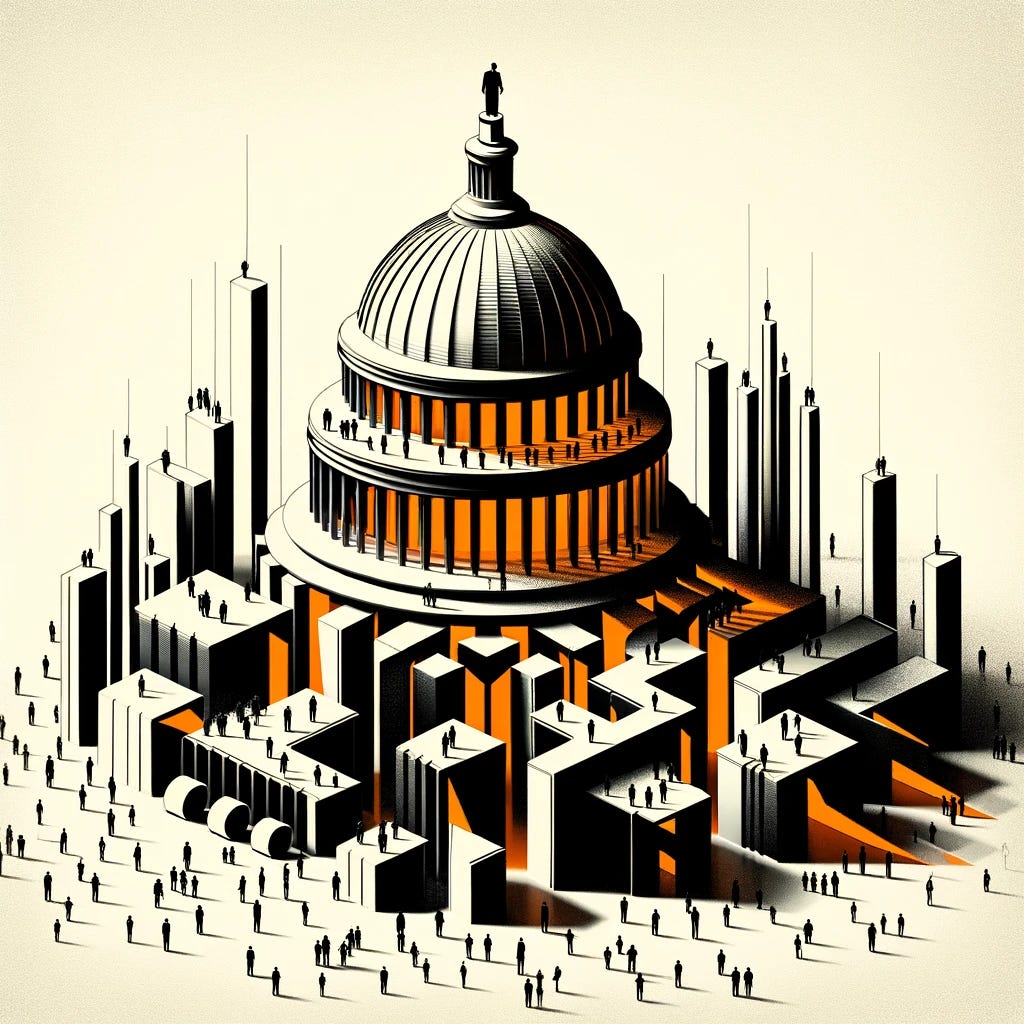
FTC non-compete ban has until reality…companies should still take notice of the strategic implications
The Federal Trade Commission's recent ban on non-compete agreements has sent shockwaves through the business world promising to reshape the competitive landscape, and empower workers to seek better opportunities.
The rule, passed by a narrow 3-2 vote, aims to promote job mobility, wage growth, and innovation by preventing employers from limiting where employees can work after leaving a job. However, the path to real change is fraught with legal challenges and political obstacles that could derail the FTC's ambitious agenda.
Almost immediately after the rule was announced, business groups and individual companies filed lawsuits challenging the FTC's authority to implement such a sweeping regulation. The US Chamber of Commerce argues that the FTC has overstepped its bounds under the Administrative Procedure Act and is engaging in regulatory overreach.
These legal challenges are just the beginning of what is likely to be a protracted battle in the courts, potentially culminating in a showdown at the conservative-leaning Supreme Court. Even if the non-compete ban survives judicial scrutiny, its impact on businesses may be muted by the time it takes effect. Companies have until January 2025 to rescind existing non-compete clauses, giving them ample time to explore alternative retention strategies and protect their proprietary knowledge.
Despite detractors, mental health materially impacts businesses
As the American workforce grapples with record-low engagement levels and a concerning rise in burnout, mental health has become a critical issue for businesses of all sizes. Despite some detractors who argue that American’s simply work harder, the reality is that unaddressed mental health challenges are taking a significant toll on productivity, retention, and overall business performance.
The latest Gallup data shows that employee engagement dropped to just 30% in the first quarter of 2024, representing 4.8 million fewer engaged workers compared to the previous year. This downward trend is particularly pronounced among younger employees, remote workers, and those who feel disconnected from their organization's culture.
The costs of ignoring mental health in the workplace are staggering. Burnout, a syndrome characterized by exhaustion, cynicism, and underperformance, is linked to increased absenteeism, job dissatisfaction, and higher probability of errors.
Reading List
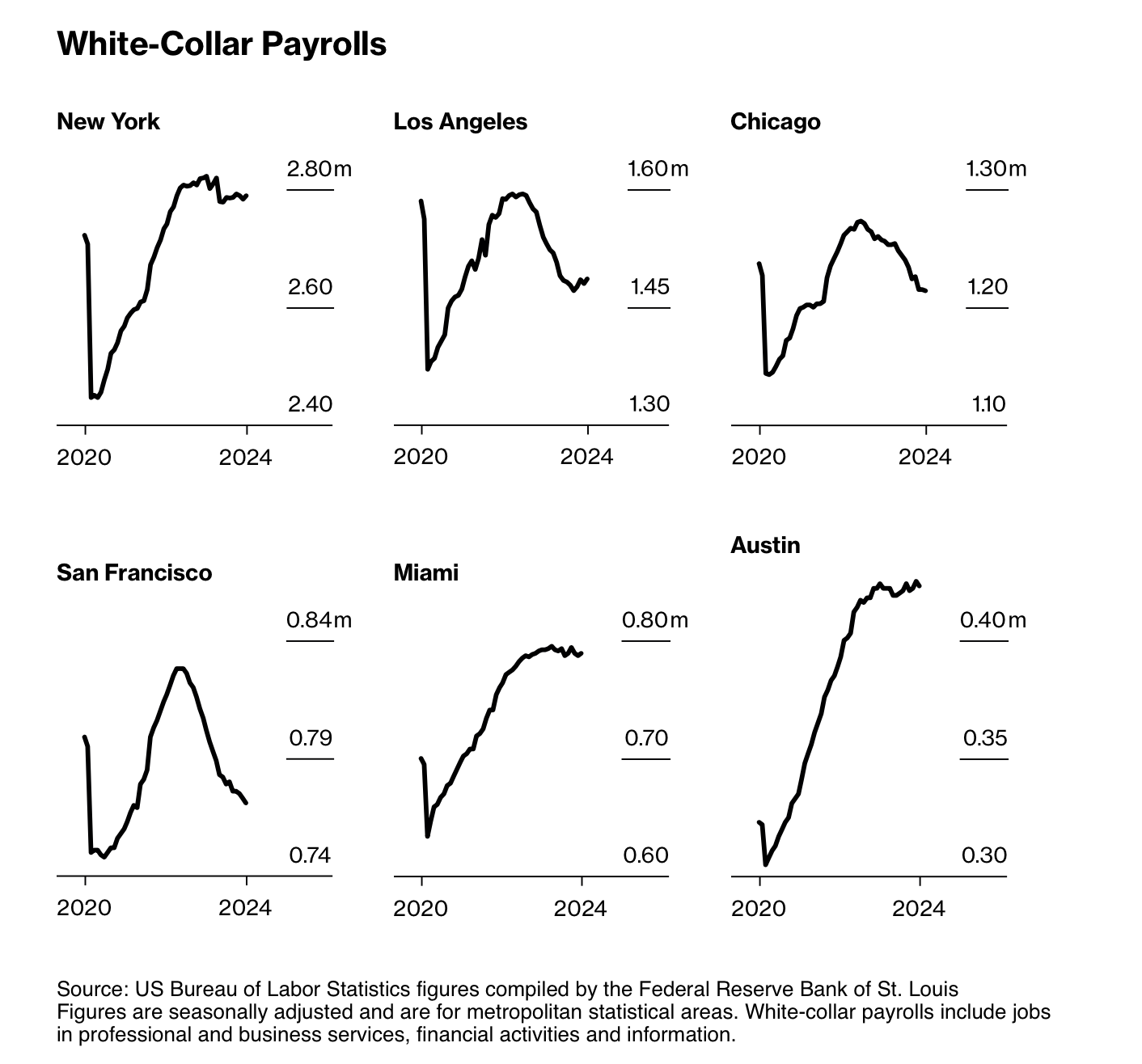
White collar workers set to lose big in 2024
White-collar workers are facing a challenging job market, with corporate positions vanishing in major cities like Chicago, Los Angeles, and San Francisco. Even pandemic boomtowns like Austin and Miami are seeing growth in this segment of the labor market flatline. Nationally, payrolls for white-collar jobs were up just 0.6% from a year ago in March, about a third as fast as last year, according to the Bureau of Labor Statistics. Banks, consulting firms, and tech companies that went on hiring sprees during the pandemic are now slashing jobs as incentives have faded.
Read more about how the college-educated job market is taking a tumble.
Companies go back to work as leaders push back against office activism
Business leaders are drawing a line in the sand when it comes to employee activism disrupting the workplace. Companies that once encouraged staff to voice their convictions on charged political and social issues are now losing patience with dissent that spills into public view and affects operations.
“Forget any ideological agenda. You’re just trying to figure out, how do I follow the law? You don’t want to overcommit or undercommit or misdescribe where you’ll land,”
Jason Schwartz, a partner with Gibson Dunn
CEOs and boards are increasingly concerned about backlash and getting entangled in partisan politics, as cases like Disney's battle with Florida Gov. Ron DeSantis and Bud Light's boycott have shown.
Read more about the new approach to dealing with controversial topics.
Tech isn't a strategy for growth without the right skills
As AI tools disrupt the workplace, companies are grappling with how to prepare their workforce for the changes ahead. Yet many employers are still relying on theoretical, content-based training that may not adequately prepare employees to work effectively with AI in real-world scenarios. To truly leverage emerging technologies for growth, businesses need to invest in hands-on learning experiences that closely mimic the tasks employees will perform in their roles.
Read more about how the next generation of training is being borne out of necessity.
Automating makes work more modular in another challenge to engagement
The US labor market is being reshaped by the rapid adoption of generative AI, the rise of part-time and gig work, and a cyclical slowdown, according to analysis by Goldman Sachs Research. AI is set to automate nearly a quarter of jobs across industries, with online job marketplaces feeling the effects as certain types of work get displaced. However, AI could also create new job categories and improve recruiter efficiency. Businesses are increasingly turning to a fractionalized workforce of freelancers, temps and gig workers to supplement or replace full-time staff.
Read more about the competitive implications of the new labor market.
Stat of the Week
In Other News
How HR can motivate employees to take cybersecurity training seriously. (Human Resource Executive)
How Personality Types Influence Virtual Training Success. (TalentCulture)
Size Matters: Matching Externalities and the Advantages of Large Labor Markets. (National Bureau of Economic Research)
Why is the economy so strong? New hires are spending more and upgrading their lifestyles. (USA Today)
CFOs forecast stronger economy amid stubborn inflation: ACCA, IMA survey. (CFO Dive)
More Companies Are Holding on to Their Employees — and Vice Versa. Here's How to Capitalize on This Labor Market. (Entrepreneur)
Don’t Overlook “Open to Work” Talent. (Linkedin Talent Blog)
LinkedIn Sees Record Levels of Engagement Once Again. (Social Media Today)
Employees will move jobs and states to find reproductive care. (Employee Benefits News)
Employers Missing Key Opportunities To Gain Advantage Through Employee Benefits: Just 30% Strongly Agree They Are Satisfied with Retirement Plan. (Nuveen)
NLRB encourages regional offices to thoroughly pursue make-whole relief. (HR Dive)
How Biden’s apprenticeship push could affect builders. (Construction Dive)
How does remote monitoring work? Here’s what HR needs to know. (HR Dive)
Uncertainty is the leading cause of employee noncompliance, Gartner finds. (HR Dive)
What are Gen Z’s workplace ‘roadblocks’? (HR Dive)
3 critical HR challenges that AI hasn’t solved yet. (HR Executive)
Moody’s designed a prototype office to engage hybrid employees. It’s changing how everyone works. (Fast Company)
Survey: Feds question the ‘why’ behind return-to-office push. (Federal News Network)
Greenhouse releases new features, further incorporating AI into its platform. (HR Brew)
High tech business entry in the pandemic era. (Federal Reserve)
The Smartest Way to Use AI at Work: Generative AI tools can help you get ahead in the office—if you know how to use them. (Wall Street Journal)