


Welcome to the latest edition of Human Capital Intelligence. As always, we would love to hear from you at ken@stibler.me with news ideas, feedback and anything else you find interesting.
Sent this by a friend? Sign up here to receive HCI in your inbox every week.
By Ken Stibler; Powered by Reyvism Analytics
What’s Working
More work with less workers - why AI is more than just hype for human capital
AI has become a buzzword that often elicits a mix of excitement and apprehension. Despite the fears surrounding AI's potential impact on the workforce, the reality is that automation technology is proving to be a powerful force multiplier, enabling businesses to achieve more with fewer employees. As the adoption of AI accelerates, it is crucial for organizations to move beyond a fear-based approach and embrace the opportunities presented by this transformative technology.
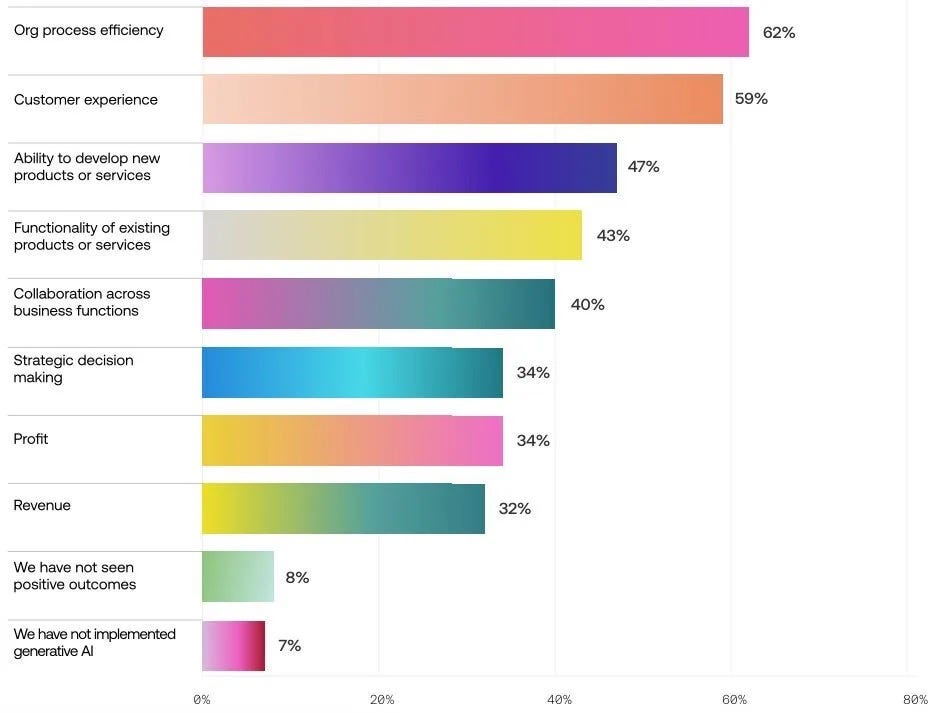
The real impact of an often intangible technology is already evident. More than 60% of US businesses report improved efficiency, and 59% experience enhanced customer experience. Moreover, nearly half of the respondents attribute the generation of ideas for new products or services to language models, showcasing AI's ability to foster innovation and creativity within organizations. While the impact of AI on profitability and revenue is still unfolding, only 8% of organizations reported no improvements across the board, indicating that the vast majority are reaping the benefits of AI in some capacity.
Gartner forecasts AI will run 80% of project management by 2030
However, like any other technology - except on steroids - AI is just another tool. A force multiplier for businesses that can get out of the mindset of fear around the tool. Most people have seen ChatGPT “do its thing” and have been unnerved. But the practical use cases are nearly limitless – which is why HCI is building a library of the best prompts for real business workflows.
Adoption is also accelerating. In 2023, only 37% of companies utilized commercial or closed-source AI platforms. However, by 2024, this figure rose to 86%. Simultaneously, the popularity of open-source models has surged, with two-thirds of organizations now leveraging these platforms compared to just 41% last year. This shift towards a more diverse AI ecosystem presents exciting opportunities for businesses to tailor AI solutions to their specific needs and objectives.
The benefits of AI are not guaranteed and risks of unmanaged adoption abound. New reports by Microsoft and LinkedIn report reveals that a staggering 85% of Gen Z employees and around three-quarters of Millennials, Gen X, and Boomers use AI tools at work that are not provided by their employer. Such AI tools carry privacy and cybersecurity risks, while resulting in uneven technology adoption and quality across the organization.
Job switchers increasingly regret their choice despite elevated post-pandemic quit rates
The Great Resignation, which saw record numbers of workers leaving their jobs for new opportunities, may not have delivered the satisfaction many had hoped for. A recent survey from the Conference Board reveals that those who switched jobs are now reporting lower levels of contentment compared to those who stayed put. This stark reversal from the previous year's findings suggests that the allure of higher pay and signing bonuses may have overshadowed other crucial factors, such as skills training, career development, and company culture.
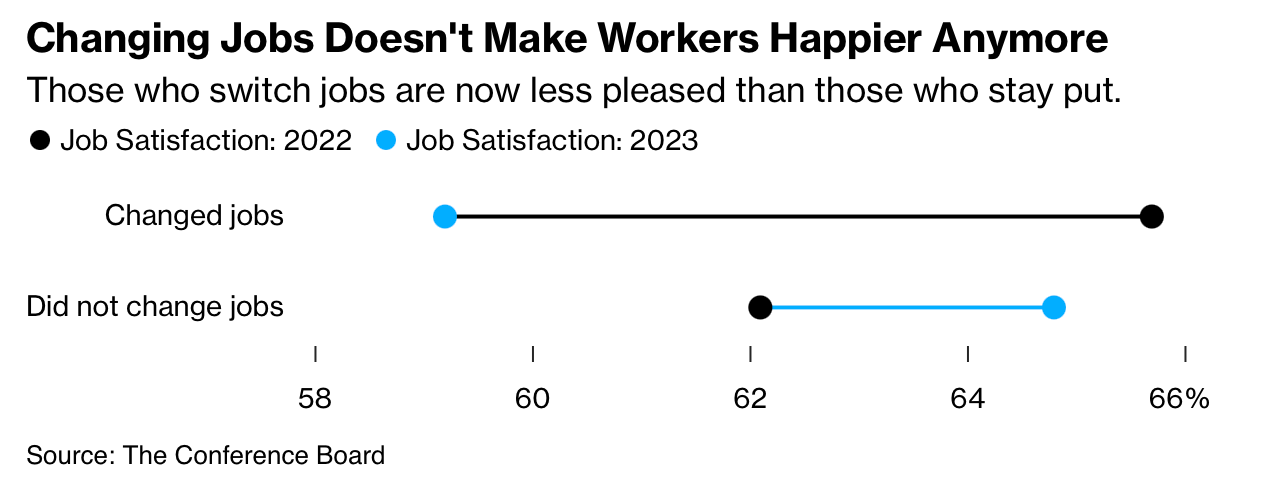
The survey results indicate that the honeymoon period for pandemic-era job switchers may be coming to an end. Those who have been in their new roles for six months to three years reported the lowest satisfaction scores, with many expressing dissatisfaction with their employers' bonus plans, promotion policies, and training opportunities. This sentiment is particularly concerning, as nearly half of those planning to leave their current job within the next six months fall into this category.
Keep reading about a story that might be good to add to the company newsletter.
Quote of the Week
“We found US employees were increasingly detached from their employers, with the workforce reporting less role clarity, lower satisfaction with their organizations, and less connection to their companies’ mission or purpose.”
— Jim Harter, chief scientist of workplace at Gallup, on declining engagement
Reading List

Winners and losers in a “more brawn, less brain” labor market
The US job market is increasingly diverging into two distinct paths, with skilled manual labor in high demand while knowledge-based professional roles face headwinds. As economists like Aaron Terrazas from Glassdoor note, it's a "buyer's market for brain and a seller's market for brawn." This shift is evident in the latest employment data, which shows a higher unemployment rate for professional and business services, contrasted with a lower rate for manufacturing workers.
Read more about which business benefit with this new dynamic.
Return to office ends up in court as employees increasingly sue their companies
As companies take a harder line on return to office mandates, a growing number of workers are escalating their complaints to the courts and federal labor agencies, the Washington Post reports. Employees argue that these mandates can be unjust, discriminate against people with disabilities, and serve as retaliatory actions against unionization efforts. On the other hand, employers maintain that in-person work is necessary for improving company culture, collaboration, and productivity.
Read more about the positioning and prospect of these lawsuits.
Skill development becomes a key engagement strategy
As companies grapple with alarmingly low employee engagement levels, lost productivity costs reached a staggering $1.9 trillion last year, according to Gallup. Training and upskilling - which has repeatedly proven an employee favorite - to provide opportunities for inward mobility is emerging as a dominant strategy for businesses dealing with the engagement apocalypse.
Read more about how skill development drives engagement.
Businesses remain resistant to migrant labor despite being desperate for workers…the resistance won't last
West Virginia is facing a dire labor shortage driven by an aging population and outmigration, with the second lowest labor force participation rate in the nation at just 55.2%. Key industries like healthcare, hospitality, and construction are struggling to find workers, leaving businesses unable to operate at full capacity. Despite the pressing need, resistance to immigration remains high, with the state legislature advancing bills to deter and even remove migrants.
Read more about how East Asia offers clues about how businesses eventually embrace immigrant labor of necessity.
Stat of the Week
In Other News
Using Data to Design Your Hybrid Work Policies. (Harvard Business Review)
OKRs vs KPIs: What’s the Difference? When comparing OKRs and KPIs, many forget a critical aspect — the relationships between them. (Medium)
You’re Back from Your Leadership Development Program. Now What? (Harvard Business Review)
U.S. Jobs Growth Set to Slow, Conference Board Says. (Wall Street Journal)
PwC launched its own internal talent platform—here’s how it works. (HR Brew)
The Labor Market Is Broken in Almost Every Conceivable Way. (Medium)
How to design a volunteering program in your workplace. (AP)
Employee Engagement Falls to Lowest Point in Over a Decade: Engagement down among Gen Z, remote workers. (SHRM)
Forget DEI and belonging — it's all about empowerment. (Employee Benefits News)
Survey Says: Hybrid Work Is Here To Stay. (FacilityExecutive)
DOL issues guidance addressing AI’s interaction with FMLA, FLSA. (HR Dive)
5 ways to think about AI’s role in change management. (HR Dive)
AI is closing the generation gap in the workplace. (Employee Benefits News)
AI Is Helping Automate One of the World’s Most Gruesome Jobs. (Bloomberg)
Lattice launches new AI features for performance management and employee surveying. (HR Brew)
What is hey-hanging? (and why it stresses younger employees out). (WorkLife)
No longer mere ‘infatuation’: Generative AI interest now shapes talent strategy, employers say. (HR Dive)
Why employers need to fine-tune their collaboration, productivity tech stacks. (WorkLife)
Great letter, I recommend reading it to all my peers.