


Welcome to the latest edition of Human Capital Intelligence. As always, we would love to hear from you at ken@stibler.me with news ideas, feedback and anything else you find interesting.
Sent this by a friend? Sign up here to receive HCI in your inbox every week.
By Ken Stibler; Powered by Reyvism Analytics
What’s Working

Getting back to relationships as a real asset for tech-turbulent times
Despite emerging technology’s promise to remake the world, and the workforce along with it, the relational foundation of businesses is crumbling. As remote/hybrid work creates physical distance and eroding trust creates emotional distance, it's becoming clear that strong workplace relationships are increasingly scarce, just as they become even more important.
Research consistently shows that the level of trust employees have in their leaders and colleagues is the key factor in creating a great workplace, regardless of where people work. The best companies understand the importance of involving employees in decision-making and ensuring that they feel heard and valued. By actively listening to their workforce and tailoring policies to meet their specific needs, organizations can build trust and foster a culture that drives business performance, even in the face of disruptive technologies like artificial intelligence.
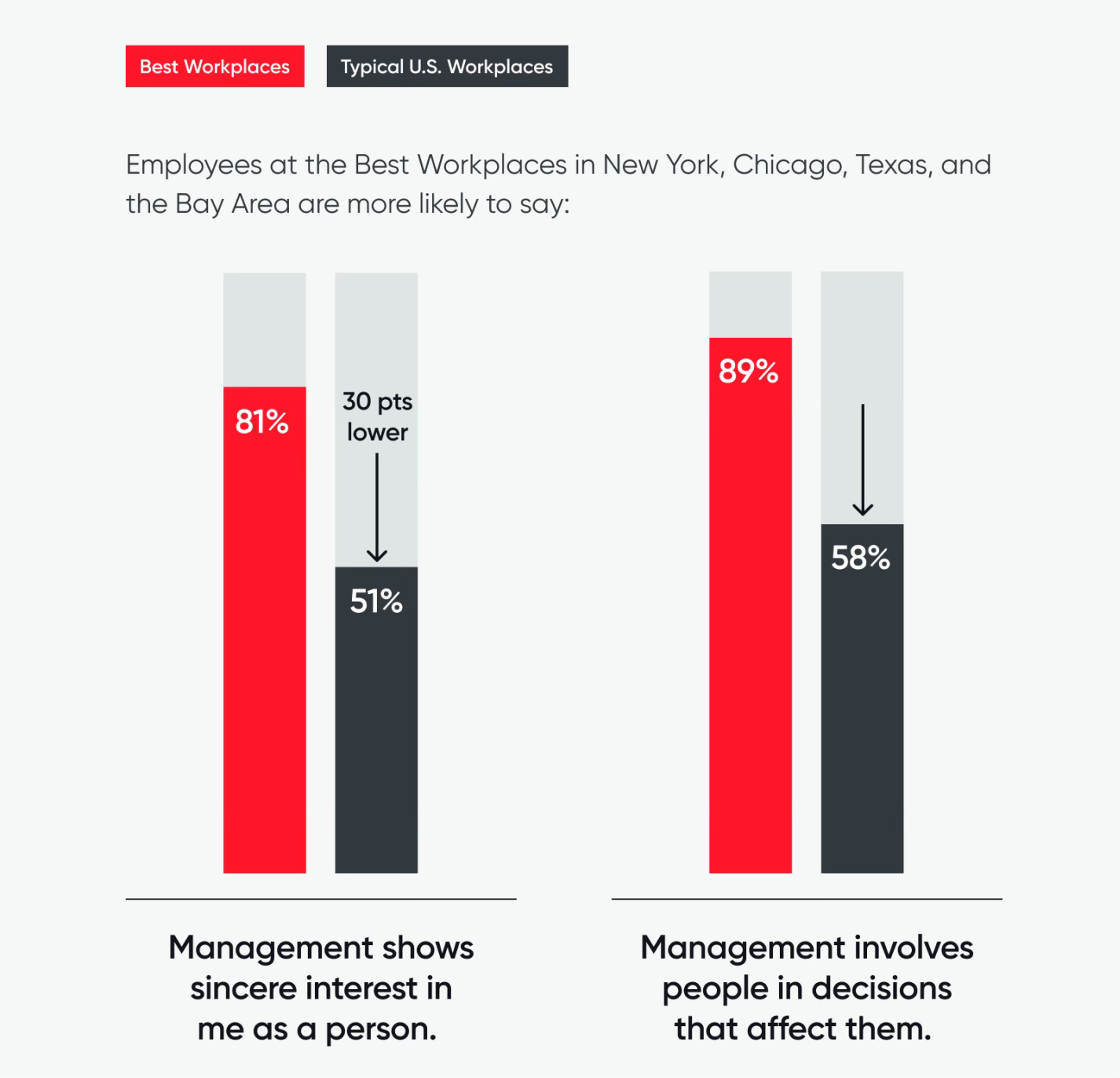
Moreover, creating a psychologically and emotionally healthy work environment is crucial for building strong relationships. While remote work can contribute to a healthier workplace for some employees, the best companies excel at providing a supportive environment for all workers, regardless of their location. By prioritizing employee well-being and promoting a healthy work-life balance, companies can foster loyalty, reduce turnover, and maintain a cohesive workforce.
Employees struggling? Time to retrain middle management
Middle managers are juggling change and pressure from two directions, making them a critical conduit between the anxious C-Suite and restive younger employee base. However, a recent survey by Betterworks reveals that only one in three middle managers believe they have the necessary support, and resources, to effectively coach their teams and drive employee development.
This lack of confidence among middle managers can be attributed, in part, to a failure by HR departments to provide adequate training and support. While middle managers are often tasked with being great coaches and helping their teams succeed, they may not have the skills or knowledge to engage in regular performance conversations or provide ongoing feedback and support. As a result, employees may feel disconnected from their managers and less engaged in their work.
Quote of the Week
“Once again, payroll growth laughs at your expectations.”
— Martha Gimbel, former Biden economic adviser and Yale Budget Lab executive director on the job market’s beating of economists’ forecast
Reading List

With RTO battle-lines drawn, leaders should act decisively and accept the consequences
As companies push for more office days, the battle lines over return-to-office (RTO) policies are becoming increasingly clear. While some leaders believe that in-person work fosters collaboration and a sense of belonging, data suggests that the number of days spent in the office doesn't directly correlate with employee connection. In fact, a blend of autonomy and two to three in-person days per week seems to be the sweet spot for fostering engagement and workplace relationships.
Government hiring creates mirage of strong labor market
The latest jobs report from the Labor Department has left analysts and investors scratching their heads, as the US economy added a surprising 272,000 jobs in May, again defying expectations of a softening market. A closer look at the data reveals that a significant portion of the hiring was done by the public sector, which added 43,000 jobs in May.
Scarcity of promotions prevents entry-level hiring
The labor market in 2024 is experiencing a significant slowdown in job promotions across all age groups, with the annual rate of promotion into management falling for virtually all working adults last year, Bloomberg reports. This trend is particularly concerning for Gen Z and Millennial workers, who are seeing fewer opportunities for advancement compared to the previous years. The promotion slowdown has continued into 2024, with the first quarter recording the lowest rate of promotions among white-collar professionals in the past five years.
“Unlimited PTO is a Scam” - Sincerely, Your Workers
Unlimited paid time off (PTO) policies have been touted as a game-changer for employee benefits, offering workers the freedom and flexibility to decide how much time they spend away from the office. However, beneath the surface of this seemingly generous policy lies a controversial reality that has left many employees feeling shortchanged and overworked.
Stat of the Week
In Other News
Onboarding New Employees in a Hybrid Workplace. (Harvard Business Review)
Work-based youth learning programs can augment talent development strategies, report says. (HR Dive)
How AI Can Make Us Better Leaders. (Harvard Business Review)
The Case For Precision Skill Development. (Forbes)
From the baby boom to the baby bust: Falling fertility rates are one of the biggest challenges facing our world. (Financial Times)
Keeping Pace with the Perceptions of Modern Workers. (Lever)
A six-day workweek could go over like ‘a lead balloon,’ says ResumeBuilder’s chief career adviser as some employers expect employees to put in more hours next year. (HR Brew)
Beyond Basic Prompts: How GAI Can Help Make You a Better Recruiter. (Linkedin Talent Blog)
How to Build the Ideal HR Team (on a Budget). (Paycor)
What is the difference between a CPO and CHRO? (WorkLife)
ACLU Asks for US Probe Into Bias of Consultant's AI Hiring Tools. (Bloomberg)
Gen Z, millennials are ‘weak link’ as AI fuels new cyberattack workplace threats. (WorkLife)
America’s Commute to Work Is Getting Longer and Longer: Drives to the office that take over an hour are becoming more common—and even more palatable. (Wall Street Journal)
US students face recruitment challenges after Gaza protests: Employers warn of tougher scrutiny following demonstrations over Israel-Hamas war. (Financial Times)
The Workers Who Do Everything on Their Phones—Except Answer Calls: Bosses and employees are wrestling over whether voice calls have a place in the hybrid era. (Wall Street Journal)