


Welcome to the latest edition of Human Capital Intelligence. As always, we would love to hear from you at ken@stibler.me with news ideas, feedback and anything else you find interesting.
Sent this by a friend? Sign up here to receive HCI in your inbox every week.
By Ken Stibler; Powered by Reyvism Analytics
What’s Working

Bosses and employees aren't speaking the same language on skills
There is a growing disconnect between bosses and employees when it comes to the importance, and types, of skills needed in the modern workplace. Recent surveys reveal that many executives do not fully understand the skills their teams require, while a significant number of employees feel their leaders are out of touch with the skills gap. This misalignment leads to increased workloads, higher turnover rates, and even project abandonment due to a lack of necessary competencies across various sectors, not just IT.
Employees are increasingly aware of the need for continuous skill development, especially with the rapid advancements in technology and evolving industry demands. However, many organizations fail to provide adequate support for this development. While companies may invest heavily in new technologies, they often neglect the human element of training and upskilling. This oversight results in underperforming training programs that do not meet the needs of employees, leading to frustration and disengagement.
Training existing employees is significantly more cost-effective than hiring new ones, yet many companies struggle to implement effective upskilling programs. The cost of training an employee in a new skill is considerably lower than the expenses associated with recruiting and onboarding new hires. However, a lack of structured and supported training initiatives means companies are not capitalizing on this cost-saving potential, leading to financial and operational inefficiencies.
Tangle of technology is starting to undermine productivity in ‘modern’ workplaces
The proliferation of digital communication tools in the modern workplace, once heralded as the harbinger of enhanced productivity, is now emerging as a significant drag on efficiency and employee well-being. Recent studies reveal a troubling trend: workers are increasingly bogged down by what experts term the "coordination tax," a phenomenon where excessive time is spent navigating multiple communication channels and synchronizing schedules in hybrid work environments.
Financial implications of this technological tangle are substantial. According to a Harris Poll survey, poor communication costs companies an estimated $12,506 per employee annually in lost productivity. This figure, extrapolated across large corporations, represents a sizeable dent in bottom lines and operational efficiency. Moreover, the constant context-switching between various digital platforms is eroding focus, with nearly half of employees reporting distractions every 30 minutes or less.
Quote of the Week
“Overall, a broad set of indicators suggests that conditions in the labor market have returned to about where they stood on the eve of the pandemic, relatively tight but not overheated.”
—Jerome Powell, chair of the Federal Reserve, on the state of the job market
Reading List
The young workers really aren't alright
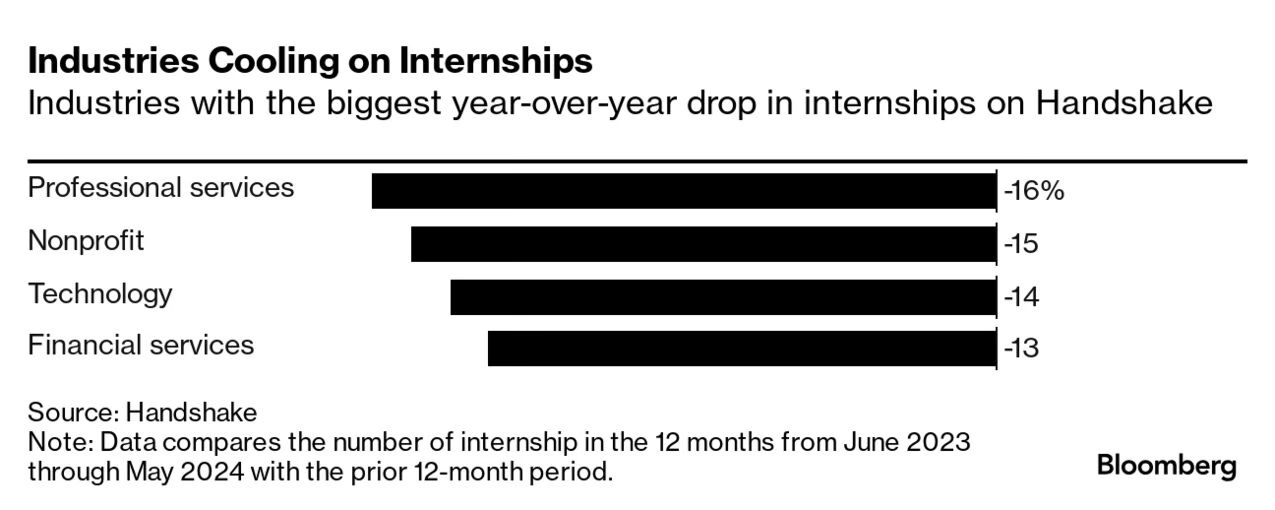
Despite a robust overall employment landscape, new college graduates are struggling to find entry-level positions. According to a Goldman Sachs analysis, only 13% of entry-level job seekers found employment in the past six months, down from a 2022 peak of 20%. This slowdown in hiring is particularly pronounced in sectors like tech and finance, traditionally popular among new grads. As a result, the US unemployment rate for 20- to 24-year-olds has climbed to 7.9%, marking the largest annual increase in 14 years, excluding the early pandemic period.
Your young employees don’t care about work that much - what next?
25% of Millennials and 60% of GenZ workers would consider quitting their jobs over a single out-of-hours demand from their boss, according to a new study by Reed. Another 25% of employees are so eager for improved work-life balance that they're willing to accept pay cuts to work less. Such startling statistics underscore the structural shift away from work as a priority as younger employees shed the ambition that defined previous generations.
Return to office means returning to busywork
Much-heralded RTO initiatives, intended to boost productivity and corporate culture, appear to be backfiring for many organizations. 42% of employees feel their in-office presence is merely for visibility to management, rather than genuine productivity gains, according to a recent survey by BambooHR. This perception has led to a surge in performative work behaviors, with nearly 80% of employees engaging in tactics designed to create the illusion of productivity, potentially masking actual output.
‘Abstract’ tech is already having a tangible effect on organizations
The integration of artificial intelligence and advanced analytics into corporate environments is already reshaping how organizations operate. Historically, HR departments functioned in isolated silos, primarily dealing with payroll, benefits, and administrative tasks. Today, AI's ability to facilitate data sharing and cross-departmental collaboration is dissolving these silos, enabling HR to play a more strategic role in organizations. By leveraging AI, companies are enhancing information flow and increasing transparency, which is essential for cohesive team dynamics and efficient workflows.
Stat of the Week
In Other News
Small Business Growth Negatively Impacted by Lack of Affordable Child Care. (Goldman Sachs)
Bad managers make employees feel less valued, SHRM research says. (HR Dive)
The Growing Appeal of Video and Interactive Employee Training. (HR Daily Advisor)
America’s top central banker says the job market is back to normal. Is that right? (CNN Business)
Let’s discuss modern-day mass layoffs: It wasn’t until the 1980s that mass layoffs as we know them today started happening outside the context of a financial crisis. (HR Brew)
Defense industry rushing to hire workers as military spending spikes. (Axios)
HR leaders say recruiting and retaining workers seems easier in 2024. (HR Dive)
Tech layoffs impact nearly 100,000 workers so far in 2024. (CFO Dive)
Goldman Sees US Jobs at Inflection Point, Sticks to Two-Cut Call. (Bloomberg)
Over 80% of workers are scared of their company’s HR department. (WorkLife)
California Moves to Modify Law Letting Workers Sue Employers. (New York Times)
Former NLRB chair Ring says agency is ‘rewriting’ federal labor law. (HR Dive)
HR leaders are honing their internal marketing skills, ensuring ROI. (WorkLife)
Making sense of Gen Z: employers seek answers on managing younger workers. (Financial Times)
Six Signs of a Parent-Child Dynamic at the Office: For managers and teams, this is an unhealthy rapport. Here’s how to stop rolling your eyes and start treating each other like full-fledged adults. (MIT Sloan Management Review)
Confusion over workplace etiquette makes employees unsure how to act, survey says. (HR Dive)
‘Mouse jigglers’ are a sign that WFH paranoia is still alive and well in the workplace: Experts say devices that trick bosses into thinking employees are working are a symptom of larger trust issues. (HR Brew)
Citi Sees AI Displacing More Bank Jobs Than Any Other Sector. (Bloomberg)