


Welcome to the latest edition of Human Capital Intelligence. As always, we would love to hear from you at ken@stibler.me with news ideas, feedback and anything else you find interesting.
We will be off for two weeks for the holiday season but will return to your inbox January 8th.
Sent this by a friend? Sign up here to receive HCI in your inbox every week.
By Ken Stibler; Powered by Reyvisum Analytics
What’s Working
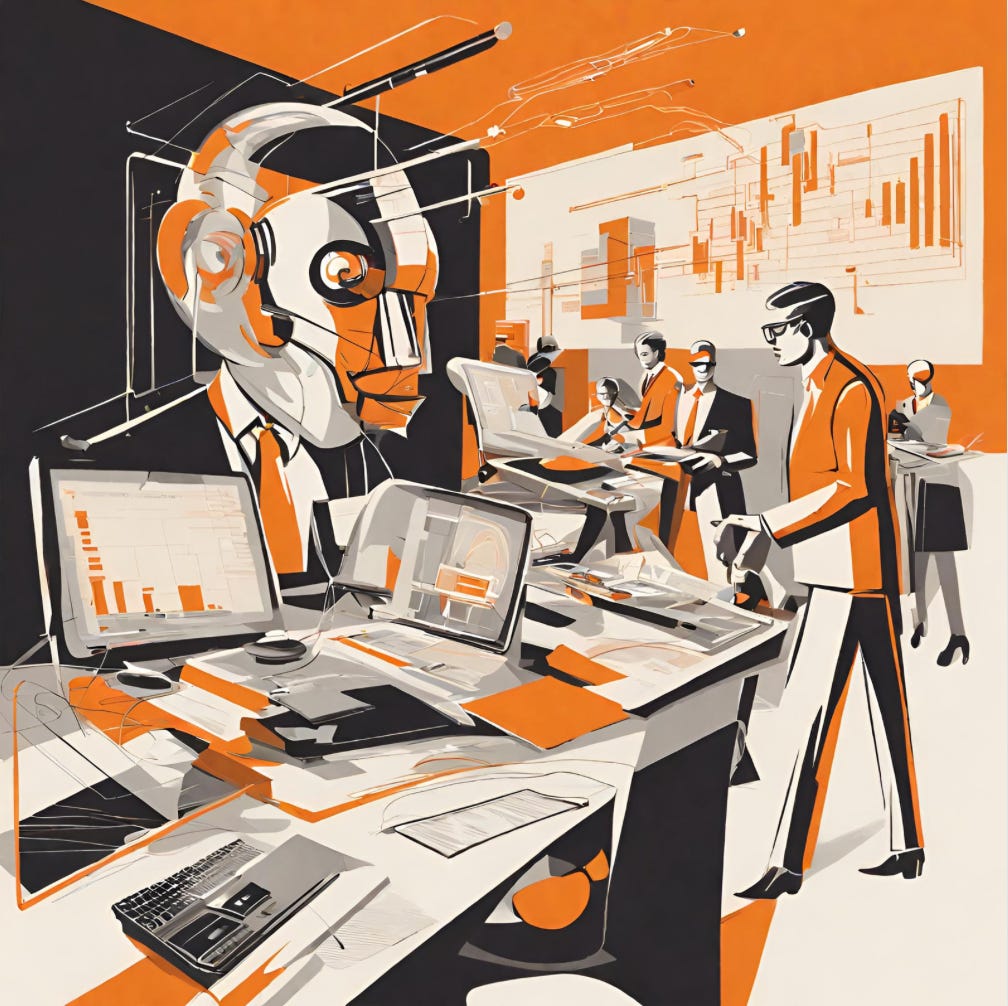
Human Capital Intelligence’s 2024 Goal: A More Strategic HR Function
HR has an image problem. Stereotype as the “fun police” focused on policy over strategy, the function’s centrality to business success remains overlooked. With the new year approaching, one trade publication made the reason for the stereotype painfully clear running the byline “ we asked a psychic what to expect from work in 2024”. In reality, its role as a berated C- function hides a strategic organization responsible for many businesses most important input: people.
However, changes in work dynamics, wrought by the pandemic, alongside rapid AI advancements, provide an opportunity for reinvention. Just as data and analytics elevated finance from number-crunching to strategic advising decades ago, AI adoption now stands to unlock the power of employees and workforce data on an unprecedented scale. By embedding such capabilities into talent management operations, HR leaders have the opportunity to shred outdated stereotypes and claim a central role guiding corporate adaptation and innovation.
The post-pandemic era demands that executives rethink how to attract, align, empower, and deploy talent in a rapidly evolving environment. HR owns the challenge and opportunity here, but lacks the trust to drive organizational resilience. That can change in 2024. The seismic shifts of the past few years present a business case for how organizations must view human capital on par with financial capital in its complexity and strategic potential.
Therefore, Human Capital Intelligence’s New Year's resolution is to cut through the noise, and help refocus leaders on the technologies and techniques to help them tap into talent analytics, change management discipline, and labor market management. We aim to show the path to making HR live up to its billing as steward of businesses’ most important input – people. Feel free to reach out with any suggestions how to redefine the function as a data-driven, strategic powerhouse over the upcoming year.
Layoffs gets longer as employers push against rising incivility
Major U.S. corporations are reorganizing the employee layoffs process, spreading them over weeks or even months rather than executing abrupt, same-day terminations. On Wall Street, Wells Fargo has budgeted up to $1 billion to cover severance payouts in Q4, while Citi is proactively offering portions of annual bonuses as incentives for voluntary resignations as lower attrition rates force more rounds of layoffs. The extended timelines and inducements aim to make cuts appear more thoughtful and transparent rather than insensitive.
Remaining staff may perceive elongated notices as increased job security. However, employees facing eventual termination describe uncertainty and sinking motivation as difficult parts of the drawn-out processes. Risks like information leaks are present, but the gradual approach signals corporate responsibility. Demonstrating compassion could also aid recruitment after economic conditions improve.
As hiring freezes and budget cuts persist, companies tread cautiously to avoid provoking backlashes. Lengthier notices cannot eliminate all harms from layoffs, but can mitigate reputational damage. Firms recognize that how they conduct reductions impacts perceptions among current talent and prospective candidates.
Looking back on a regulation-happy 2023
This year saw a wave of new employment laws and guidance at both the state and federal level in the United States according to law firm DLA Piper’s 2023 global employer report. Key developments include new pay transparency rules in Colorado, Hawaii, Illinois, and New York City, as well as federal restrictions on the use of NDAs in discrimination settlements. Many states also expanded protections against discrimination and harassment.
Heading into 2024, US-based companies face an active regulatory agenda that will demand attention and resources. The SEC's impending climate disclosure rule, the DOL's expected changes to overtime exemptions potentially impacting 3.6 million workers, and the EEOC's continuing guidance on artificial intelligence are top issues. Meanwhile, a divided landscape persists around ESG initiatives as proponents face increasing state-level resistance.
Navigating the complex matrix of new worker protections and disclosure requirements while pursuing cost reductions poses real compliance challenges. The US regulatory wave shows no sign of slowing with lawmakers continuing an assertive pace of workplace interventions. Companies must focus on mitigating legal risks while balancing compliance with corporate values and strategic priorities.
HR Reading List

A measured warning on AI and labor.
This week Microsoft announced a partnership with more than 60 labor unions to provide formal training on how AI works and create "an open dialogue" on how AI will impact workers that includes an agreement that makes union formation easier. The initiative marks the first collaboration on AI between labor unions and the technology industry and coincides with growing concerns that artificial intelligence could displace workers. There’s a lot of maximize claims about AI, but lessons from previous industrializations show that large technological leaps does lead to temporary but very sharp disruptions to labor - just like how automation and outsourcing hit the rust belt in the first 20 years of the century.
Bottom Line: While not a simple relationship, the overlap between AI-led productivity improvements and continued layoffs is set to reinforce fears. Organized labor is in vogue and is receiving on-the ground support from younger employees across sectors: combined with the growing uncertainty and paranoia around AI among many workers, the current noise has a path to become a headache for many businesses.
Are your people ditching the office holiday party?
Amid frequent warnings about record low employee engagement rates, 40% of businesses are concerned about staff not showing up to holiday parties according to a survey of GrubHub’s corporate clients. The first full year since the end of the pandemic and common RTO mandates, companies are trying to revive the tradition of a holiday party evidenced by rising budgets for in person-events. However employees apparently have different priorities, with social media trends suggesting younger employees (now over a quarter of the workforce!) have turned on the time honored tradition.
Bottom Line: While it's likely too late to recalibrate plans, party attendance can be a natural end-of-year pulse check for employee engagement after another challenging year where businesses had to balance layoffs and rising staff expectations.
A painfully revealing freelancing problem for HR.
The combination of rising costs and increased work flexibility has led to an explosion of freelancing, gig work, and ‘side hustles’. In 2023, around 64 million Americans - 38% of the US workforce - participated in work outside of work. While this comes with inherent challenges for employers, several high profile cases of school teachers making adult content on OnlyFans, a subscription-based website known for sexually explicit content, show that some forms of side hustling may cross lines HR hadn't even thought to draw yet.
Bottom Line: with more people choosing to create adult content as their second job, employers should develop clear-cut freelancing policies to address such uniquely revealing problems before they happen…or become wrongful termination suits.
Skills shortages look likely to replace labor shortages.
The end of 2023 has seen a welcome rebalancing of higher labor availability and decelerating costs. However businesses the world over are likely to face skills shortages for the foreseeable future. China’s internationally competitive electric cars industry demonstrated this dynamic when long-term higher-ed trends left a massive shortfall of the skilled technicians the sector needed, hitting output and pushing specialized wages up. The demand rose so quickly that the education system was caught flat-footed, and it takes a few years to adequately prepare and train top-notch technical skills according to an education professor at the University of Hong Kong. Unlike last year’s labor shortages, where employers couldn’t hire for key positions, the more understated skills shortage is the result of higher education poorly aligning it teachings with rapidly changing industry demands.
Bottom Line: With US higher education clearly failing at this, a robust learning and development plan is an insurance plan against skills shortage on top of the number one engagement tactic for younger employers.
Stat of the Week
In Other News
It’s a good time to hire, jobs report suggests. (HR Brew)
Startups face grim holiday season as layoffs, closures mount. (Employee Benefits News)
AI Puts Fully Remote Jobs at Risk, Stanford Economics Professor Says. (Bloomberg)
The 10 best and worst states to find work. (Employee Benefits News)
Private company talent strategies outlook: A closer look at hiring intentions, challenges, and insights. (Deloitte)
Active listening helped this company increase its retention rate by 22%. (HR Brew)
What are ‘shadow vacancies’? (WorkLife)
Two Hours of Meetings a Day Is More Than Enough for Most Workers - Salesforce research. (Bloomberg)
With equity compensation on the decline, stocks become a top employee Christmas gift. (WorkLife)
Ranking the Best Companies for Career Growth: The 2023 index rates companies by how well they help employees, especially those without college degrees, move into better, high-paying jobs. (American Opportunity Index)
More retirement savers are borrowing from their 401(k) plan. Those are ‘leading indicators of economic stress,’ expert says. (CNBC)
Legislative lowdown: New York further limits NDAs to resolve discrimination claims. (HR Brew)
A Moving Company Touts Its Young, Chiseled Workers. Feds Say That’s Age Discrimination. (WSJ)
Gen Z is bringing anxiety to the workplace. (Business Insider)
Why employers like Lululemon and CVS offer mental health first-aid training to employees. (HR Brew)
World of HR: South Africa tries a four-day workweek. (HR Brew)
Global employer 2023 in review and 2024 preview. (DLA Piper Employment Law)
The Math for Buying a Home No Longer Works in Most of America. These Charts Show You Why. (WSJ)