


Welcome to the latest edition of Human Capital Intelligence. As always, we would love to hear from you at ken@stibler.me with news ideas, feedback and anything else you find interesting.
Sent this by a friend? Sign up here to receive HCI in your inbox every week.
By Ken Stibler; Powered by Reyvisum Analytics
What’s Working
Labor Department finalizes independent contractor rule
The U.S. Department of Labor's (DOL) new rule on classifying independent contractors, set to take effect on March 11, has sparked concerns among legal experts and business groups. Reverting to a pre-2021 standard, the rule mandates a comprehensive evaluation of economic factors to determine a worker's status as an employee or an independent contractor. Legal experts note that businesses are familiar with this approach, but the shift back to a more employee-centric standard could trigger a surge in misclassification lawsuits under the Fair Labor Standards Act. Critics, meanwhile, argue that the rule lacks clarity for businesses and restricts the flexibility of the independent workforce, potentially hindering technological progress.
The regulation is particularly impactful for the gig economy, where companies like Uber and Lyft typically classify workers as independent contractors. Industries such as construction, transportation, and media could also be significantly affected. Economist Wayne Weingarden from the Pacific Research Institute points out the rule's problematic nature for small businesses, which may struggle with compliance due to resource constraints. Under the Fair Labor Standards Act, the distinction between employees and independent contractors is crucial as it determines eligibility for minimum wage, overtime pay, and other benefits.
The rule has been met with criticism from business groups like the U.S. Chamber of Commerce and the National Retail Federation, who argue that it undermines worker flexibility and poses economic risks. SHRM also expressed concerns about the increased complexity and uncertainty this rule brings to employers. Meanwhile, lawyers expect more misclassification lawsuits and reluctance toward temporary hires.
With the rule taking effect March 11, HR should review all contractor roles using the new lens. Have arbitration agreements and uniform processes in place and monitor, but don’t bet on, lawsuits striking down the new rule.
Personal user manuals help address hybrid-work miscommunications
"Personal user manuals" detailing employee preferences are gaining traction, especially on remote teams, Bloomberg reports. These "cheat sheets" cover optimal hours, communication channels, pet peeves and weaknesses. They accelerate collaboration by eliminating guesswork. Workplace coach Barbara Palmer likens them to appliance manuals - explaining features for smooth operation.
With remote, global and multigenerational teams, assumptions backfire. Such manuals allow focus on productivity, not navigating quirks. Leaders should create them first to set the tone. For example, fintech CEO Kate Steel's manual specifies email for review requests, not Slack. As she notes, everyone differs, but manuals clarify individual needs.
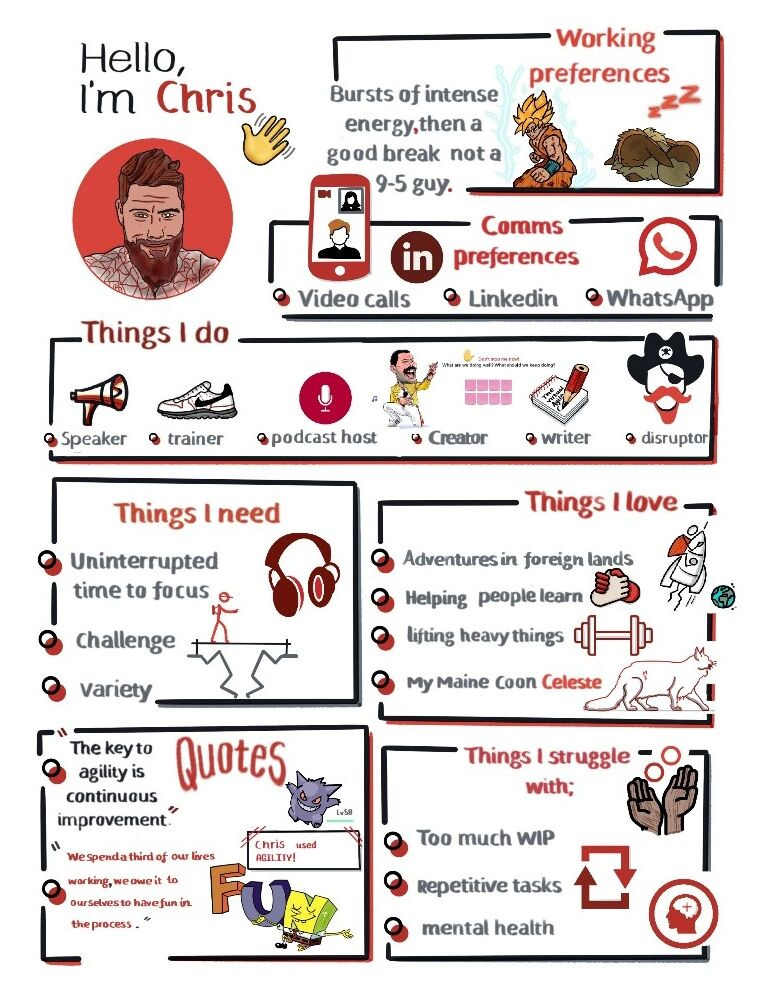
In our diverse workplaces, friction is inevitable without insight into how people work best. User manuals can foster efficiency and respect. HR can encourage their organization-wide adoption as self-awareness tools to prevent conflicts. When in doubt, consult the manual.
Return to office leads to a rise of professionalism classes
The pandemic has led to a breakdown in office etiquette and professionalism. Over 60% of U.S. companies will implement etiquette training in 2024 to address this issue, according to a recent survey by Resume Builder. Lessons will cover making eye contact, dressing professionally, and holding polite conversations. Employers cite increasing complaints about inappropriate behavior as motivation. Two-thirds of firms offering classes so far report high success.
Such training has predominantly targeted Gen Z, who lack in-person work experience. However, the survey found all employees need refreshing, including baby boomers. Soft skills training is now being offered to new hires of all ages at major consulting firms. Some colleges are also providing networking and communication lessons. Still, only 10% of firms surveyed require training just for recent grads.
“[O]ffice etiquette training is beneficial for all employees, regardless of experience level or position. As a result, we expanded the program to include all employees, allowing us to reinforce our company’s values and foster a collaborative work environment.”
—Young Pham, co-founder of BizReport, on why his company offers etiquette classes
The office has changed, requiring adaptations in interactions. So even seasoned employees are re-learning manners. Firms realize etiquette training benefits all workers in reinforcing company values and collaboration. The hybrid environment demands new standards.
HR Reading List

Rising cybersecurity risks requires human solutions
HR has a pivotal role in cybersecurity as human error enables most data breaches. Remote work and sophisticated phishing heightened risk, with over 75% of incidents starting with emails. Continuous workforce training and engagement are now critical. HR should integrate cyber education into onboarding and ongoing development. This can boost threat detection and reporting. Up-to-date modules are also becoming relevant in more exposed industries as hacking approaches evolve.
Read more about the cyber-HR nexus here.
Coursera launches new suite of enterprise AI training resources
Coursera has unveiled its GenAI Academy to meet surging corporate demand for AI training. The program offers foundational courses for everyday users, plus executive education. Partners include Stanford, AWS and Google. Coursera's chief learning officer cites client need for practical guidance beyond the hype. Content imparts core principles, applications, hands-on practice and ethics. This equips workforces as AI augments jobs.
Read more about the new AI training resource here.
Boredom presents another front in the employee engagement crisis
Nearly half of employees report being chronically bored at work according to new data from CSU Global and Gartner. This "bored-out" stems from repetitive tasks, lack of challenge or purpose. A Gartner's study echoes this, revealing that only 31% of employees feel engaged with their work, indicating that a majority of the workforce is lacking a meaningful connection to their jobs. While its easy to dismiss such concerns, boredom notably contributes to lower productivity, diminished work quality, and increased employee turnover.
Read more about how to respond to employee boredom.
RTO harms careers, but hybrid hi-jinxes make employers ask ‘why?’
Fully remote workers are receiving fewer promotions and early career employees are being undeserved. Despite strong employee preferences for remote work, 90% percent of companies plan to implement return-to-office policies by the end of 2024. For bosses, the policy just makes sense as 63% of executives report a post-RTO increase in retention, compared to 19% who said bringing employees back drove retention down, according to data from Resume Builder.
Read more about how back to office without reviving engagement falls short.
Growing job requirements deter applicants
Overly stringent job descriptions are deterring promising applicants, especially recent graduates. A third of grads won't apply if their major doesn't match the listing, per a Handshake/SHRM study. Laura Mazzullo of East Side Staffing advises limiting descriptions to 3-5 core skills plus 3-5 desired cultural traits. She says numerous required qualifications paint an unrealistic "magical unicorn" ideal. Instead, focus on transferable skills and capacity for growth.
Read more about requirement best practices amid a changing skill landscape.
Stat of the Week
In Other News
51% of Employers Cited Employee Satisfaction as their Organization's Most Important Goal. (Integrated Benefits Institute)
How this consulting firm boosted retention via mentorship. (Employee Benefit News)
Does Working from Home Boost Productivity Growth? (FRBSF)
Workplace Wellness Programs Have Little Benefit, Oxford Study Finds. (New York Times)
20% of applicants will change their names on resumes to avoid discrimination. (Employee Benefits News)
Americans Are Suddenly a Lot More Upbeat About the Economy. (WSJ)
American Workers Are Staying Put. (The Atlantic)
Where US companies will see the most hiring this quarter. (HR Brew)
Wage growth slows in world’s major economies. (Financial Times)
Remote work doesn't affect productivity, according to Fed study. (Employee Benefits News)
Companies rush to define DEI. (Axios)
Records of achievements and praise can boost staff morale. (Financial Times)
Should employers worry about being recorded during layoffs? (WorkLife)
Legislative lowdown: New paid sick leave laws take effect. (HR Brew)
How new trauma-leave laws will help employees handle ‘logistics and emotions of loss’. (WorkLife)
Technically HR: Generative AI will transform the workplace, but employees need more education, new survey finds (HR Brew)
PwC drops some US diversity goals to meet changed legal landscape. (Financial Times)
How does pay transparency legislation impact communicating about compensation to employees? (Employee Benefits News)
How AI ‘skill leveling’ will arm workforces in this year’s ‘quest for productivity. (WorkLife)
How Abbott paved the way for employers to offer a new student loan benefit (HR Brew)
Great information