


Welcome to the latest edition of Human Capital Intelligence. As always, we would love to hear from you at ken@stibler.me with news ideas, feedback and anything else you find interesting.
Sent this by a friend? Sign up here to receive HCI in your inbox every week.
By Ken Stibler; Powered by Reyvisum Analytics
What’s Working

Changing needs and skill shortages prompt businesses to revise talent development
The skills gap has led more employers to prioritize abilities over degrees in hiring. Non-degree holders are often wrongly assumed to lack skills, yet make up 70 million US workers. Remote and hybrid work also necessitate new approaches to training for engagement and impact, forcing companies to double down on L&D despite continued resource limitations.
Initiatives like skills-based hiring and robust development programs can expand talent pools. Training should align with strategy and workflows for relevance and short, frequent sessions are critical amid declining attention spans. Fun elements boost retention, as does leadership modeling, and existing team skills can offset costs through internal training.
With acute talent shortages, tapping non-traditional talent and upskilling employees is critical. Rethinking degree requirements, strengthening development, using internal experts, and modernizing training deliverables can optimize programs for today's needs. As work evolves, so must learning, to engage employees in achieving business and personal growth goals.
Apprenticeships on the rise amid search for alternative labor sources
Apprenticeships are surging as an increasingly attractive alternative to costly degrees or mid-career reskilling. Registrations hit records in the US and Canada last year, with jumps of 12-22%. Enrollment at Canada's SAIT is up 20% over 2 years. The boom follows falling college attendance and high youth unemployment.
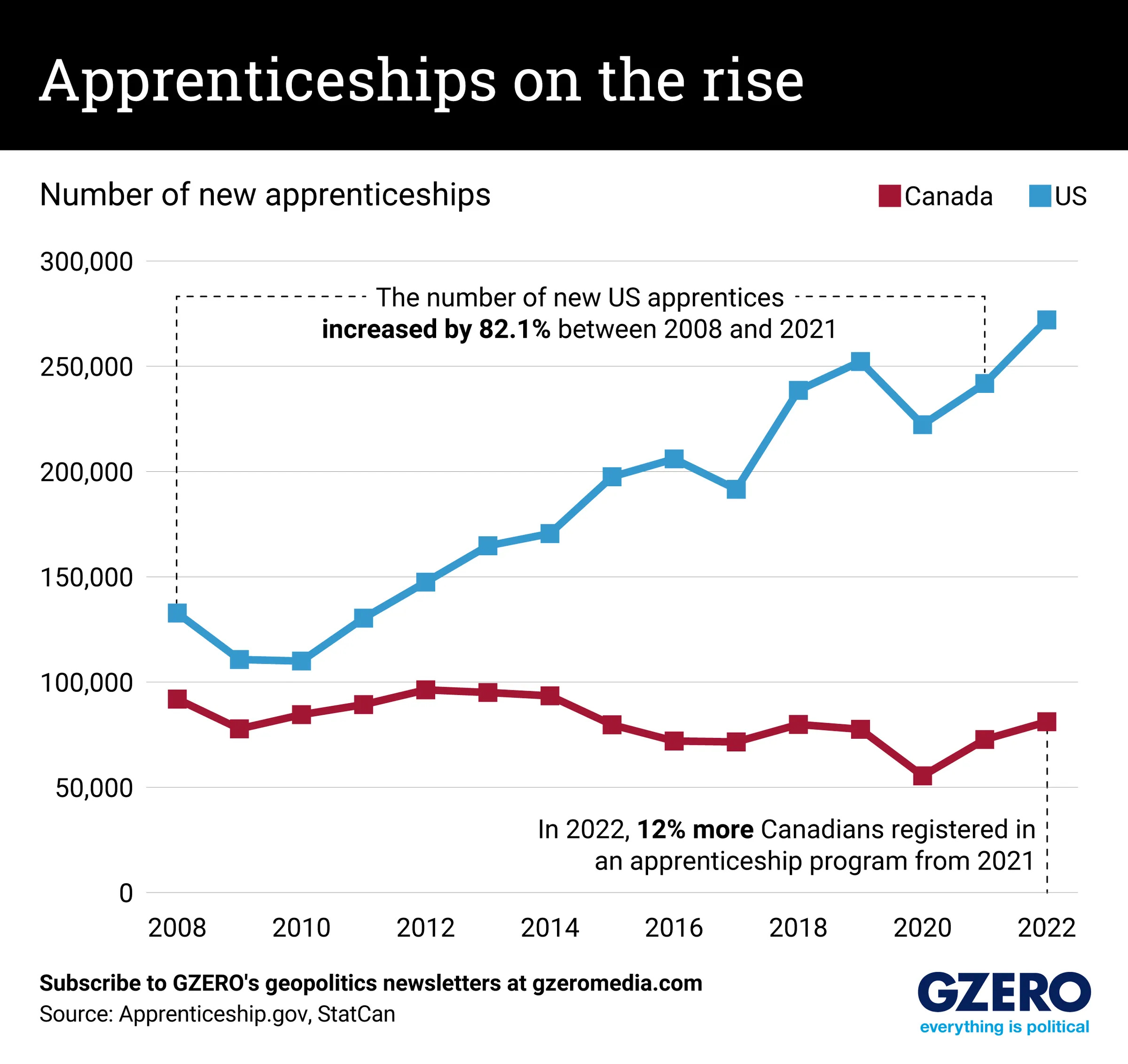
Apprentices earn while learning on the job. The model provides options beyond the traditionally expensive 4-year degree. It also helps re-skill unemployed youth and career switchers. The trend will likely continue as apprenticeships become a flexible path to in-demand skills.
Read More: Biden Administration Announces Nearly $200mn Available In Grants To Expand Registered Apprenticeships. (US Department of Labor)
With college costs deterring many and labor shortages acute, apprenticeships are an underutilized pipeline. Blending work and education, they can rapidly grow talent for vacant roles. The uptick reflects their value aligning with learner and employer needs. Savvy companies will capitalize on apprenticeships amid tight markets.
Four-day work week tests proliferate as employees work fewer hours
The 4-day work week is gaining traction as hourly workers put in less time post-pandemic. ADP data shows the median hours worked per week dropped from 38.4 in late 2019 to 37.7 in late 2022. Part-time roles now comprise 47% of hourly jobs, up from 43%. With labor inputs declining, more firms are trialing 4-day schedules.
Early data shows potential benefits like better retention and wellbeing with no productivity loss, if done right. But scaling requires flexible hours - working extra when needed to accommodate demands - which can create tensions. The transition takes extensive preparation and expense, including 20% staff increases for some to offset lost time. While promising, results may not be representative, with most trials being in small companies suffering from measurement difficulties, client expectations, and work intensity challenges remain.
Four-Day Workweek Pilot Project Abandoned at Hungarian Telecom Company. (Bloomberg)
Still, with hourly workers' hours dropping, and Friday becoming a de-facto dead-day in many offices, 4 day pilot projects continue to emerge. Blending worker autonomy, manager trust and output accountability, the model aims for sustainability. While tests are still limited, rethinking the workweek is the next front in the redefinition of work flexibility.
Reading List

AI Automation of ‘Busy work’ comes with downsides
In the relentless push towards workplace efficiency, the advent of AI-driven automation promises a future with less "busywork." However, busywork, often dismissed as trivial, actually serves as a crucial cognitive buffer. It allows employees to smoothly transition between high-intensity tasks, providing important mental break and reducing the risk of decision fatigue. Without these interspersed periods of lighter work, employees miss out on "easy wins" that can bolster morale and build confidence.
Read more about the hidden complications of eliminating busy work.
Remote work has slowed wage growth and raised productivity
New economic research reveals a link between remote work and lower wage growth, contradicting expectations. Each extra home day correlates with 0.5% less growth, even as workers value flexibility. This suggests expanded applicant pools and ‘pajama productivity’ give firms leverage to suppress pay.
Read more about the new research on remote productivity and labor costs.
Benefits become critical in employee decisions to leave
Benefits play a decisive role in retention, with 73% of departing workers inclined to stay if offered better insurance, according to Marsh and Mclean’s yearly report. The workplace's 5 generations display rare alignment on the importance of under-engagement, cost concerns, and mental health needs. Optimizing benefits for whole person health improves experience and retention per 95% of employers.
Read more about how HR can respond.
Focus becomes a scarce resource amid RTO push
Hybrid workers are increasingly struggling to focus as RTO brings employees back together, often in the open floor plans that have become the new normal. Employees rank focus as the top need from offices, according to Gensler’s 2023 Global Workplace Survey. Therefore firms add quiet zones, pods, and enclosed spaces, but small booths don't allow deep concentration.
Read more about how to ensure the post-pandemic office is productive.
GenZ ditches Linkedin in favor of TikTok job searching
A recent survey found 70% of Gen Z use TikTok for career advice, with 19% calling it their main resource. TikTok influencers have become role models and influential sources of information, yet only 42% fact check TikTok career tips, with 55% exhibiting misinformation. Still, 46% say TikTok shapes their professional choices as younger employees turn their back on traditional platforms like Linkedin.
Read more about the consequences of changing sources for career guidance.
Eroding trust undermines culture and productivity
Trust between employers and employees has reached a crisis point, negatively impacting company culture, productivity, and retention. The pandemic triggered a decline in trust as remote work arrangements were revoked despite evidence of sustained productivity. Surveillance of employees through tracking of emails, calls, and keyboard usage has further damaged trust.
Read more about the cost of collapsing trust and how to respond.
Stat of the Week
In Other News
6 Future Job Market Trends to Watch Out for in 2024. (Teal)
Black workers are enjoying a jobs boom in America. (The Economist)
Innovate and balance: How AI is transforming the hiring process. (HR Brew)
For high-earning workers, it's hard to break free from 'golden handcuffs'. (BBC)
The price of long COVID: What the undiagnosed illness is costing employers. (Employee Benefits News)
World of HR: Australia passes right to disconnect law. (HR Brew)
IBM’s decision to reinstate its defined benefit scheme makes good business sense — other companies should follow. (Financial Times)
What HR should know about using AI for benefits administration. (HR Brew)
As many 2024 layoffs go virtual, how HR can reduce risk of going viral. (HR Executive)
‘I’m never going to be able to retire:’ Gen Xers cast doubts on life after work. (WorkLife)
What are RTO shadow policies? (WorkLife)
2024 Talent Trends: Artificial Intelligence in HR. (SHRM)
AI Adoption in HR Is Growing. (SHRM)
Less Than Half of Americans "Very Satisfied" With Own Lives. (Gallup)
The Best Way to Work With AI? A Study May Reveal the Answers. (Wall Street Journal)
How Companies Are Starting to Use Generative AI to Improve Their Businesses. (Wall Street Journal)
How The In-Office Vs. Remote Debate Is Shaping The Future Of Work. (Forbes)
Your Résumé Might Be Getting Tossed by AI. How to Push Back. (Wall Street Journal)
Global Indicators of Workplace Performance & Societal Health. (Gallup)
How the Myers-Briggs personality assessment can make you a better manager. (Employee Benefits News)
The 18 Best Employee Engagement Survey Providers (Unbiased, Q1 2024). (FlexOS)