


Welcome to the latest edition of Human Capital Intelligence. As always, we would love to hear from you at ken@stibler.me with news ideas, feedback and anything else you find interesting.
Sent this by a friend? Sign up here to receive HCI in your inbox every week.
By Ken Stibler; Powered by Reyvisum Analytics
What’s Working
Big Read: AI’s first victim is your leadership pipeline
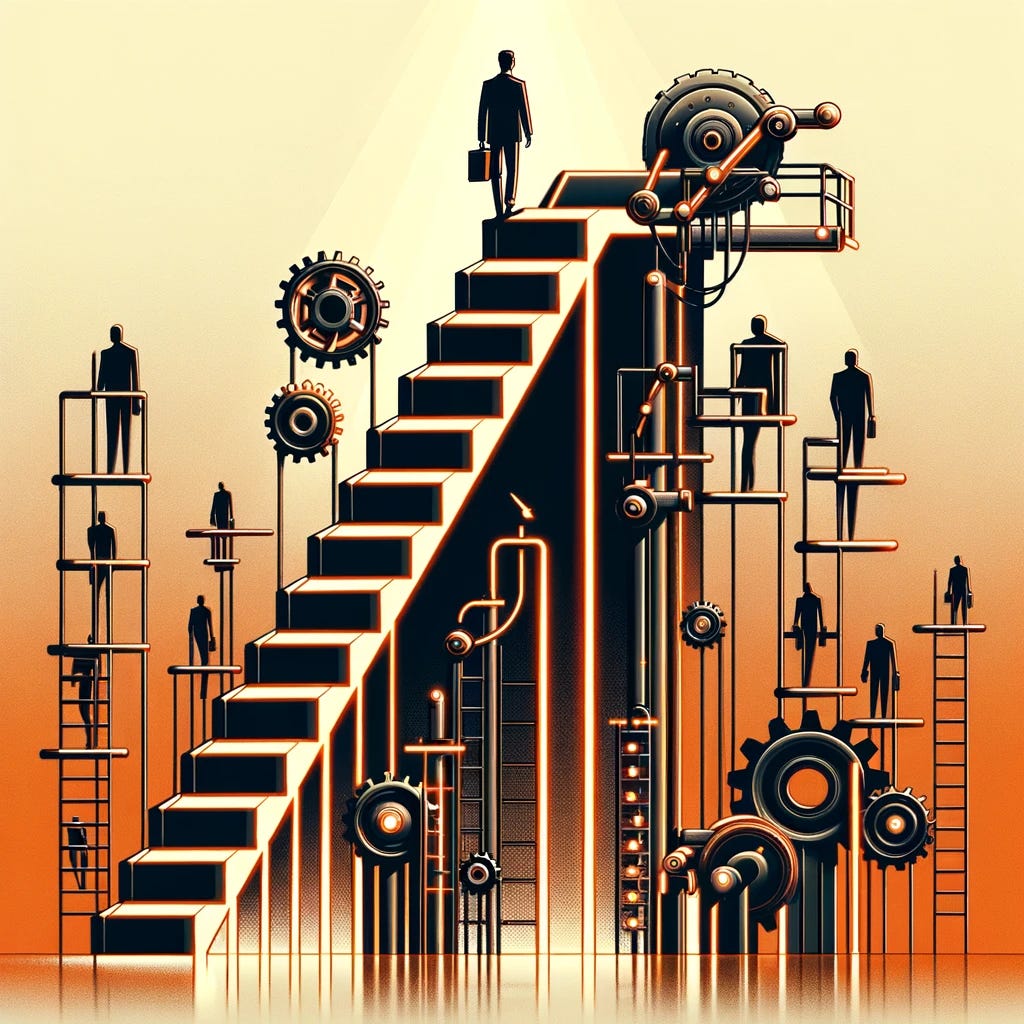
AI is poised to fundamentally transform the labor market, with white-collar and early-career roles facing the most significant disruption. While concerns about mass unemployment persist, the impact of AI is expected to be more nuanced, affecting specific segments of the workforce rather than leading to widespread job losses.
The traditional talent pipeline, which funnels workers from entry-level positions into management roles, is likely to be undermined by AI's automation of routine tasks. Entry-level jobs, particularly in administrative and clerical roles, are being heavily targeted by automation given the nature of the work, potentially eliminating these positions as career stepping stones. Simultaneously, AI's encroachment into cognitive tasks threatens to displace or transform white-collar professions, such as lawyers, accountants, and financial analysts.
As the workforce ages and the baby boomer generation retires, a shortage of skilled managers is looming. AI's ability to complement and enhance managerial roles could partially mitigate this shortage, but the disruption to the traditional talent pipeline raises concerns about the future supply of leadership positions. Companies may need to rethink their talent development strategies, emphasizing continuous learning and upskilling to prepare workers for the rapidly restructuring job market.
Learning and development becomes the crux of workplace adaption to AI
Once a backwater, learning and development (L&D) function has emerged as the crux of a successful strategic adaptation to AI-driven change. As technological advancements disrupt traditional skill sets and labor markets, organizations are grappling with the urgent need for upskilling and reskilling, making L&D a strategic imperative.
The 340 billion dollar corporate learning industry has undergone a seismic transformation over the past two decades. However, the emergence of AI promises to be the most disruptive force yet, challenging the very foundations of traditional learning models. AI's ability to personalize learning experiences, automate content creation, and seamlessly integrate with talent intelligence systems heralds a new era where static, one-size-fits-all approaches are no longer viable. This disruption extends beyond technology, as organizations increasingly recognize the importance of aligning learning programs with business goals, upskilling employees, and fostering a culture of continuous learning to enhance retention and adapt to rapidly evolving workplace dynamics.
74% of workers would consider leaving for a new role if it offered additional education opportunities. (Benefits Pro)
As AI continues to reshape industries and automate tasks, the ability to rapidly acquire new skills and adapt to changing job requirements has become a critical differentiator for both individuals and organizations. Companies that embrace AI-driven learning solutions and invest in upskilling their workforce will enhance efficiency and innovation while gain a competitive edge in attracting and retaining top talent.
Reading List

Middle managers layoffs risk further disengagement and attrition
As corporations prioritize efficiency in the face of economic headwinds, middle managers are bearing the brunt of layoffs. According to an analysis by Live Data Technologies, middle managers – defined as non-executives who oversee employees – accounted for nearly a third of layoffs last year, up from 20% in 2018. Major companies like UPS, Citigroup, and Meta have all announced significant cuts to their management ranks in a bid to streamline operations and reduce costs.
Read more about the drivers and consequences of hollowing out management.
AI-driven acceleration makes change critical, but companies are struggling with adaptation
Corporate AI investment has surged, with 82% of organizations investing and 33% planning to increase their investment by more than 50% in the coming year. However, businesses are struggling to actually integrate all this transformative technology into business operations. A recent survey by Orgvue reveals that nearly half of companies are unsure how to use AI, with 39% admitting they lack the organizational expertise to make this transition a reality.
Read more about how companies are shifting to more agile operating models.
Lessons for boosting post-pandemic productivity
As businesses navigate the post-pandemic landscape, boosting productivity has become a top priority. A recent Atlassian study revealed that excessive meetings are the biggest hindrance to productivity, surpassing lack of motivation and unclear goals. The survey found that nearly 80% of workers struggle to complete their tasks due to the sheer number of meetings they are expected to attend. Moreover, over half of the respondents leave meetings without a clear idea of the next steps, leading to a vicious cycle of follow-up meetings.
Read more about the barriers to productivity and how to respond.
Entry-level to manager pipeline breakdown poses risk to business operations
The traditional pathway from entry-level roles to managerial positions is facing mounting challenges, posing a significant risk to business continuity and operational resilience. This crisis within the managerial ranks is exacerbated by a lack of adequate training and support. Only 37% of middle managers received training upon hiring or promotion, and a staggering 74% report rarely, or never, receiving ongoing training.
Read more about the implications of early-career disruption on management pipelines.
Question of the Week
In Other News
7 Ways to Build a Strong Employer Brand as a New Company — or an Old One in a New Place. (LinkedIn)
Dell is telling remote workers they can't get promotions, report says. (Quartz)
Deeming Mass Layoffs a ‘Failure of Leadership,’ One Company Fine-Tunes a Strategy to Avoid Them. (Wall Street Journal)
Job sharing: The benefits of splitting one job between two people — but how does it work? (New York Post)
Small Business Economic Trends Survey Shows Inflation is a Top Concern as Employment Slows. (NFIB)
IBM’s CHRO believes AI could be the only solution to a global labor shortage. (HR Brew)
From portfolios to social media profiles, visuals can help you stand out in your job search. We've gathered insights, tools, and tips to help you harness the power of design to land that dream job in 2024. (Canva)
Looking beyond the résumé: How talent pros can lean into skills-based hiring. (HR Brew)
Users ditch Glassdoor, stunned by site adding real names without consent. (ArsTechnica)
Companies overestimate their employees’ trust. That’s bad for business, PwC says. (HR Dive)
How to Fix Your Company’s Culture of Overwork. (Harvard Business Review)
How to calculate the real cost of employee turnover. (WorkLife)
Want happier employees? Create a community, business scholars say. (HR Dive)
AI and wage and hour laws: what employers need to know. (Reuters)
'The extra shift': The unpaid emotional labour expected of women at work. (BBC)
Underemployment Carries Hidden Costs for Women: Wellbeing suffers when they aren't working at the capacity they want. (Gallup)
How AI may make more employees eligible for overtime pay. (Employee Benefits News)
EEOC hired more investigators, filed 50% more lawsuits in FY 2023. (HR Dive)
‘You get the union you deserve’: Middle managers need more help handling staff union efforts. (WorkLife)
Tackling remote work tax challenges. (Employee Benefits News)
These lawsuits will define future RTO and WFH rights. (WorkLife)
In the US, companies may lead the ‘right to disconnect’ movement, leaders say. (HR Dive)
4 in 10 employees grade their benefits a 'C' or lower. (Employee Benefits News)
White House Budget for Fiscal Year 2025 Impacts Small Business. (NFIB)
4 ways to support employees in a politically charged environment. (Employee Benefits News)
‘Folks don’t live near the office anymore’: Remote work guru Nick Bloom gets real on why RTO is so hard. (Fortune)
Employees cite lack of productivity, high commuting costs as return-to-office barriers. (HR Dive)
How to help employees overcome their AI anxiety. (Employee Benefits News)
How Technology Is Revolutionising Recruitment And Retention. (HR Director)
Tech Job Seekers Without AI Skills Face a New Reality: Lower Salaries and Fewer Roles. (Wall Street Journal)
Don't want to be replaced by bots? These are 8 'AI-proof' businesses, according to employees. (Employee Benefits News)
The Post-Pandemic Customer: More Demanding, Harder on Employees. (Gallup)
AI’s copyright problem will soon slow adoption, Gartner says. (CIO Dive)